
Designer working beside a bright window
You want the pages to remain easy to read, so start by considering the screen’s position and any potential glare. Arboportaal recommends positioning your viewing direction parallel to the window.


Start by considering where the screen will go: Arboportaal recommends positioning your viewing direction parallel to the window and using blinds or other sun protection where necessary to reduce distracting reflections. A separate desktop is a good choice if you want to select and assess the monitor yourself; an all-in-one is an option if you want an integrated setup and its built-in screen is suitable for your space. Then check the requirements for your chosen layout software and ask your printer which settings you’ll need for the booklet.
You want the pages to remain easy to read, so start by considering the screen’s position and any potential glare. Arboportaal recommends positioning your viewing direction parallel to the window.
You want to assess photos and colours for print carefully. EIZO describes calibration and recalibration as parts of colour management, while Adobe also explains settings for printing booklets.
You’re weighing up an integrated computer-and-screen setup against a separate desktop where you choose the monitor yourself. Apple, HP and Dell offer examples of these different setups.
First, work out how to position the screen by the window. Then compare the colour workflow, software requirements and complete setup.
| Point to consider | What to look for when buying | Who should give this more priority? |
|---|---|---|
| Glare from the window | Assess the screen’s position in your intended workspace and check whether you’ll need blinds or other sun protection. Arboportaal recommends positioning your viewing direction parallel to the window. | If daylight falls on my screen, I want to assess the position first; around 36% of consumers say glare is their main concern. |
| Colour for print | Ask your printer which file and colour workflow they require. EIZO describes calibration and recalibration as parts of a colour workflow. | When I’m assessing photos for the booklet, I want to know how the screen settings and print will work together; around 29% of consumers say assessing colour for print is their top priority. |
| Layout software | Check the requirements for your chosen programme and version. For InDesign, Adobe specifies a minimum of 8 GB RAM and recommends 16 GB. | When I choose a layout programme, I want to check that the computer meets its requirements; around 21% of consumers put software compatibility first. |
| Complete workspace | Check which components are included and compare the whole setup. With a separate desktop, you choose the monitor separately. | If I want to set up my desk with everything I need, I want to know whether the computer and screen come together in one purchase; around 14% of consumers say a complete setup is their main concern. |
A powerful computer won’t solve reflections in your workspace. Consider both the screen’s position and the light coming in; Arboportaal highlights positioning your viewing direction parallel to the window as a practical point to consider.
Check the screen in the place you plan to use it and see whether you need blinds or a different setup.
You may also need blinds or a different screen setup for your workspace.
A separate desktop and a computer with a built-in screen are different setups. The price of the desktop alone doesn’t show which other components you’ll need for a complete workspace.
Compare what’s included and assess the full setup, including a separately chosen screen.
With a separate desktop, you’ll need to choose a monitor yourself and include it in your workspace.
Screen settings and the printing process are separate steps. EIZO describes calibration as part of colour management; Adobe provides settings for booklet printing that depend on the method you choose.
Agree your file settings with your printer, and don’t treat screen calibration as a substitute for their print-ready file specifications.
Checking colours may require extra work or a new proof.
The Mac mini is designed for people who want to choose their own monitor, while the iMac combines the computer and screen. Apple Netherlands lists 6 November 2026 as the availability date for the iMac M6.
According to HP Netherlands, the HP OmniStudio X 27-cx0625nd is a Windows all-in-one with a 27-inch QHD screen, 24 GB RAM and a 512 GB SSD.
The Dell Pro Micro Plus QBM1250 is a compact Windows desktop for people who want to choose their own monitor.
These picks include integrated computers and separate desktops for a workspace where you’ll want to assess the screen in daylight and while preparing files for print.
 No image available
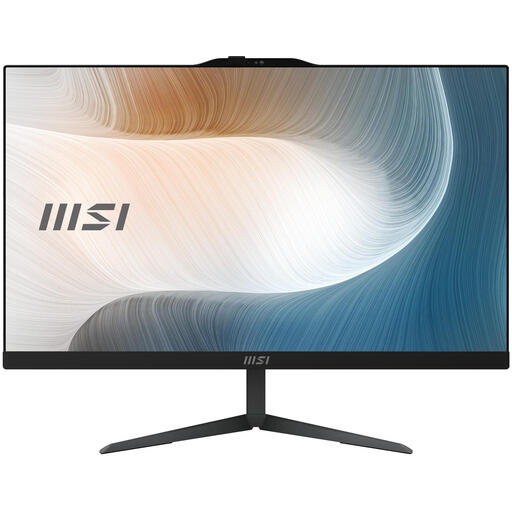
An integrated computer-and-screen setup for people who don’t want to choose a separate monitor; check the screen in the place you plan to use it.
24-inch all-in-one. The power adapter must be purchased separately.
 No image available
A separate desktop for people who want to choose their monitor independently and position it to suit the window.
Apple M6 chip with 12-core CPU and 12-core GPU; 24 GB memory and 512 GB SSD.
 No image available
A compact separate desktop for people who want to choose their own monitor; check the display outputs and monitor together.
The product name lists Wi-Fi 6, Bluetooth 5.2 and support for output to three 4K screens.
 No image available
An integrated setup for people who want to choose the computer and screen together; assess the screen where you’ll be designing your booklet.
Intel Core 5 120U, 8 GB DDR5, 512 GB SSD and Windows 11 Pro. The power adapter must be purchased separately.
 No image available
An integrated computer-and-screen setup for people who want one fixed combination; check for reflections and assess the positioning in your own workspace.
27-inch QHD screen, Intel Core Ultra 7 255H, 16 GB memory and 1 TB SSD.
No. Consider the screen’s position separately from your choice of computer. For screen-based work, Arboportaal recommends positioning your viewing direction parallel to the window and using blinds or other sun protection where necessary; this doesn’t guarantee that a particular screen won’t reflect light.
Ask your printer which files and settings they need. Adobe explains settings in InDesign for things such as bleed areas and margins when printing booklets; agree the values with your printer based on their printing method.
If assessing colour is important, calibration can be part of your workflow. EIZO describes recalibration as part of a colour management process; this doesn’t mean the screen and print will look identical.
According to the Dutch government, there’s no fixed statutory warranty period in the Netherlands. However, you’re entitled to a product that works as it should, and you can contact the seller if there’s a problem. A manufacturer’s warranty is separate from your statutory rights.
According to the Dutch government, in many cases you have a 14-day cooling-off period when buying from a business online as a consumer. Check the applicable terms and exceptions; purchases from private sellers aren’t covered by the same distance-selling rules.