
Detail-focused model-maker
You want to show small parts and precise work from your work area. The distance to your project and the freedom to position the camera are important considerations.


For long filming sessions above a fixed model-making area, an adjustable document camera is a better fit. If you switch between showing yourself and your work surface during calls, a webcam with a desk view may be more practical. In either case, measure the distance to small parts and check that the camera, connection and software will work with your setup. Manufacturer specifications describe the features, but can’t guarantee how clearly a particular model-making task will appear on screen.
You want to show small parts and precise work from your work area. The distance to your project and the freedom to position the camera are important considerations.
You switch between showing yourself and the model on your table during a call. Check whether the camera’s desk view works with the height of your monitor and the position of your work area.
You record longer building sessions from one spot. Before you buy, check that the focus, frame rate, connection and camera mount suit your fixed setup.
First, decide how the camera should show your work surface. Then measure the distance from the lens to your parts and check that the connection and audio suit your computer and the way you plan to use it.
| What to consider | What should you check? | Who is this important for? |
|---|---|---|
| View of the work surface | Check whether an arm or desk-view feature gives you the angle you want and shows the whole work area. | If you want to keep your hands and model in shot at the same time without the camera getting in your way, the working angle matters a great deal. Around 36% of consumers put this overview first. |
| Focus on small parts | Measure the distance from the lens to the part and compare it with the focus range of the exact model. | If small parts need to stay in focus at your working distance, the focus range is crucial. Around 29% of consumers prioritise this need. |
| Movement and lighting | Consider resolution and fps together, and assess your planned lighting and camera position with moving hands in shot. | If you want to show your work and assess shadows or reflections on the model, movement and lighting are important considerations. Around 21% of consumers put these first. |
| Connection and calls | Check the USB connection and app support, and whether you need a separate microphone or mount. | If you also want to use the camera for calls, the connection and audio need to work with your computer. Around 14% of consumers make this complete workstation setup their top priority. |
A part outside the specified focus range won’t automatically look sharp just because the resolution is higher.
Measure the distance between the lens and your project, then compare it with the focus range of the exact camera model.
A desk view doesn’t automatically give you the same perspective as a camera physically mounted above the table. Logitech warns that Show Mode isn’t intended for very small text.
Check your monitor height and working angle, and view a sample using a part of the usual size.
Cameras vary in their connections and app support. Elgato says the Facecam MK.2 doesn’t have a built-in microphone.
Before buying, check the port, operating system, video-calling app and audio setup.
The Dutch Government distinguishes between statutory protection for faulty products and an additional warranty; the Netherlands has no fixed statutory warranty period.
Check exactly what an additional warranty plan covers. Report any fault to the retailer.
The V4K PRO 120 is a document camera for an adjustable setup above a fixed model-making area.
The Link 2 is a monitor webcam for anyone who switches between showing themselves and their desk during calls.
The MX Brio offers a standard webcam setup and Show Mode for your desk. The C920s is a Full HD webcam with no desk-view mode confirmed here.
The Tiny 2 is a webcam with adjustable focus and camera modes for anyone who wants to fine-tune their recording setup.
The Facecam MK.2 is suited to a fixed camera setup at a distance within its specified focus range.
Below are cameras and webcams for use with a computer or at a workstation. For each model, check that the viewing angle, focusing distance and software suit showing your model-making table.
 Image unavailable
A monitor with a webcam for a computer workstation. Check whether the camera angle is suitable for showing your work surface.
27-inch QHD IPS; 100 Hz.
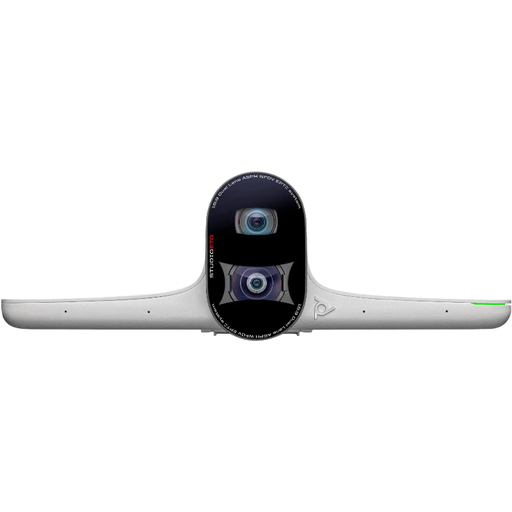 Image unavailable
A smart camera for a workstation. Before buying, check that the recording angle and software will work with your model-making setup.
 Image unavailable
A webcam for video recording. Check that the fixed positioning and focusing distance suit your work surface.
4K UHD; autofocus; dual built-in microphones; privacy shutter.
 Image unavailable
A webcam for calls or streaming from a computer. Check that the mount and camera angle work for showing your model-making area.
2K QHD; built-in microphone with noise reduction.
 Image unavailable
A monitor webcam with DeskView for anyone who wants to show their desk during a call. Check that your monitor position works with your work surface.
1/2-inch sensor; autofocus with PDAF; HDR.
Check the connection on the exact model and whether your app recognises an external camera. In OBS, add a webcam as a Video Capture Source; the virtual camera can then provide an OBS scene to apps that accept a webcam. IPEVO specifies USB-A/UVC for the V4K PRO 120 and says that the app must recognise the camera.
No. Start with the working angle and focusing distance: more pixels won’t fix an out-of-focus part or an unsuitable viewing angle. Then compare resolution and fps in the same camera mode; they’re separate features.
Measure the distance from the lens to the part and compare it with the specified focus range. Elgato lists fixed focus from 30–120 cm for the Facecam MK.2; OBSBOT lists autofocus and manual focus from 10 cm for the Tiny 2. Adjust the camera height or focus setting within the capabilities of the exact model.
According to the Dutch Data Protection Authority, the GDPR does not generally apply to camera recordings made by an individual solely for personal or household use. This may differ if, for example, the footage is made available online to an unlimited audience. If other identifiable people appear in the footage, check which privacy rules apply before publishing it.
For many online consumer purchases, the Dutch Government says you have a 14-day cooling-off period, with some exceptions. Before ordering, check the retailer’s information about the cooling-off period and returns policy.