
Student joining a call on their own
You join from your own laptop and want to be clearly visible without showing too much of the room. HP and Logitech describe personal webcams with different fields of view.


If you’re joining a call on your own, choose a webcam with a field of view that suits what you want to show; a wider lens isn’t automatically better. If several students are sharing one camera, check that everyone is in shot and that the microphone picks up voices from every seat. A conference camera may be a better fit for a group around one table, but how clearly everyone can be heard depends on the set-up and the room.
You join from your own laptop and want to be clearly visible without showing too much of the room. HP and Logitech describe personal webcams with different fields of view.
Several people share the same camera. So consider both the field of view and how clearly people can be heard from different seats. Trust and Logitech describe models for a range of set-ups.
You want to show sketches or other work on your desk during the call. Logitech says the Brio 500 has a stand that lets you angle the camera downwards.
| What to consider | What should you check? | Who is this important for? |
|---|---|---|
| Field of view and framing | Work out how many people will share one camera and how far away they’ll be. HP lists 66° for the 325 FHD, Logitech lists 78° for the C920e and 120° for the MeetUp; these models are designed for different set-ups. | If I’m joining a call on my own, I want to be visible without filming the whole room. Around 31% of consumers are mainly looking for a personal frame. |
| Group coverage | Measure the table and decide where to place the camera. Trust describes the Taxon as a webcam with a wide-angle lens for several people, while Logitech positions the MeetUp for small meeting rooms. | If several students are sharing one camera, I want everyone in shot without having to keep moving the camera. Around 31% of consumers prioritise group coverage. |
| Audio clarity | Check the microphone set-up and test each seat. Logitech says the integrated microphones on the C920e need to be enabled through Logi Tune. | If we’re not all sitting next to the laptop, I want every speaker to be easy to hear. Around 23% of consumers say clear audio from multiple speakers is their top priority. |
| Privacy and connection | Check that the connection suits your computer, that the lens can be physically covered and which apps can access the camera and microphone. Microsoft describes separate privacy settings for Windows apps. | If I connect a webcam to my laptop, I want to decide when the lens and microphone are available. Around 15% of consumers prioritise privacy and a suitable set-up. |
The camera’s resolution isn’t the only factor affecting the picture quality available during a call. Zoom has requirements for HD video in group calls, while Google Meet lists requirements for 1080p that include the camera, processing power and edition used.
Before paying extra for higher resolution, check what your video platform, account, computer and connection can support.
A wide field of view can show more people, but it doesn’t tell you whether the microphone will pick up everyone clearly in your room. Manufacturer specifications don’t measure how well people can be heard from the seats in your study group.
Test the picture and sound with people sitting in the places they’ll use during the call.
If someone can’t be heard clearly from their seat, you may need a different audio set-up.
Logitech says you need to enable the C920e’s integrated microphones through Logi Tune Desktop.
Check that they’re enabled and select the right microphone in your calling app before your study group starts.
The range includes personal webcams such as the C920e and Brio 500, as well as the MeetUp for small meeting rooms.
Trust positions the TW-200 as a Full HD webcam with fixed focus, and the Taxon QHD as a model for showing several people.
According to HP, the HP 325 FHD is a personal USB-A webcam with an integrated microphone, a 66° diagonal field of view and a detachable lens cover.
Jabra positions the PanaCast 20 as a portable camera for personal video conferencing.
These products are designed for video calls using one camera, from personal webcams to conference cameras for groups in a room. Compare the field of view, microphone set-up and intended room size with your seating arrangement.
 No image available
Could suit a shared-camera set-up; test whether the microphone picks up participants from the seats you plan to use.
The product name lists 1080P, a microphone and USB Plug & Play.
 No image available
The wide field of view could be useful when several people share the same camera; check the framing from the distance of your table.
The product name lists 4K, a 99° field of view and a privacy shutter. The title also mentions noise reduction.
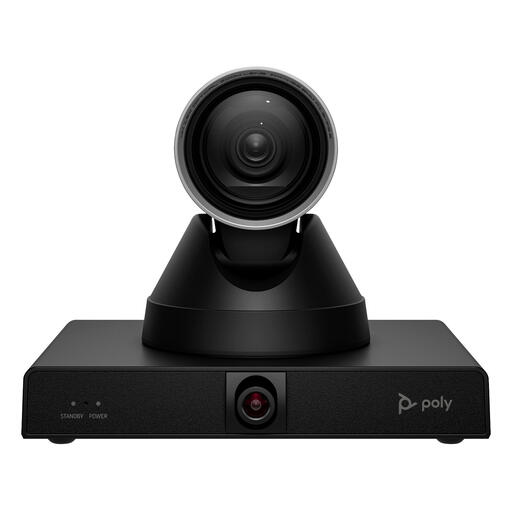 No image available
The product description positions this camera for large meeting rooms; consider whether that set-up suits the space used by your study group.
The product name lists 4K, MPTZ and 12× optical zoom.
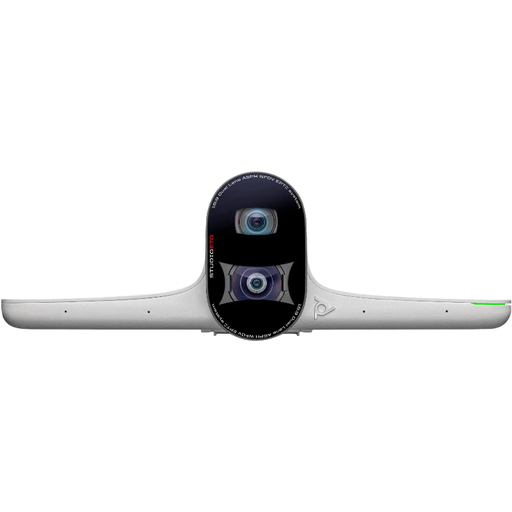 No image available
The product description mentions group framing for larger meeting rooms. Check in advance which mounting option and connection will suit your space.
 No image available
Logitech describes the MeetUp as suitable for small meeting rooms, which could work well for a study group joining from one room.
Logitech specifies a 120° field of view, integrated microphones and a speaker. The product name lists 3840 × 2160 pixels at 30 fps.
Not simply because several people are taking part. Zoom has requirements for HD video in group calls, including account, settings and available bandwidth. Google Meet says that 1080p requires, among other things, a suitable camera, enough processing power and a supported edition. Check these requirements and choose a field of view that suits your set-up too.
Check the connection, then select the camera and microphone you want to use in your calling app. Google Meet offers a camera preview for checking connected devices; in Windows, you can manage camera and microphone access for each app. If you’re using the Logitech C920e microphones, also check that they’re enabled through Logi Tune.
According to ACM ConsuWijzer, with an ordinary online consumer purchase you generally have a statutory 14-day cooling-off period after delivery; check the applicable terms and exceptions. If, under normal use, a product doesn’t do what you could reasonably expect, your statutory guarantee applies alongside any manufacturer’s warranty, and the retailer is responsible for providing an appropriate solution.
The rules for schools and universities don’t automatically provide a general answer for every informal study group. Talk to the other participants and check the terms of the platform you’re using. If an educational institution is organising the call, check its recording policy too. The Dutch Data Protection Authority requires schools and universities to have policies on making and keeping recordings and informing the people involved.