
Filming details on small clay projects
You want to show your fingers, tools and fine details clearly. Compare the focusing distance of the camera or lens with the distance at which you plan to work.


Start by measuring the distance between the camera and the clay, then choose an angle that captures both your hands and your work. A webcam suits a fixed computer setup; a mirrorless camera gives you a choice of interchangeable lenses, but choosing the right lens, mount and recording settings takes extra care. Logitech describes a downward-facing Show Mode for the MX Brio, while Canon says the EOS R50 can also be used as a USB webcam.
You want to show your fingers, tools and fine details clearly. Compare the focusing distance of the camera or lens with the distance at which you plan to work.
You want a consistent view from above your work surface, for example for a recording or livestream, without having to reposition the setup each time.
You want to explain what you’re doing as you sculpt, so it’s worth considering the recording workflow, power supply and a suitable audio setup.
A good fit if: you film or stream from one desk and have your computer available while recording.
Consider: a computer-based workflow is convenient for a fixed location, but you’ll still depend on the connection and compatible software. A tilting function doesn’t guarantee that the image will be sharp at your working distance.
A good fit if: you want to record independently or adjust the lens and framing to suit different projects.
Consider: you’ll need to check that the lens works at close range, as well as confirm the mounting and recording setup. Video specifications alone don’t guarantee a sharp image with every lens.
| What to consider | What should you check? | Who benefits most? |
|---|---|---|
| Getting small details in focus | Measure the distance from the lens to the clay and compare it with the focusing range of the exact model or lens you’re considering. For the Facecam 4K, Elgato specifies a fixed focusing range of 30–120 cm at 4K; OBSBOT gives the Tiny 2 Lite a minimum focusing distance of 10 cm. | If I want to show small shapes and my fingers clearly, the clay needs to be within the focusing range. Around 29% of consumers prioritise sharpness on small details. |
| Getting your work surface and hands in shot | Check the mount and viewing angle at your workspace, and distinguish between tilting the camera down and getting a straight-down view. Logitech describes the MX Brio’s Show Mode as a way to show desk work. | I want my hands and the piece I’m working on to stay in shot without having to keep repositioning the camera. Around 24% of consumers prioritise a practical, consistent overhead view. |
| Adjusting light and colour | Check whether you can adjust the settings on your computer, then review a test recording under the lighting you actually use. Logitech says you can adjust settings including exposure and white balance on the MX Brio. | If I want the colour of the clay to show accurately under my desk lamp, I need to be able to adjust the image to suit that lighting. Around 18% of consumers put light and colour first. |
| Filming for longer and explaining as you go | Make a test recording for the length of time you need and check both the picture and sound. Canon says the EOS R50 offers 4K 30p and recording times of over 30 minutes; according to Canon, its built-in microphone doesn’t work with EOS Webcam Utility. | I want to keep working during a longer demonstration and explain things clearly, so the recording and audio need to work together. Around 17% of consumers prioritise uninterrupted recording and spoken explanations. |
| Putting together a complete setup | Check the exact version and which lens, mount, power supply and audio solution it includes; don’t assume accessories are included unless they’re listed for that version. | If I need a complete filming setup that works, I want to know in advance which parts I’ll need. Around 12% of consumers focus mainly on how complete the setup is. |
The stated resolution doesn’t tell you whether small shapes will be in focus at your recording distance. A clay project outside the focusing range won’t magically become sharp just because the resolution is higher.
Measure the distance between the lens and your project, then check the focusing range of the exact model or lens you’re considering.
The angle from your monitor may not give you the view you want, and your hands could block the project.
Check the camera and mount position with the whole project and both hands in shot. A different mount may work better.
Versions can differ in the lens and accessories supplied. You may also need a separate microphone; for example, Elgato says the Facecam 4K has no built-in microphone.
Compare the full version with your recording and audio workflow, and check exactly what’s included.
Worth considering for a fixed webcam setup when you want to show work at your desk.
The Facecam 4K may suit you if you’re looking for a webcam with a specified focusing range.
The Tiny 2 Lite may suit a desk setup where you’d like to adjust the camera angle.
The EOS R50 is a mirrorless camera with an interchangeable lens that, according to Canon, can also be used as a USB webcam.
The ZV-E10 II may suit creators who want to record independently and change lenses.
This Joybuy selection includes webcams and cameras for computer setups and video recording. For each model, check that the viewing angle and focus suit your working distance and overhead view.
 No image available
An option if you want to use a webcam with a PC or laptop; check whether its fixed viewing angle suits your work surface.
The product name mentions Full HD 1080p, a built-in microphone and USB plug-and-play. The product description lists a 120° lens, a 360°-rotating lens and a flexible tripod base.
 No image available
May suit you if you’re looking for a compact video camera; before using it for small clay projects, check that the focusing distance and framing are suitable.
The product name mentions 4K video, 64 MP, a 330° rotating lens, a 1.72-inch touchscreen, a mini tripod and Type-C.
 No image available
A pocket gimbal camera for video recording; check that the screen and viewing angle can show your entire work area.
The product name mentions a 1″ CMOS sensor, 4K/240fps, 3-axis stabilisation, 2× lossless zoom, 107GB of built-in storage and a 2″ rotating screen.
 No image available
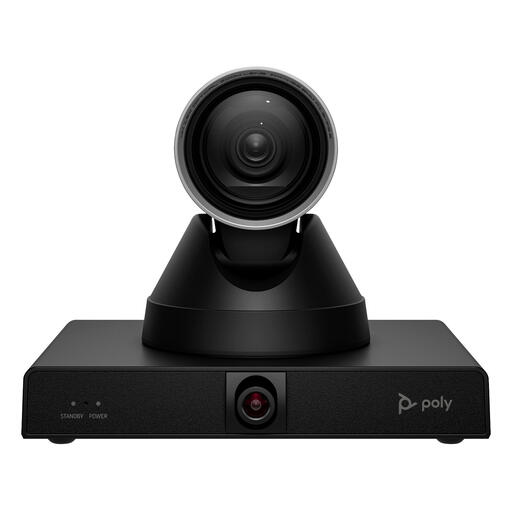
May suit a fixed setup where you want to adjust the framing; check that you can mount it above your work surface.
The product name mentions MPTZ and 12× optical zoom. The product description lists pan, tilt and zoom controls, and mounting options for a display, tripod or ceiling bracket.
 No image available
A desktop webcam to consider for a fixed computer setup; check the framing and focus at the distance you sculpt from.
The product name mentions 4K UHD, autofocus, two built-in microphones and a privacy cover.
No. 4K alone doesn’t guarantee a sharp close-up. Compare the distance from the lens to your project with the focusing range: for the Facecam 4K, Elgato specifies 30–120 cm at 4K, while OBSBOT gives the Tiny 2 Lite a minimum focusing distance of 10 cm. Also check that the project and your hands will fit in shot together.
First decide where the camera and mount can go, then check the framing and focus with a test recording. Logitech says you can tilt the MX Brio towards your desk; that doesn’t automatically give you a straight-down view.
If you want to record commentary while using this software connection, use a separate audio source. Canon says the camera’s built-in microphone can’t be used with EOS Webcam Utility.
When you buy as a consumer, your statutory guarantee applies alongside any manufacturer’s warranty. According to ACM ConsuWijzer, if a product becomes faulty sooner than could reasonably be expected under normal use, the retailer must put it right free of charge.
Not necessarily. The Dutch Data Protection Authority considers recognisable people to be personal data. The exception for personal or household use doesn’t automatically apply to public or commercial publication; you’ll need a lawful basis under the GDPR, which is often consent.