
Student with housemates in the background
Wants to stay in frame and physically cover the lens after lessons. Logitech and Trust describe lens covers on the models featured here.


First, choose a setup that makes your voice easy to hear and lets you control how much of your shared space appears on camera. Only then compare resolution and extra picture features. A physical lens cover helps you cover the lens after your lesson, but it won’t reduce noise. Google Meet says its noise cancellation doesn’t filter out the voices of other people in your home.
Wants to stay in frame and physically cover the lens after lessons. Logitech and Trust describe lens covers on the models featured here.
Practises pronunciation while other people at home may be audible, so wants to test the audio where they take their lessons. Google Meet says its noise cancellation doesn’t filter out other people’s voices.
Doesn’t always have the same lighting or camera angle, so pays attention to how the webcam is mounted, its focus and framing. Logitech describes the C920s as having autofocus and automatic light correction.
Start with clear audio and framing that suits your shared living space. Then consider extra picture features and resolution.
| What to consider | What to look for | Who is this important for? |
|---|---|---|
| Privacy and framing | Check the field of view, adjustability and whether there’s a physical lens cover. Before your lesson, check what actually appears on camera. | If I’d rather keep housemates and personal belongings out of shot, I pay attention to the webcam’s position and framing. I can close the lens cover after my lesson. Around 31% of consumers say privacy is their main concern when buying. |
| Clear speech | Test the microphone in a practice call from your usual study spot, with normal background noise. | When my housemates are talking, I want my pronunciation to remain clear, so I test the audio in my own room. Around 31% of consumers prioritise clear speech. |
| Picture quality in different locations | Check that the mount fits your screen or desk, and assess the focus and picture in the lesson app you use. | If I take lessons in different places, I want a useful frame and picture in changing light. Around 23% of consumers prioritise picture quality and where they can use their webcam. |
| Easy connection | Check that the connection and mount work with your computer, and make sure the webcam is compatible with your operating system and lesson app. | I want to join my lessons without paying for extra features I won’t use, so I check the connection first. Around 15% of consumers say ease of connection is their main concern when buying. |
Google Meet says the feature suppresses non-speech sounds, but doesn’t filter out people’s voices or the sound of a TV.
Test the audio during a typical busy period at home before relying on a microphone feature.
If your voice isn’t clear enough on a practice call, you may need to change your audio setup.
A wider frame may show more of your shared home. A lens cover only covers the lens when it’s closed.
Check your self-view before the lesson and decide whether you want to show just yourself or lesson materials as well.
Creative says that 2K output from the Live! Cam Sync V3 depends on a supported application, such as OBS.
Check how the webcam looks in the app you actually use for lessons.
The Dutch government distinguishes between a manufacturer’s warranty and your legal rights to a product that meets requirements. There is no fixed statutory warranty period for all products in the Netherlands.
Keep your proof of purchase and contact the seller if something goes wrong.
The Brio 100 and C920s are worth comparing if you’re looking for a webcam with a lens cover. According to Logitech, the C920s also has autofocus and a stated field of view of 78°.
The Tanor is a Full HD webcam with a built-in microphone and privacy shutter. The TW-200 is another option to assess for its positioning and microphone performance.
The Live! Cam Sync V3 is worth considering if you want to adjust the frame using digital zoom.
These Joybuy options range from webcams with physical privacy covers to models with adjustable framing. When choosing, pay particular attention to the frame, your audio setup and compatibility with your lesson app.
 No image available
A good fit if you’re looking for a desktop webcam with a physical lens cover and autofocus. Test the audio separately in your own study space.
4K UHD; autofocus; dual built-in microphones; privacy cover; EU version, black.
 No image available
The clip-on mount is useful if you want to attach the webcam to a laptop or desktop screen. Check that the clip fits your screen.
2K QHD; built-in microphone; clip-on mount; EU version, silver.
 No image available
Auto-Framing and the physical privacy switch are useful if you want to adjust the frame and physically cover the camera after your lesson.
4K; Auto-Framing; physical privacy switch; microphone; gesture control.
 No image available
AI tracking and Auto-Framing are worth considering if you move around during lessons. Check that the controls suit the way you take your lessons.
4K; AI tracking; HDR; microphone; Auto-Framing.
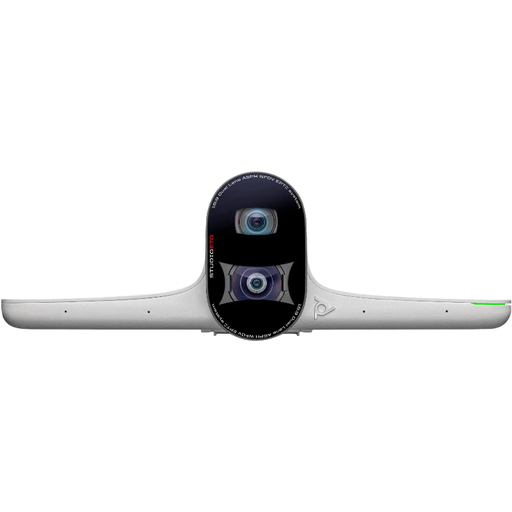 No image available
Its stated field of view of 93° to 111° may show a lot of your shared space, so check the frame and camera position in advance.
4K; dual camera; 93° to 111° field of view; 7.3x digital zoom; free-standing or wall-mounted.
No. A lens cover blocks the lens when you close it, but it won’t stop housemates appearing on camera during your lesson, and it isn’t a confirmed microphone switch. Check your framing in advance. Google Meet says background features may depend on your account and administrator settings.
No. According to Google Meet, it doesn’t filter out other people’s voices or voices coming from a TV. Test the sound in your usual study spot and check whether the feature is available for your account.
First, check the connection and mount, select the camera and microphone you want to use in your lesson app, then make a practice call. Close the lens cover after use, if there is one, and follow the manufacturer’s instructions for model-specific cleaning and updates.
Online purchases made by consumers from a business in the Netherlands generally come with a 14-day cooling-off period, although exceptions apply. You also have legal rights if a product is faulty. The Dutch government says there is no fixed statutory warranty period for all products. Contact the seller if there’s a fault.