
Student demonstrating PCB work live
If you want to show components and your work from your desk without getting in the way, consider an adjustable overhead camera. CZUR and IPEVO describe models with adjustable setups.


Choose a document camera with an adjustable arm if you mainly want to show the PCB and your work from above. A standard webcam may suit you if you also often show your face and have a suitable overhead mount. Focusing at your working distance and leaving room for your hands matter more than resolution alone, so test a sample image in your video-calling app.
If you want to show components and your work from your desk without getting in the way, consider an adjustable overhead camera. CZUR and IPEVO describe models with adjustable setups.
If you want to show yourself during video calls as well as the circuit, check whether the camera can easily switch between the two angles. CZUR describes the Fancy series as suitable for both overhead views and webcam use; Logitech designed the Brio 500 for meetings.
If you need a compact, portable setup, factor the base, arm or any tripod mount into your layout. HUE mentions a flexible neck, while Trust lists a tripod thread for the Tomar.
Choose this option: if you mainly want to show the PCB and your hands from above.
Bear in mind: the space taken up by the base and the focus at your working distance; you’ll still need to test a sample image.
Choose this option: if you also want to use the same camera for video calls and can position a suitable mount above your work.
Bear in mind: a standard webcam won’t automatically sit above the PCB; you may need a separate mount.
| What to consider | What should you check? | Who is this important for? |
|---|---|---|
| Sharp detail at your working distance | Compare autofocus, manual or fixed focus, and the distance from the PCB. CZUR and IPEVO list autofocus; HUE mentions manual focus and Trust lists fixed focus. | If I want to show small components and connection points, the camera needs to focus at my working height. Around 40% of consumers prioritise sharp PCB details. |
| Unobstructed overhead view while assembling | Check the arm’s position and stability, the space left for your hands, and the cable route. Trust lists a ¼-inch tripod thread; this won’t automatically position the camera above your work. | If I need both hands to assemble components, I want to keep the camera above my work without constantly moving it. Around 30% of consumers prioritise an unobstructed overhead view. |
| One camera for work and calls | Check whether your video-calling app recognises the camera and how to switch the camera angle. IPEVO lists UVC for the V4K; OBS explains how to add a webcam as a video capture source. | If I also use the camera for video calls, I want to switch easily between showing my face and the PCB. Around 20% of consumers prioritise this dual use. |
| Space on a small desk | Compare the footprint and storage space needed for the setup; also check whether you’ll need a separate mount. HUE mentions a flexible neck and Trust a tripod thread. | If my desk is also my work area, I want to have room left to work after a demonstration. Around 10% of consumers prioritise a compact setup. |
Resolution alone doesn’t tell you whether small markings will be clearly readable at your working distance. CZUR lists a maximum of 1080p at 60 fps or 4K at 15 fps for the Fancy S Pro.
Check the combination of focus, working distance, resolution and frame rate in the app you use.
A tripod thread or monitor clip won’t automatically give you the right angle above your PCB.
Plan the camera angle and the space you need for your hands, and check which mounting hardware is actually included.
You may need a suitable mount or tripod, so check before choosing your setup.
A demonstration may show the room or other people as well as your project.
Point the camera at your project as much as possible and follow your institution’s rules for recording teaching sessions. The Dutch Data Protection Authority highlights the need for rules on filming students and teachers, and on making and storing recordings.
CZUR describes the Fancy S Pro as a document camera and webcam for overhead work and video calls.
IPEVO positions the V4K as a USB document camera with an adjustable stand for materials on a desk.
HUE describes the HD Pro as a flexible Full HD document camera for a portable desk setup.
Logitech designed the Brio 500 for video calls, making it an option if you regularly want to appear on camera too.
Trust describes the Tomar as a webcam with a tripod thread for use with a separate mount.
This selection includes a USB webcam for video calls and a USB document camera. Check separately whether the mounting options and focus are suitable for an overhead view of your PCB.
 No image available
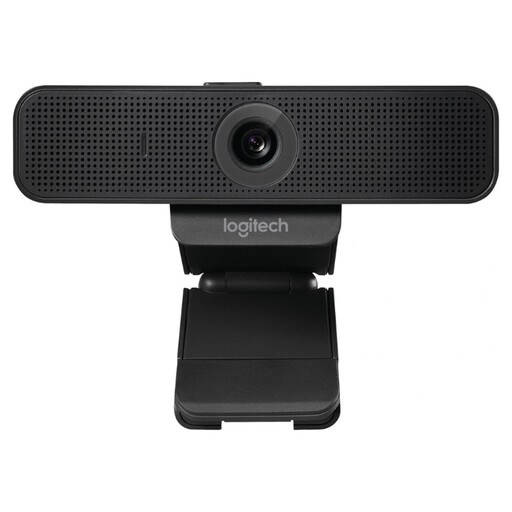
Worth considering if you’re looking for a webcam for calls and a view of your work. The adjustable clip is designed to attach to laptops and monitors, so check separately how you’ll position the camera above the PCB.
The product information lists autofocus, Full HD video and a built-in microphone; the product name specifies 30 fps.
 No image available
An option to consider if a foldable USB document camera would suit your workspace. Test a sample image to see whether the PCB is in focus at your preferred distance.
The product information lists an 8MP sensor, A3 and A4 document scanning, OCR, and compatibility with Windows and macOS. These features don’t guarantee that small PCB details will be readable.
You can if your computer and software recognise the camera. OBS explains how to add a webcam as a video capture source; IPEVO lists a UVC interface for the V4K. Check that your own camera is recognised by your computer.
Set the camera at the working height where you’ll be showing the components, then check a sample image. CZUR lists continuous and one-shot autofocus for the Fancy S Pro; HUE lists manual focus for the HD Pro. Neither specification guarantees that every component will be readable in your setup.
For most online consumer purchases in the Netherlands, you generally have up to 14 days from delivery to change your mind, subject to legal exceptions. This is separate from your statutory guarantee if a product doesn’t meet what you could reasonably expect; contact the seller about this.
Check with your educational institution before recording or sharing footage. The Dutch Data Protection Authority advises educational institutions to set rules for filming students and teachers, and for making and storing recordings. Check with your institution which rules apply to your activity.