
Explaining fine measurement details
Your viewers need to be able to follow scale markings, pointers and hand movements on the work surface. In this case, camera position and focus matter more than a portrait view.


For measurement markings, instruments and actions on a table, an adjustable document camera is usually the more targeted choice; IPEVO and CZUR describe their models as being designed to show a work surface. If you’ll mainly be on camera and only want to show your desk from time to time, a webcam with a downward-facing desk view may suit your setup better. Before you buy, test the framing, focus and software, and check what others in the shared studio might see or hear.
Your viewers need to be able to follow scale markings, pointers and hand movements on the work surface. In this case, camera position and focus matter more than a portrait view.
You want to show the exercise without unnecessarily including other users, conversations or someone else’s work. What’s appropriate also depends on who is filming and what happens to the footage.
During a video call, you switch between showing your face and your measurement setup, and want to find out whether one tilting camera can handle both views in practice.
Start by deciding what viewers need to see most: fine details from above, you as the speaker, or a mix of you and the work surface.
Choose this when: the scale, your hands and the measurement steps are the main focus.
Bear in mind: how much space you’ll need on or next to the table, and whether the whole measurement area will fit in the frame.
Choose this when: you’ll mainly be speaking and also want to show work on your desk during the call.
Bear in mind: a downward angle from a monitor is not the same as a camera positioned directly above the measurement area.
Choose this when: showing the speaker matters more than a targeted overhead view of small measurement details.
Bear in mind: a fixed viewing angle may give you less control over how a small object on the table is framed.
| What to consider | What to look for | Who is this important for? |
|---|---|---|
| Measurement details and overhead view | Test the camera angle, framing and focus with your own instrument. IPEVO lists a maximum of 30 fps at Full HD and 15 fps at its highest stated resolution for the V4K. | If I want viewers to follow the zero point and my actions, I check whether the instrument appears large and sharp enough on screen. Around 36% of consumers prioritise measurement details above all else. |
| Video and audio in the studio | Before a call, check what the camera and microphone pick up; if necessary, frame only the work surface. | If I’m filming in a shared space, I want to keep other users and their work out of shot, and avoid unnecessary noise in my explanation. Around 29% of consumers prioritise limiting unwanted video and audio. |
| Switching between the speaker and work surface | Test the framing from the intended monitor position and check that your software supports the view you want. Logitech describes Show Mode for the Brio 500 and MX Brio. | If I’m usually speaking on camera but sometimes want to show my measurement setup, I want to know whether the downward angle reaches my work surface. Around 21% of consumers put switching between the speaker and work surface at the top of their list. |
| Connection, software and clear audio | Check that the connection and supported software are compatible with your computer, and test the microphone and lighting in the room. HUE lists UVC compatibility for the HD Pro. | If I want to explain things using my computer, I need the camera to work with my equipment and pick up my voice clearly. Around 14% of consumers prioritise straightforward connectivity and audio. |
A stated resolution alone doesn’t tell you whether small numbers will look sharp and clear on a video call. For the IPEVO V4K, the maximum frame rates listed by IPEVO vary by resolution.
Test the camera angle, distance, focus, lighting and image settings in your calling software, using your own instrument.
A cover blocks the lens when you’re not using the camera, but it doesn’t determine who or what is seen or heard during a demonstration.
Point the camera at the work area you need to show, and check the microphone before going live or recording.
According to the Government of the Netherlands, the retailer is your point of contact for your statutory guarantee if there’s a problem with a consumer purchase. An additional cover package is separate from this.
Check exactly what an additional package covers, and remember that you already have statutory rights.
IPEVO describes the V4K as a USB document camera with an adjustable stand, designed to show materials on a work surface.
CZUR describes the Fancy S Pro as an adjustable document camera with webcam functionality.
According to Logitech, the Brio 500 and MX Brio are designed for video calls where you may also want to show work on your desk; the C920e is geared towards showing the speaker.
HUE describes the HD Pro as a USB document camera for uses including live demonstrations.
AVer describes the AVerVision M5 as a foldable USB visualiser for computer-based demonstrations.
This selection includes a webcam for setups centred on the speaker, and a document camera for anyone who mainly wants to show materials on a work surface.
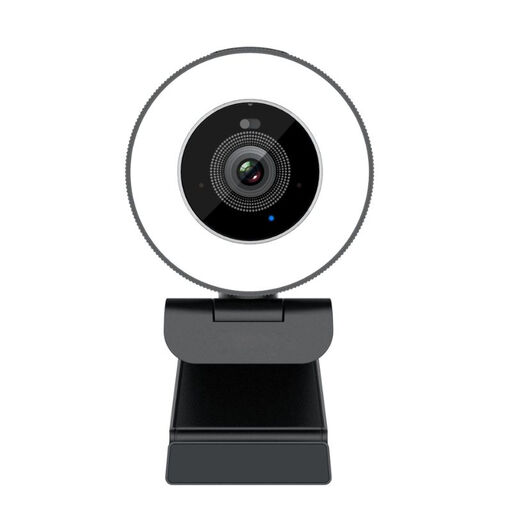 Image unavailable
This standard webcam suits a setup centred on the speaker. Check that the camera position also captures the part of your work surface you want to show.
The product name lists autofocus, two built-in microphones and a privacy cover.
 Image unavailable
A document camera is a suitable form factor if you mainly want to show a measurement instrument and the work surface. Check that the software and computer environment suit the way you plan to use it.
The product name lists A3, OCR and compatibility with Windows and macOS.
No. The stated resolution alone doesn’t determine whether the numbers will be easy to read. Check how large the instrument appears on screen, whether the numbers stay sharp, and which resolution and frame rate your calling software actually uses. IPEVO lists different maximums for Full HD and the highest resolution on the V4K.
Check the framing, image orientation and focus again. According to HUE, the HD Pro may need to refocus after the camera-to-subject distance has changed.
Not without considering the circumstances. The Dutch Data Protection Authority explains that identifiable people in footage are personal data. According to the Authority, a legal basis is required for images recorded in the workplace; in many cases, this means consent from the employee shown. What applies to your recording depends on who is filming and what happens to the footage. Where possible, point the camera only at the exercise, and consider recording and sharing separately.
For a consumer purchase in the Netherlands, the retailer is your point of contact for your statutory guarantee, according to the Government of the Netherlands. There is no fixed statutory guarantee period in the Netherlands; what you can expect in terms of a product’s lifespan depends on factors including the product and the sales information. An additional warranty package doesn’t replace those rights.