
Someone drawing at a small desk
You draw constructions on paper and want to avoid the camera or its base getting in the way of your compass, ruler or hand movements.


For a cramped desk, a clamp-mounted overhead camera is a good option if your desk edge is suitable; a document camera with a base needs space beside the paper. An adjustable webcam may appeal if you also want to use the same camera for calls, but check that your drawing and moving hands remain fully in view from that position. Also consider the capture area, focusing and the computer or software required.
You draw constructions on paper and want to avoid the camera or its base getting in the way of your compass, ruler or hand movements.
You demonstrate each step live and want to switch between the whole worksheet and small details. If pupils might appear on camera, also agree how the camera and any recordings will be used; the Dutch Data Protection Authority advises educational institutions to set out arrangements for images and recordings.
You want to show both your face during a call and your drawings, and are weighing up whether an adjustable webcam would work at your desk.
A good fit if: your desk edge is suitable and you want to keep the space beside your paper clear. Logitech offers Reach with a clamp mount as an alternative to a table base.
Bear in mind: the clamp must fit your desk edge, and the arm must reach your work surface. Logitech describes Reach as a USB-C camera that connects to a computer.
A good fit if: you mainly show paper and have room for a base or a stable setup. IPEVO specifies a maximum capture area of 342 × 255 mm for the V4K; HUE lists manual focus for the HD Pro.
Bear in mind: the base may take up drawing space. HUE describes a flexible neck that can be plugged into a USB port without the base; check that the camera will remain stable in your setup.
A good fit if: you also want to use the same camera for video calls, and your monitor or tripod position lets you show your entire drawing. Logitech describes Show Mode for the Brio 500 and MX Brio.
Bear in mind: angling the camera down does not guarantee that a compass point, circle or hand movement will remain clearly visible. Check the framing from the camera position you plan to use.
| What to consider | What to look for | Who is this important for? |
|---|---|---|
| Clear drawing space and full view | Measure the desk edge and the space beside your paper. Compare the mounting method and stated capture area with your largest drawing, including your hands and tools. | When I draw with a compass and ruler, I want the paper and my hands to stay in view without blocking my workspace. Around 36% of consumers prioritise clear drawing space. |
| Visible lines and actions | Compare focusing, capture area and video resolution at the frame rate you use. Also check that your hands will not block the view for long periods. | When explaining lines and intersections, I want viewers to follow the details and the order of my actions. Around 29% of consumers prioritise visible construction details. |
| One camera for your face and drawing | Check that the camera can point far enough down from the monitor or tripod position you plan to use, while keeping the whole drawing in view. | When I switch between talking on camera and drawing, I don’t want to keep changing cameras. Around 21% of consumers prioritise using one camera for both purposes. |
| Connection, software and aftercare | Check the USB connection, compatibility with your computer and whether the app you use recognises the camera. Keep your proof of purchase too. | When using the camera with my existing teaching or computer setup, I want to know in advance whether they will work together. Around 14% of consumers prioritise easy connection and use with their existing setup. |
For a live demonstration, framing, focusing and frame rate matter too. IPEVO lists a maximum image resolution of 3264 × 2448 pixels for the V4K, but up to 30 fps specifically at Full HD.
Compare resolution and frame rate using the same camera position, and check that the whole worksheet remains in view.
The usable angle depends on the position of your monitor, camera and paper. Pointing the camera down does not automatically give you a clear, unobstructed view of the whole worksheet.
Check the line of sight in your own setup before choosing between a webcam, clamp arm or document camera.
If your current monitor position does not show the paper clearly, you may need a different mount.
The Dutch government explains that there is no fixed statutory warranty period in the Netherlands, and that an additional manufacturer’s warranty does not replace your rights against the retailer.
Keep your proof of purchase and contact the retailer if something is faulty.
Reach is designed for an overhead setup; according to Logitech, the Brio 500 and MX Brio webcams also offer a desk mode for sketching.
The V4K is a USB document camera for showing paper live via a computer.
The HD Pro is a USB document camera for demonstrations on paper.
The IRIScan Visualizer 7 is designed for those who want to combine live demonstrations with annotating or digitising documents.
The ELPDC21 is a desktop document camera for presentations and magnifying details.
This selection includes webcams for use with a computer and a document camera for paper. For each model, check that the viewing angle, positioning and software suit your drawing needs.
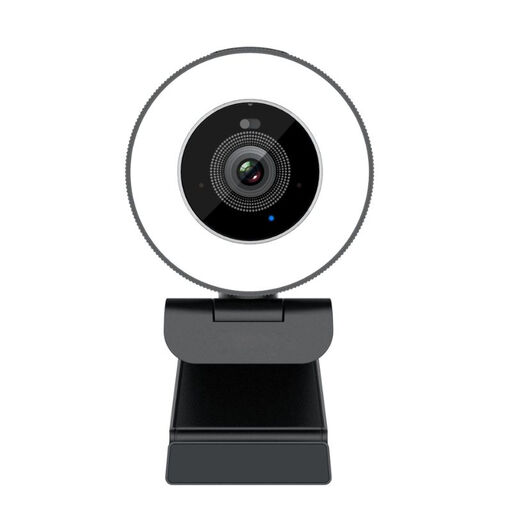 Image unavailable
A webcam option if you also want to make video calls; check that the camera position shows your entire drawing surface.
4K UHD; 8 MP; autofocus; dual microphones; built-in privacy shutter.
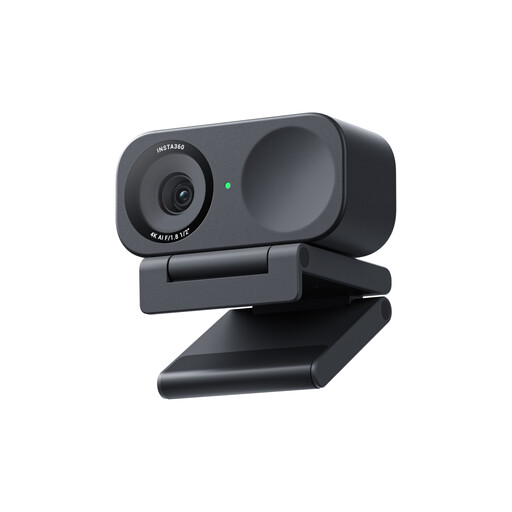 Image unavailable
A 4K webcam option for showing desk-level views during a presentation; check compatibility with your computer first.
4K; 1/2-inch sensor; HDR; gesture control.
According to the product information, it is not compatible with ARM-based Windows systems.
 Image unavailable
A document camera for capturing larger flat sheets too; set aside a stable spot on your desk and check the software requirements.
For flat sheets up to A3; OCR; compatible with Windows and macOS.
According to the product information, software installation is required and the device must be placed on a stable surface during use.
Lay out your largest sheet of paper, leaving room for your hands, compass and ruler too. Compare the whole area with the capture area of the specific model; IPEVO lists a maximum of 342 × 255 mm for the V4K. Then check whether you can position the camera as needed on your desk.
Do not assume so: IPEVO says the V4K requires software on a computer, while HUE describes using the camera with apps that recognise USB cameras. Check that the camera, computer and app you use for lessons work together.
For a consumer purchase in the Netherlands, a product must meet what you can reasonably expect; the retailer is your point of contact if something is faulty. The Dutch government explains that there is no fixed statutory warranty period. Online purchases usually also come with a cancellation period; ACM ConsuWijzer states that this ends 14 days after delivery, subject to legal exceptions.
Pointing a camera at your drawing does not automatically give you permission to record pupils. The Dutch Data Protection Authority advises educational institutions to set out who may appear on camera and how recordings are made and stored. Ask your institution to assess the proposed recording before you make it.