
Instructor with a folding table
Your main aim is to show the paper and both hands. Compare the capture area with your largest sheet, and allow for the space your hands need while folding. IPEVO and AVer provide model-specific capture area details.


For a demonstration where the paper and both hands are the main focus, a document camera with an adjustable arm is a natural choice. Just check that the entire work area fits in shot. A webcam may suit you if you regularly switch between showing yourself and the table, but a presentation mode doesn’t guarantee a full overhead view. If you’re using a room screen, you’ll also need to check that the camera’s output is compatible with the equipment available.
Your main aim is to show the paper and both hands. Compare the capture area with your largest sheet, and allow for the space your hands need while folding. IPEVO and AVer provide model-specific capture area details.
You want moving hands and each folding step to stay visible, and the camera to work with your computer and meeting app. IPEVO and CZUR list autofocus features for their document cameras; check the picture in the app you use.
You want to demonstrate the steps to a group in person. Check which input the screen has and compare it with the camera’s outputs. ELMO lists HDMI, RGB and USB among the connections available on the MX-P3.
Choose this if: the paper and your hands are usually the main focus. Measure the sheet and the space you need for your hands; IPEVO lists a maximum capture area of 342 × 255 mm for the V4K.
Bear in mind: you may need a computer and compatible software or video source. A stated capture area doesn’t necessarily tell you how large the folding details will appear on screen.
Choose this if: you regularly want to switch between showing yourself and the work surface. CZUR lists both webcam and document camera modes for the Fancy S Pro; Logitech lists Show Mode for the Brio 500.
Bear in mind: a presentation mode doesn’t prove that the entire sheet will be in shot from above at your chosen mounting position.
Choose this if: you want to connect a camera directly to a compatible room screen. ELMO lists HDMI, RGB and USB for the MX-P3.
Bear in mind: a listed output alone doesn’t confirm that the camera, cables and input on your room setup will all work together.
| What to consider | What should you check? | Who is this important for? |
|---|---|---|
| Work area and room for your hands | Measure your largest sheet and the space your hands need. Compare both measurements with the capture area and check that the arm doesn’t restrict your movements. | I want to see the whole sheet and both my hands at once, so no folding step is out of shot. Around 36% of consumers therefore give the visible work area top priority. |
| Clarity while folding | Check the focus at your planned working distance while your hands are moving. Compare the frame rate at the resolution you’ll actually use. | If I want to show small folding details while my hands are moving, I pay attention to how well the camera focuses during the demonstration. Around 29% of consumers prioritise motion clarity and detail. |
| Connection and display | Check the inputs on your computer and screen, whether your meeting app recognises the camera, and how the picture will appear to participants. | I want to know in advance whether the picture will reach my meeting app or room screen, so the group can follow each step. Around 21% of consumers give connectivity top priority. |
| Switching between speaker and paper | Check how to switch between camera modes and review the work surface framing in each mode. | If I want to show both myself and the folding, the framing needs to work in both modes. Around 14% of consumers prioritise switching between speaker and paper. |
A high sensor resolution doesn’t tell you whether the entire sheet will fit in shot or what resolution a meeting app will send to participants. Zoom lists separate requirements for HD video in meetings.
Check the capture area and view the final picture on screen or in the app you’ll use for the meeting.
IPEVO lists the V4K’s maximum capture area as 342 × 255 mm. A 30 × 30 cm sheet won’t fit fully within both dimensions, even before you allow extra room for your hands.
Compare both sides of your largest sheet with the capture area and allow space for your hands.
The IPEVO V4K is specified as a USB UVC camera, while ELMO also lists HDMI for the MX-P3. These are different connection options for a computer or screen.
Before buying, check the inputs and outputs across your entire room or online setup.
Depending on your existing equipment, you may need additional compatible cables or connection equipment. Check what your setup already supports.
The V4K is a USB document camera with an adjustable arm, designed for an overhead view connected to a computer.
The AVerVision U50+ is a USB document camera with a flexible arm and built-in lighting.
According to CZUR, the Fancy S Pro combines a webcam mode with a document camera mode.
The Brio 500 is a webcam with Show Mode, for anyone who wants to show themselves as well as the work surface.
The MX-P3 is a document camera with several video outputs, including HDMI and USB.
This Joybuy product selection includes webcams and a monitor whose product information lists a webcam. For a view of your table, check that the camera can be pointed at the paper from your intended mounting position.
 Image unavailable
For anyone who wants a monitor with a webcam as part of their computer setup; the product information lists an integrated webcam.
The title specifies a 27-inch QHD IPS monitor with a 100 Hz refresh rate. Check whether the webcam can capture the work surface at the angle you need in your setup.
 Image unavailable
For a computer-based demonstration where you can point the camera at the paper; the product description lists a flexible tripod base and a rotatable lens.
The description lists 1080p at 30 fps and a 120° field of view. Check the framing at the height where you plan to position the camera.
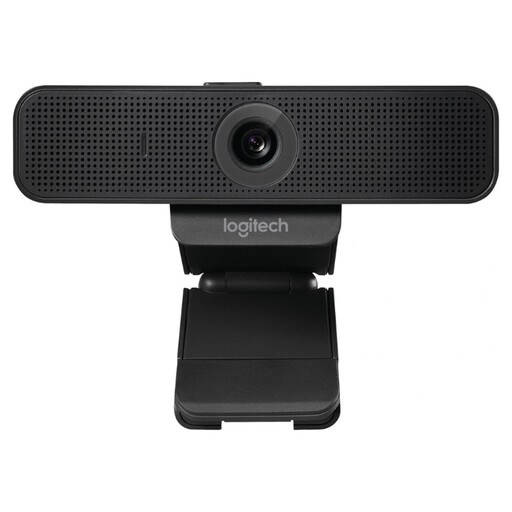 Image unavailable
For a computer setup where you want to mount the webcam on a laptop or monitor; the product description lists an adjustable clip.
The description lists autofocus, a 78° field of view and Full HD 1080p at 30 fps. Check whether the field of view from your chosen position covers the whole folding area.
 Image unavailable
For anyone looking for a webcam with autofocus that can be pointed at the work surface; check the mounting angle and framing before using it for a demonstration.
The product title lists 4K UHD, 8 MP, autofocus, dual built-in microphones and a privacy cover.
 Image unavailable
For use with a desktop or laptop; check whether you can mount the camera in a position that gives you a clear view of the folding area.
The product title lists 2K QHD, a noise-cancelling microphone and a clip-on design.
No. More megapixels don’t guarantee that the work area will fit in shot or that participants will receive the same picture. First check the capture area and the resolution your meeting service sends; Zoom lists separate requirements for HD video in meetings.
Before the meeting, take a test shot with a recognisable mark on the paper. IPEVO lists features in Visualizer for rotating and mirroring the live image; check whether these features are available in your software and camera mode.
You’ll need to take data protection rules into account. The Dutch Data Protection Authority says an organisation needs a valid legal basis to use identifiable images. Consent may be one basis at events, but it isn’t the only option. Point the camera at the paper and hands if participants don’t need to be shown, and check separately whether anyone is still identifiable.
For a consumer purchase made online, there is usually a statutory cooling-off period of up to 14 days after delivery, with some exceptions. ACM ConsuWijzer explains that statutory guarantees also apply: if a product doesn’t do what you could reasonably expect under normal use, the seller is your point of contact.