
Colour-conscious hobbyist
You want to show subtle differences between mixed colours and have control over white balance and exposure, not just a high resolution.


For showing your hands, mixing pots and work surface, an adjustable document camera is the more practical choice. A webcam may be enough for a demonstration where you’re mainly on camera and occasionally show materials. Then check the focusing distance, white balance, exposure and computer connection: these specifications alone don’t prove that paint colours will look true to life in your hobby room.
You want to show subtle differences between mixed colours and have control over white balance and exposure, not just a high resolution.
Your viewers need to see your hands, mixing pots and work surface at the same time, so the camera angle and usable image area matter too.
You’re often on camera and hold materials up to the lens between explanations. In that case, focusing, audio and a suitable connection are important.
Start with the camera angle: do you mainly want to show the tabletop, or yourself with materials that you occasionally hold closer to the lens? Then choose the focusing, image settings and audio to suit your setup.
| What to consider | What to look for | Who is this most important for? |
|---|---|---|
| Keeping colours recognisable | Check whether you can adjust white balance and exposure. Test your paint under the lighting you’ll use during the demonstration. | If I want to compare shades between mixing steps, I need to be able to control the image settings. Around 36% of consumers rank colour control as their top purchase priority. |
| Showing the whole work surface | Measure the work surface and the space available for the camera stand. Check that the camera’s field of view includes both the mixing pots and your hands. | When viewers need to see my hands and mixing pots at the same time, a suitable overhead view is important. Around 29% of consumers give the work surface the highest priority. |
| Keeping focus at different distances | Compare the distance between the camera and your materials with the stated focusing range. Also check whether autofocus is available. | If I move colour samples from the table towards the lens, I need to know at what distance they’ll stay in focus. Around 21% of consumers say close-up focusing is their main requirement. |
| Combining commentary and visuals with ease | Check whether the camera has a microphone and whether its connection and controls are compatible with your computer. | If you want to talk and demonstrate at the same time without much preparation, it’s best to sort out the audio in advance. Around 14% of consumers prioritise a simple setup. |
A high resolution doesn’t tell you whether the whole work surface will fit in the frame or whether your paint will look recognisable under your lighting.
First check the camera angle, usable image area, and white balance and exposure settings.
Elgato states that the Facecam MK.2 has a fixed focus range of 30–120 cm. Objects outside this range are beyond its specified focusing distance.
Measure the distance between the camera and your materials in advance, or compare it with a model that has autofocus or an adjustable document camera.
Elgato doesn’t list a built-in microphone for the Facecam MK.2, while Logitech lists two microphones for the C920s. Audio options therefore vary by model.
Check the audio before you start recording.
You’ll need a separate microphone or another audio device to record spoken commentary with the Facecam MK.2.
The V4K is a USB document camera for materials on a table, where your hands and mixing area take centre stage.
The Facecam MK.2 is designed for a prepared, mainly front-facing demonstration with adjustable image settings.
The Link 2 may suit a demonstration where you switch between talking and showing objects close up.
The C920s is a Full HD option for spoken commentary, with the occasional object shown on camera.
The Tiny 2 is a movable webcam option for demonstrations where the presenter and objects change position.
The webcams and smart cameras below are options for a demonstration setup. Compare the features listed with your preferred camera angle, distance from the materials and audio setup.
 No image available
An option for giving spoken commentary through a webcam setup; check in advance that its field of view suits your table.
The product name lists 1080P, a microphone and USB plug-and-play.
 No image available
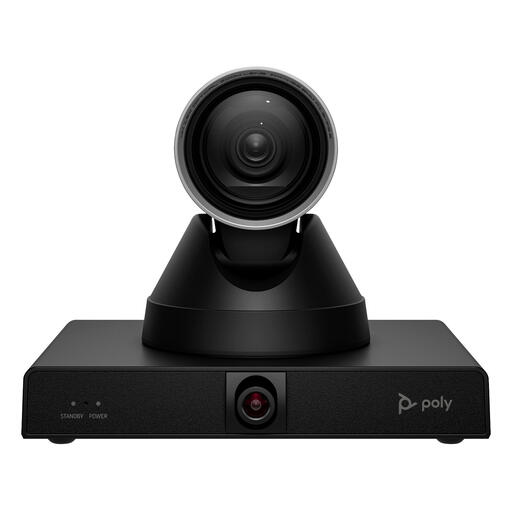
A smart camera option to compare for a fixed demonstration setup; check that the mounting and connections suit how you plan to use it.
The product name lists 4K, MPTZ and 12× optical zoom.
 No image available
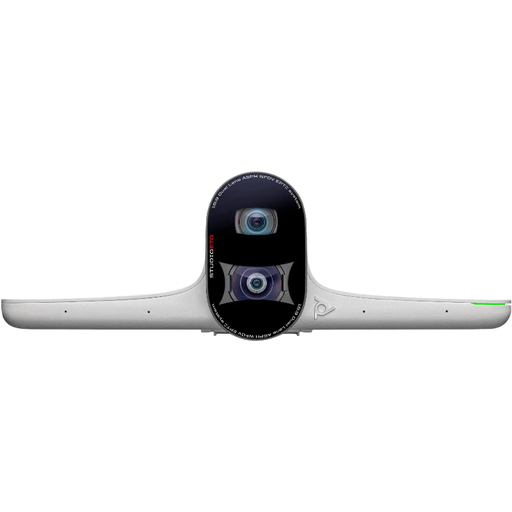
An option if you’re considering a smart camera; check in advance that the controls, mounting and connection suit the demonstration you want to give.
 No image available
A webcam option for a demonstration with spoken commentary and materials on screen; check that the chosen position works with your work surface.
The product name lists 4K UHD, 8 MP, autofocus, two built-in microphones and a privacy cover.
 No image available
A webcam option for talking and demonstrating from a computer; check that the features listed suit your tabletop setup.
The product name lists a 4K webcam for PC and Mac, a 1/2-inch sensor, auto-framing, HDR, a microphone with AI noise reduction and gesture control.
Resolution alone won’t tell you. First measure your work surface and check the framing, focusing distance, white balance and lighting. IPEVO lists a maximum capture area and up to 30 frames per second at Full HD for the V4K; this doesn’t determine how accurately your paint colours will appear.
Point an adjustable document camera at the work surface if your hands and mixing pots are the main focus, and check in your video app that the USB camera is selected. With the Facecam MK.2, keep your materials within Elgato’s stated focusing range of 30–120 cm; for uncompressed 1080p60, Elgato specifies USB 3.0.
No, audio features vary by model. Elgato doesn’t list a built-in microphone for the Facecam MK.2, while Logitech lists two microphones for the C920s. Check whether your camera records audio or whether you’ll need a separate audio device.
According to the Dutch government, when you buy online from a business, you generally have 14 days to change your mind, although there are exceptions. Your statutory rights if a product is faulty are separate from any additional guarantee offered by the seller.
Not automatically. According to the Dutch Data Protection Authority, identifiable people in an image are personal data; the exception for purely personal or household use doesn’t apply when images are shared more widely. You’ll therefore need a legal basis under the GDPR to publish them, which in most cases means consent. Keep others out of shot if you haven’t made the necessary arrangements.