
Teacher in a dimly lit room
Runs conversation exercises from a fixed workspace and wants facial expressions to remain visible. They’re comparing extra lighting with automatic light correction.


Compare a webcam with built-in lighting against models that adjust to the available light. Also check whether the microphone suits your teaching set-up. A fixed workspace may only need a fixed frame, while if you move around during exercises, you may also want to look into framing and tracking. Manufacturers’ specifications don’t show how a webcam performs in your room, so assess the picture and sound using your own lighting and video-calling app.
Runs conversation exercises from a fixed workspace and wants facial expressions to remain visible. They’re comparing extra lighting with automatic light correction.
Helps learners practise pronunciation and taking turns, and wants to know how the microphone sounds in their own teaching set-up.
Stands up or changes position and wants to find out whether framing or tracking can keep their face in view.
In low light, compare how the light actually falls on your face with what extra lighting or light correction could do for your teaching space. Then consider the microphone, movement in the frame and the privacy features of the exact model. The percentages indicate which purchasing need may matter most to consumers in this teaching situation.
| What to consider | What to look for | Who is this important for? |
|---|---|---|
| Keeping your face visible | Compare built-in lighting with automatic light correction, and test the picture in your own teaching space. | If I teach in low light, I want facial expressions to be easy to see. Around 36% of consumers give visible facial expressions top priority. |
| Making speech easy to understand | Test the microphone in your video-calling app and check how its pickup works when you move around. | For pronunciation practice and taking turns, I want my voice to come across clearly. Around 29% of consumers prioritise clear speech. |
| Staying in the frame | Check the viewing angle you need and whether framing or tracking needs to be enabled. | If I stand up during a role-play, I don’t want to go out of frame. Around 21% of consumers say staying in the frame while moving is their main need. |
| Privacy outside lessons | Check whether the exact model has a lens cover, and agree on recording arrangements when teaching through an institution. | When I’m not using the camera, I want to be able to cover the lens and know what happens to any recordings. Around 14% of consumers give privacy features top priority. |
Resolution alone doesn’t tell you how much light falls on your face. The models reviewed use different approaches, such as built-in lighting or image correction.
Compare the picture in the conditions you actually teach in, rather than looking only at the stated resolution.
Anker warns that the voice may be suppressed or distorted on the PowerConf C200 if a moving speaker goes outside the directional microphone’s pickup area.
Test speaking both sitting down and standing up, and check whether a different pickup direction would work better for your lessons.
The Razer Kiyo with ring light and the Razer Kiyo V2 X are different models. The Kiyo V2 X product listing doesn’t prove that it’s the original Kiyo.
Check the full model name and specifications before associating a product with a particular feature.
The Brio 500 is worth comparing for a fixed teaching space where automatic light correction is useful.
The PowerConf C200 is worth considering if you want to adjust the viewing angle and microphone pickup.
The original Kiyo is worth looking into if built-in lighting is important to you.
The Facecam MK.2 is worth considering if you want to explore manual image controls and HDR in high-contrast lighting.
The Tiny 2 Lite is worth looking into if you move around the room during exercises.
These products are suited to using a webcam for online conversation lessons. Compare the specifications listed and check the lighting, microphone and framing in your own set-up.
 No image available
This webcam may suit you if you want to adjust the picture settings to match your teaching set-up.
The product name lists 1440p/1080p at 60 FPS, USB and the Quartz colour. This is the Kiyo V2 X, not the original Kiyo with ring light.
 No image available
This model may suit a teaching space where you’re looking for a webcam with a microphone for video calls.
The product name lists Full HD 1080p and USB Plug & Play.
 No image available
This model may suit you if you want to compare autofocus and a lens cover alongside a suitable microphone.
The product name lists a Sony IMX363 sensor, PDAF autofocus, dual microphones, a lens cover, a 75° viewing angle and USB-A/USB-C.
 No image available
This model may suit a teaching set-up where you want to compare a wide viewing angle and a lens cover.
The product name lists 4K, a 99° viewing angle and a privacy cover.
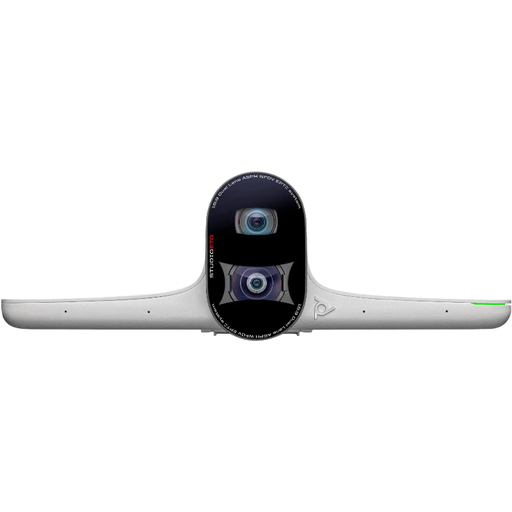 No image available
If you move around during exercises, check that the camera you choose offers framing and tracking suited to your teaching style.
The installation instructions mention mains power and HP Poly software or drivers; check that these suit your set-up.
Not necessarily. First check the lighting on your face, speech clarity and video mode in your set-up. A stated resolution doesn’t prove that a webcam performs well in low light. For the Elgato Facecam MK.2, uncompressed modes also require USB 3.0.
Check the picture in the lighting you’ll be teaching in, then select the right camera and microphone in your video-calling app. Anker describes how to select devices for the PowerConf C200; check the software features for other models individually.
Check your selected microphone and pickup direction, and test your entire route before the lesson. Anker warns that the directional microphone mode on the PowerConf C200 may suppress or distort a voice outside the pickup area.
You don’t need an extended warranty to receive your statutory rights. ACM ConsuWijzer explains that statutory rights exist alongside any manufacturer’s or seller’s warranty, and in the Netherlands there is no fixed two-year period. What you can reasonably expect from a product depends on the product and normal use.
This requires an assessment of the privacy risks and clear agreements. The Dutch Data Protection Authority advises schools and universities to agree on recording, informing people, storage and deletion. Whether a DPIA is required depends on the privacy risk of the specific processing; these rules for schools do not automatically apply to every private lesson given by an independent tutor.