
Colour-focused demonstrator
You want to compare mixing stages in consistent lighting and control the white balance and exposure, not just get a higher resolution. Logitech and Elgato describe adjustable image controls for this purpose.


First, decide how you’ll frame the mixing surface and make sure the lighting is manageable. Then adjust the white balance and exposure, and compare the image with the colours on the table. A camera with a desk mode is useful if you want to switch from presenter to tabletop during a demonstration, while a separate mount gives you more freedom for a fixed setup. Check the focusing distance, connection and framing: specifications and colour claims don’t prove that pigments will look true to life under your lighting.
You want to compare mixing stages in consistent lighting and control the white balance and exposure, not just get a higher resolution. Logitech and Elgato describe adjustable image controls for this purpose.
You switch between yourself and the mixing table as you explain, and want to quickly set the camera to a useful angle. Logitech and Insta360 describe features that let you temporarily show a work surface.
You work close to your materials in a space shared with others. Focusing distance and the ability to keep identifiable bystanders out of shot are factors to consider.
Start with the camera angle and lighting, then choose image settings, focusing range and privacy measures to suit your workspace.
| What to consider | What to look for when buying | Who is this important for? |
|---|---|---|
| Consistent mixed colours | Check whether you can adjust the white balance and exposure. Make a test recording under the lighting you’ll actually use. | If I want to compare mixing stages side by side, I don’t want changing light or automatic settings to affect the comparison. Around 36% of consumers give colour control their highest priority. |
| Framing the mixing surface | Test whether your hands, table and materials all fit in the shot. Compare a desk mode viewed from the screen with a separate mount. | When I want to show my hands and palette as I explain, the frame needs to capture the mixing without me having to reposition the camera each time. Around 29% of consumers prioritise showing the work surface. |
| Focus at working distance | Measure the distance to the nearest and furthest materials, then compare it with the focusing range. Also check which connection is needed for your preferred video output. | If I hold a brush or colour swatch close to the lens, I want to know whether it will stay in focus at that distance. An estimated 21% of consumers give sharp detail at working distance their highest priority. |
| Privacy and spoken explanations | Check the entire frame and whether the camera has a built-in microphone. A lens cover blocks the image when the camera isn’t recording. | In a shared studio, I want to show my work surface without accidentally recording identifiable images of others, and make sure my explanation is easy to follow. Around 14% of consumers prioritise privacy and simplicity. |
A resolution specification or manufacturer’s claim won’t show how your pigments will look under the lights in your studio.
Test the same colours under your final lighting setup, and keep the image settings consistent when comparing mixing stages.
Elgato doesn’t list a built-in microphone for the Facecam MK.2.
Check the audio input on the setup you plan to use before scheduling a demonstration.
You’ll need a separate audio solution to record spoken explanations with this model.
The MX Brio could suit demonstrations where you switch between yourself and the work surface.
The Link 2 offers DeskView for temporarily filming the work surface from the screen position.
The Facecam MK.2 is designed for a separately mounted setup, with image settings available through Camera Hub.
The Taxon QHD is worth considering if you need autofocus, a desk stand and a physical privacy cover.
These Joybuy products are suited to colour-mixing demonstrations where you want to frame the work surface, focus on it or adjust the image settings.
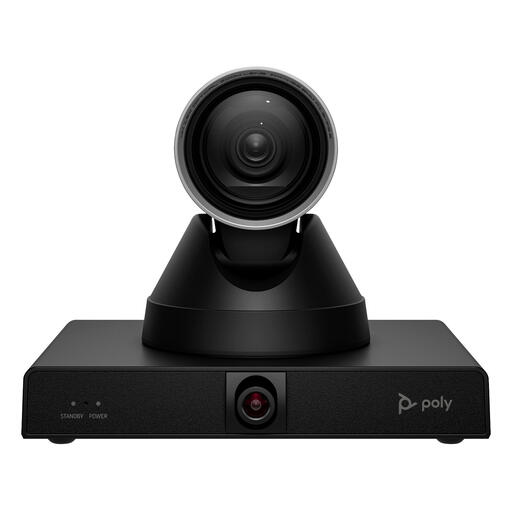 No image available
The listed pan, tilt and zoom functions and optical zoom could be useful if you want to adjust the framing of a demonstration.
HP Poly product information lists 4K, up to 60 fps and 12× optical zoom. It also states that the camera can be used as a video source in meeting software. According to the product information, it weighs 1.79 kg; check that your display, tripod or ceiling mount can support this weight.
 No image available
This version could suit a setup where autofocus and a physical privacy cover are important.
Philips lists autofocus, dual built-in microphones and a privacy cover for this version.
 No image available
DeskView and autofocus could be useful if you want to show the work surface temporarily and film materials at varying distances.
Insta360 product information lists PDAF autofocus and adjustable white balance from 2000–10000 K. According to the product information, this version isn’t compatible with ARM-based Windows systems.
 No image available
This camera could suit a temporary work-surface demonstration where you need autofocus and adjustable white balance.
Insta360 product information lists DeskView, PDAF autofocus and adjustable white balance from 2000–10000 K.
No. Resolution alone doesn’t determine how colours look under your lighting. Make a test recording with the lighting you plan to use, and check the white balance and exposure. Don’t treat a manufacturer’s claims about colour accuracy as a measurement of how your paint will look.
That depends on the camera, the mount and the distance to your workpiece. Elgato lists a 1/4-inch mount and fixed focus of 30–120 cm for the Facecam MK.2, so measure the distance at the intended mounting position. Insta360 describes DeskView for temporary use from the screen, without a separate overhead mount.
For online consumer purchases, ACM ConsuWijzer says you’ll generally have a cooling-off period, with some exceptions. This period lasts until 14 days after delivery. You’re also entitled to a product that works properly in the Netherlands. The Dutch government states that there’s no fixed statutory guarantee period; if there’s a fault, contact the seller.
Not without considering the circumstances and the applicable privacy rules. According to the Dutch Data Protection Authority, images of identifiable people are personal data; a legal basis under the GDPR is needed for filming and publishing for business purposes. The applicable basis depends on who is filming and how the images are used. Where possible, keep others out of shot and assess the situation before streaming or publishing.