
Demonstrating cards up close
You want viewers to be able to follow the cards and your moves up close. So start by checking the distance between the camera and the playing area, and make sure the image stays sharp at that distance.


Start with a camera angle that shows the whole playing area, then check that the cards stay in focus from that distance. A higher resolution alone won’t correct a poor angle or an unsuitable focusing distance. A tilting webcam can be useful if you switch between showing your face and the desk, while a fixed setup may give you more control. Also check the lighting, connection and any extra mounting equipment your setup requires.
You want viewers to be able to follow the cards and your moves up close. So start by checking the distance between the camera and the playing area, and make sure the image stays sharp at that distance.
You have little permanent space for equipment but still want a useful overhead view. The mounting options and tilt range will help determine which setup works for you.
You switch between showing your face, hands and playing area, or move beyond a fixed frame. Consider frame rate, camera presets and tracking, without assuming these features will make every trick easier to see.
For shoppers looking for a webcam for card tricks in a student room, each row shows a possible top priority; the percentages are estimates for this specific situation.
| Buying consideration | What should you look for? | Who might this matter to? |
|---|---|---|
| Focus at card distance | Measure the distance to the playing area and check the focusing range; test autofocus on the cards. | If I want the cards to stay sharp at my actual recording distance, I start by checking the focus distance and taking a test shot. Around 29% of shoppers make sharpness their top priority. |
| A useful angle on a small desk | Check the tilt range and mounting options, and whether a tripod will fit on your desk. | If I want to show my hands and the playing area without filling my workspace with equipment, I look at where the camera can go. Around 23% of shoppers prioritise their desk setup. |
| Enough light on the playing area | Check the image under the lighting you’ll actually use, and look out for shadows cast by your hands. | If my hands cast shadows over the cards, I first want to know whether the playing area will remain clearly visible. Around 18% of shoppers make lighting their top priority. |
| Hand movements and changes of framing | Compare the stated frame rate and test tracking or saved camera presets with your own framing. | If I often switch between my face, hands and table, I look at how the camera frames those movements. Around 18% of shoppers prioritise movement or changes of framing. |
| Equipment you’ll need | Check whether you’ll need separate mounting or audio equipment, and whether the connection is compatible with your computer. | If I want to keep the setup simple, I factor in everything I’ll need besides the camera itself. Around 12% of shoppers prioritise any extra equipment they’ll need. |
A high stated resolution doesn’t guarantee sharp cards if the lens won’t focus at your recording distance or the playing area is poorly lit.
Check the recording distance, focus and lighting first. Then compare resolution and frame rate.
On a small desk, there are only so many places you can position the camera. Tilt and mounting options vary by model.
Test the camera angle you have in mind and check what’s included with the exact version you’re buying.
Elgato points to other equipment for audio with the Facecam MK.2. Trust lists a USB-A-to-USB-C adapter with the Teza.
Compare the complete setup: the camera, its connection and how you’ll record audio.
For the MX Brio, Logitech highlights Show Mode, which lets you tilt the camera towards your desk. The C920s PRO HD is a Full HD model with autofocus.
Trust lists 4K, autofocus and an included tripod for the Teza. This could be useful if you want to position the camera away from the edge of your screen.
According to Elgato, the Facecam MK.2 is designed for a dedicated recording space, with image settings and 1080p at 60 fps.
For the Tiny 2 Lite, OBSBOT lists hand tracking and preset camera modes. These options could be useful if you switch between demonstration positions.
These webcams are suited to a desk setup for demonstrating card tricks. Focus on sharpness, positioning and the extra features you actually need when comparing them.
 No image available
Autofocus could be useful if the distance between the camera and the cards changes.
The product title lists 4K UHD, 8 MP, autofocus, two built-in microphones and a privacy cover.
 No image available
A clip-on mount could work if you want to position the webcam on a screen.
The product title lists 2K QHD, a clip-on mount and a noise-cancelling microphone.
 No image available
Worth including in a comparison if you’re looking for a stated 4K resolution at 30 fps.
The product title lists 3840 × 2160 pixels and 30 fps.
 No image available
This version could suit you if you’re looking for a webcam with video and framing features; check that it’s compatible with your computer.
The product title lists 4K, a 1/2-inch sensor, Auto-Framing, HDR and gesture control. According to the product information, this model isn’t compatible with ARM-based Windows systems.
 No image available
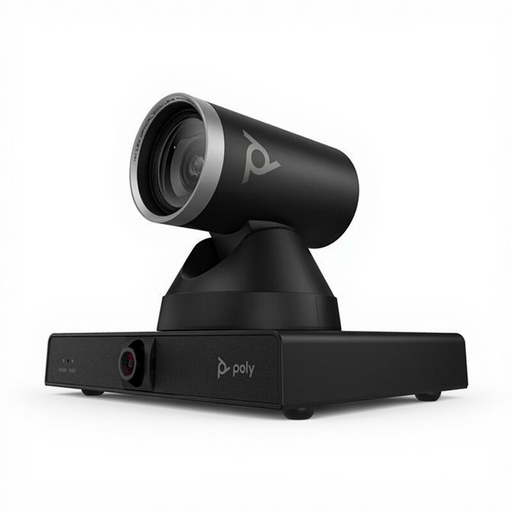
Consider this model only if your desk can accommodate the camera’s size and weight.
The product title lists 4K MPTZ and 12x optical zoom. The product information gives a weight of 1.79 kg, so your mount must be able to support it.
Measure the distance from where you plan to position the camera to the playing area, then compare it with the stated focus range. Elgato lists a fixed focus of 30–120 cm for the Facecam MK.2. For models without a stated range that suits your setup, check sharpness at your intended distance.
Check that the camera can be positioned steadily to point at the playing area, that its connection is compatible with your computer and that your recording app displays the image you want. Elgato states that the uncompressed modes on the Facecam MK.2 require a USB 3.0 connection. For the Tiny 2 Lite, OBSBOT explains how to set up camera presets using OBSBOT Center.
According to the Netherlands government, you’re entitled to a product that works properly in the Netherlands, and you can contact the seller if there’s a problem. There’s no fixed statutory guarantee period in the Netherlands; the product’s expected lifespan and the circumstances are taken into account. Many online purchases also come with a 14-day cooling-off period, although exceptions apply.
Not necessarily. The Dutch Data Protection Authority explains that recognisable people in images count as personal data. Images shared only with a very limited group may fall under the household exemption. That exemption doesn’t apply to wider publication, which requires a lawful basis under the GDPR. If possible, film only the playing area, or check that you have permission from anyone who can be recognised before publishing.