
Weaver with a wide work surface
You film on a larger loom and want hands and threads to stay visible as they move through the frame. You need room to set up lights out of shot.


For a wide weaving area with room to position lights out of shot, adjustable panels or a COB light with suitable diffusion could work well. For a small table, a compact desk light may be more practical. Canon Europe describes separate lighting for the subject and background as a principle of high-key photography, but this is not a test of continuous video lighting. So, assess the weaving, white background, yarn colours and moving footage in a test recording. Nikon recommends setting the white balance to suit the light you are using, while Canon Europe warns that some LED light sources can cause banding with an electronic shutter.
You film on a larger loom and want hands and threads to stay visible as they move through the frame. You need room to set up lights out of shot.
You want to capture subtle differences between yarns clearly. A test recording and manual white balance can help you assess your own setup.
You share your work surface with your camera and materials. In that case, a clamp or compact mount may matter more than an extensive floor setup.
Choose this if: you want to light a wide loom and have room for two light stands.
Trade-off: you’ll need more space and equipment to set everything up. Diffusion softens shadows, but it won’t guarantee a white background while preserving every detail.
Choose this if: you want to shape the light and have room for the light, modifier and mount.
Trade-off: a softbox or other light modifier may be sold separately. Lux figures quoted with a reflector don’t predict how much light will reach your weaving after diffusion.
Choose this if: you film at a small table and want to keep the floor around your workspace clear.
Trade-off: one compact panel may not cover a wide work surface or the white background completely. Also check that the clamp and power supply suit your table.
| What to consider | What should you check? | Who is this most relevant to? |
|---|---|---|
| White background and weaving detail | Check whether you can direct or adjust your key light and any background lighting separately. Assess pale threads and the background together in a test recording. | I want to keep the background bright without losing detail in pale threads. Around 36% of consumers prioritise a white background and detail. |
| True-to-life yarn colours | Set the white balance to suit the light you’re using and make a test recording with your own yarns. | When I show yarns, I want the colour differences to remain clear against white. Around 29% of consumers put yarn colour first. |
| Hands and movement in shot | Check the diffusion and direction of the light; test using the camera settings and brightness you plan to use. | I want to follow the movements of hands and threads clearly. Around 21% of consumers prioritise seeing hands in motion. |
| Space, power and what’s included | Measure the space available and check the mount, power supply and any included light modifiers. | At a small table, I want to know whether the light, mount and power supply will fit without a fuss. Around 14% of consumers prioritise setup space and having everything included. |
A white background doesn’t automatically show whether hands and pale yarns still have enough detail.
Check both the weaving and the background in the same test recording, and adjust the lighting zones separately if needed.
The stated lux figures for the COB lights mentioned are measured at a specific distance and with a reflector. A light modifier and the width of your work surface will change the setup.
Only compare measurements taken on the same basis, and check which light modifier and mount are included with the version you’ve chosen.
You may need to buy a suitable light modifier separately, so check what your setup requires in advance.
Box contents vary by version. According to Elgato, the Elgato Key Light Air MK.2 needs a suitable USB-C power supply to reach its stated maximum brightness; this is not included.
Before buying, list the mount, power supply and light modifier you need, then compare this with the exact version on offer.
Depending on your setup, you may also need a stand, battery, softbox or suitable power adapter.
A stated colour-rendering value doesn’t prove how your yarns will look on camera. Canon Europe explains that some LED light sources can cause banding when using an electronic shutter.
Test the yarn colours and check for banding with your own camera and the settings you’ll use for filming.
The NL660 panel range is worth considering if you’re looking for adjustable lighting for a work surface.
The 100x S is a bi-colour COB light for anyone who wants to choose a suitable light modifier.
The Key Light Air MK.2 is designed for a compact desk with a suitable edge for the supplied clamp.
The FS-150B is a bi-colour COB option with a Bowens mount.
Joybuy picks for adjustable video lighting for a weaving demonstration, including a COB light and a compact ring light with a tripod.
 No image available
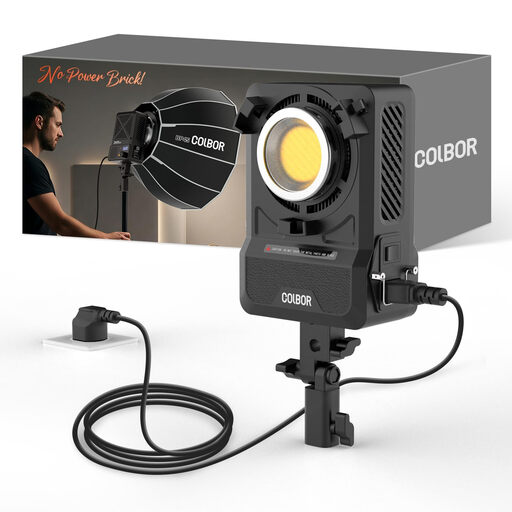
A COB option to consider if you want to set up the light with a suitable Bowens light modifier.
Adjustable range of 2700–7000 K; the product information lists CRI and TLCI 96+.
Features brightness control and a Bowens mount.
 No image available
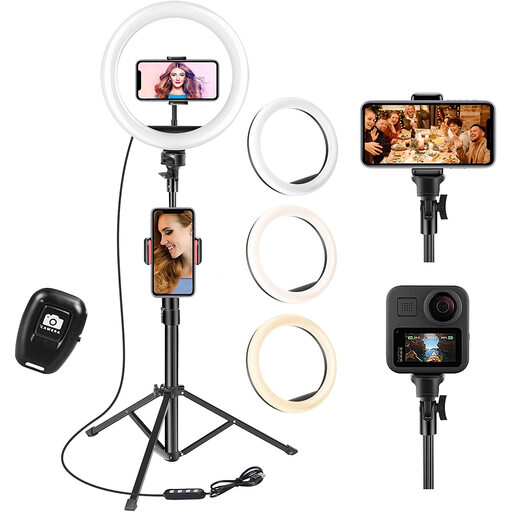
A compact light with a tripod to consider if you’re looking for a small filming setup. Check in a test recording whether the light covers your work surface sufficiently.
The product name specifies a 10-inch ring light, a 63-inch tripod and a remote control.
Lists three colour modes and ten brightness levels.
Start with a test recording in which the weaving is well lit. If you want a bright white background, check whether you can light and adjust it separately without losing detail in pale threads. Canon Europe describes separate background and key lighting as a high-key photography principle; it is not a video light product specification.
Set your camera’s white balance to suit the light you’re using, then check the yarns in a test recording. Nikon describes using a manual white balance setting for this; the controls vary from camera to camera.
It depends on the version and your setup. For the standalone NL660, NEEWER lists an adapter and diffuser, but an NP-F battery is sold separately. Elgato says that the Key Light Air MK.2 needs a suitable USB-C PD power supply to reach its stated maximum brightness; this is not included. Also check that the mount is stable and cables are kept away from your weaving.
For a consumer purchase, the Dutch government says you are entitled to a product that is fit for purpose; there is no fixed statutory guarantee period in the Netherlands. If a product is faulty, the retailer is your point of contact. A manufacturer’s guarantee is in addition to this right, not a replacement for it.
Record a test using your own camera, the brightness you intend to use and the settings you plan to use for the demonstration. Canon Europe explains that some LED light sources can cause banding when using an electronic shutter, so test the combination you’ll actually be using.