Start by considering the size of your weaving and where you can safely set up the light. Adjustable, softenable light makes it easier to assess your hands, threads and shadows on camera. A compact light is better suited to close-ups and a workspace you need to clear quickly; a larger panel or COB studio light needs more room and may require a separate light modifier. Record a test clip using the actual yarns, and check which EU product rules apply to the specific light and power supply.
Who is this guide for?
Weaving teacher filming a demonstration
If you’re demonstrating the steps, you’ll want both your hands and the threads to be clearly visible at the same time. Canon Europe describes using a key light and a less powerful fill light on the other side as ways to reduce shadows.
Maker showcasing textile colours
If you’re filming yarns and woven pieces, you’ll want the colours to look consistent from one shot to the next. The Journal of the American Institute for Conservation, in an issue available through the Smithsonian Institution, explains that LED lights with the same colour temperature can make textile colours appear different.
Filming in a shared workshop
If you’re filming alongside other workstations, you’ll need to consider space, cables and walkways, and be able to pack away your setup afterwards. Arboportaal stresses that artificial lighting should be installed in a way that avoids hazards and accidents.
What should you look for in a video light?
Compact panel or small battery-powered light
Best suited to: filming hands or threads close up, when you want to clear your workspace quickly afterwards.
Bear in mind: a small light source won’t necessarily illuminate the whole weaving evenly, so test the full frame.
Larger, adjustable LED panel
Best suited to: illuminating a larger area of your work surface, if you have a stable spot next to the loom.
Bear in mind: check whether a stand is included and that the setup won’t block a walkway.
COB studio light with a light modifier
Best suited to: a permanent filming spot where you can shape the light with a separate diffuser or softbox.
Bear in mind: you’ll need a suitable light modifier and extra setup space; check what’s included with the exact version.
| What to consider |
What to look for when buying |
Who it matters to |
| Keeping hands and threads visible |
Record a test clip with your hands moving and check that you can adjust the light’s direction and soften it if needed. |
If I’m filming my hands and threads at the same time, I want to follow the movements without my hands casting shadows over my work. Around 31% of consumers say visibility of the action is their top buying priority. |
| Keeping textile colours true to life |
Film the actual yarns under your intended lighting setup and assess the footage; a CRI rating alone doesn’t prove how your textiles will look. |
I want the yarn colours to look consistent from one shot to the next, so I’ll assess the test footage. Around 25% of consumers prioritise textile colour. |
| Space and a safe setup |
Measure the available space and check the mounting, stability and cable routing. Arboportaal advises positioning lighting so that it doesn’t create a hazard or cause an accident. |
If I share a workspace, I want to set up safely and clear the space again after filming. Around 25% of consumers say limited setup space is their top priority. |
| Power and uninterrupted filming |
Compare your recording time with the battery life at your chosen power setting, and test with the workshop lights on. Sony recommends trying a shutter speed of 1/50 or 1/100 second to address flicker in a 50 Hz environment. |
I want to finish a demonstration without interruptions caused by power issues or visible flicker. Around 19% of consumers say uninterrupted filming is their top buying priority. |
Common buying mistakes
-
Assuming a high CRI guarantees true-to-life yarn colours
Research into textiles shows that LED lights with the same colour temperature can still make colours appear different. A CRI figure alone therefore won’t tell you how your yarns will look on camera.
Record a test clip using the actual yarns and your full lighting setup.
-
Assuming a panel or COB light comes as a complete kit
What’s included can vary between versions. For example, a stand is only included with the NEEWER NL660 version that comes with a stand; the listed box contents for the amaran 100x S include a reflector, but not a softbox.
Before buying, compare the contents, mounting and power supply for the exact version.
You may need to buy a stand, softbox or battery separately to get the right setup; check which accessories are included with the version you’ve chosen.
-
Choosing a small battery-powered light as your key light without testing it first
The manufacturer describes the Ulanzi VL81 as a small rechargeable light. Its specifications don’t prove that one unit will illuminate the whole weaving evenly from your chosen filming distance.
Test the full frame with your hands moving before deciding whether you need an additional or larger light.
Brands to consider
NEEWER
The NEEWER NL660 is an adjustable bi-colour panel designed to sit beside your work surface.
- NEEWER lists a diffuser and mains adapter; a version with a stand is also available.
- NP-F batteries are not included. Check which version you’re choosing.
Godox
The Godox P260C Pro is a bi-colour panel with a diffuser and several power options.
- Godox lists a colour temperature range of 2800–6500 K and an average CRI/TLCI of at least 98.
- These are the manufacturer’s figures, not an independent colour test using the yarns you’ll be filming.
amaran
The amaran 100x S is a bi-colour COB studio light, for which you’ll need to choose a suitable light modifier separately.
- According to amaran, the light has a Bowens mount and the box includes a reflector.
- A softbox is not listed as included; the stated lux rating is with the reflector at 1 metre, not with a diffused setup.
SmallRig
The SmallRig RC 60B Lite Edition is a portable bi-colour COB light with a built-in battery.
- SmallRig lists 45 minutes of use at full power and 75 minutes in ECO mode.
- Softboxes are optional. Make sure you’re comparing the Lite Edition, not another version of the RC 60B.
Ulanzi
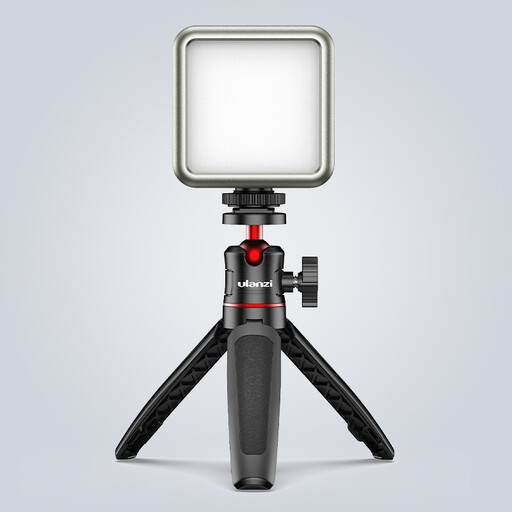
The Ulanzi VL81 is a small rechargeable light for close-ups or as supplementary lighting.
- Ulanzi lists a built-in 3000 mAh battery, a colour temperature range of 3200–5500 K and a cold shoe mount.
- These specifications don’t prove that one VL81 will illuminate an entire weaving evenly.
Elgato
The Elgato Key Light Air MK.2 is a panel with a desk clamp, suitable for a fixed workbench.
- Elgato says the clamp fits desks up to 6 cm thick.
- Maximum brightness depends on the power source; test whether the light will fit above the loom in your chosen position.
Joybuy products for compact lighting and COB setups
This selection of Joybuy products includes compact lights for supplementary or close-up lighting, as well as COB studio lights for setups using a suitable light modifier. Record a test clip to check whether your chosen light reaches the whole weaving.
 No image available
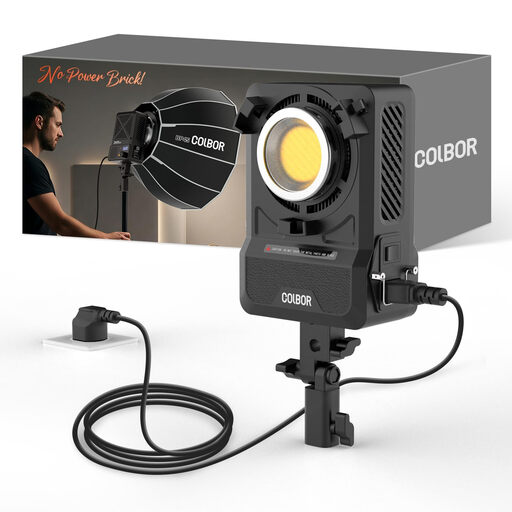
COLBOR 200W bi-colour COB studio light with Bowens mount
An option for a fixed studio setup where you can choose a suitable Bowens light modifier.
The product name lists bi-colour, a range of 2700 K–7000 K and a Bowens mount. Check which light modifier will suit your setup.
Joybuy
 No image available
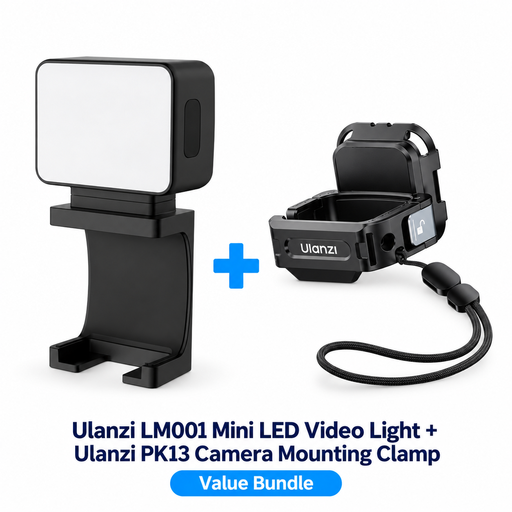
ULANZI LM001 Mini LED video light with PK13 clamp for DJI Osmo Pocket 3
The product description presents this compact light as supplementary lighting for indoor filming.
The bundle name lists a PK13 clamp for DJI Osmo Pocket 3; the description mentions a 500 mAh battery and magnetic mounting. Check that the clamp suits your camera setup.
Joybuy
 No image available
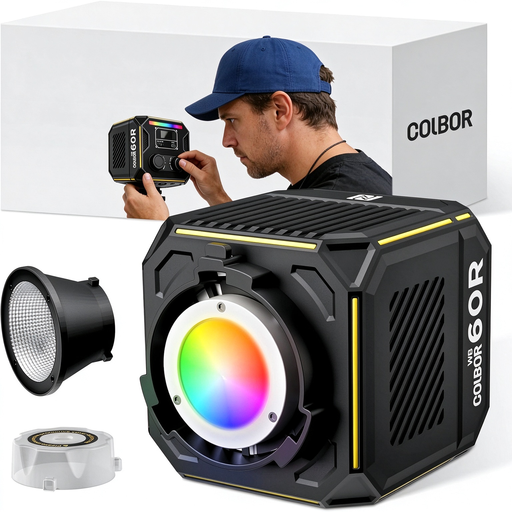
COLBOR 60W portable RGBCW COB video light with built-in battery
A portable COB option for a filming space where you want to move the lighting setup without relying on a fixed mains cable.
The product name lists a built-in 59 Wh battery, bi-colour from 2700 K–6500 K and full-colour control. Check which light modifier and mount you’ll need.
Joybuy
 No image available
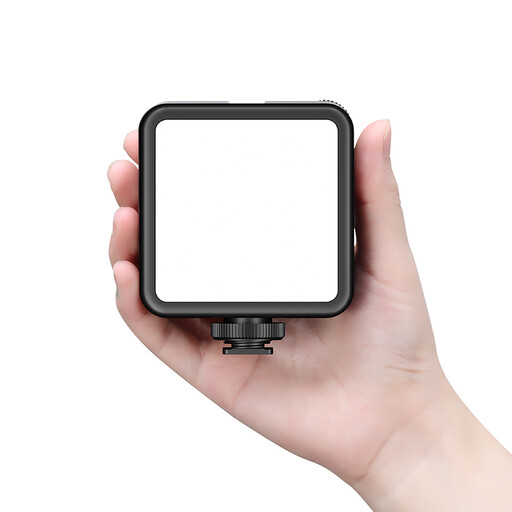
Ulanzi VL81 rechargeable LED video light, black
A compact option for close-ups or as an additional light; test whether it reaches the part of the work surface you want to illuminate.
The product description lists 81 LEDs, USB-C charging, a cold shoe mount and an adjustable colour temperature from 3200 K to 5600 K.
Joybuy
 No image available
ULANZI VL49 RGB video light with 2000 mAh battery
A compact option for macro or close-up shots; record a test clip to see whether this small light illuminates enough of the weaving.
The product name lists an adjustable colour temperature of 2500 K–9500 K; the description mentions a magnet on the back. Check that your chosen mounting spot is suitable.
Joybuy
Frequently asked questions
Do you need to buy two lights straight away?
Not necessarily. Start with an adjustable key light and check for moving hand shadows in a test clip. A fill light on the other side can reduce shadows, but you’ll also need another safe spot to set it up.
How can you keep yarn colours looking consistent while filming?
Test the yarns you’ll be using under the actual combination of workshop and video lighting, and keep your white balance setting consistent. Textile research shows that LED lights with the same colour temperature can make colours appear different, so a CRI specification alone isn’t a reliable enough check.
What can you do if the workshop lighting causes bands in your video?
Start by recording a test clip with all the lights on. Sony recommends trying a shutter speed of 1/50 or 1/100 second to address flicker caused by lighting in a 50 Hz environment; results depend on the camera and light source.
When does a video light need a CE mark?
That depends on which EU product rules apply to the specific light and power supply. According to Your Europe, CE marking is required when the applicable EU rules say it is; the manufacturer must determine which rules apply to that version.
Can you film and publish identifiable people in a shared workshop?
That depends on who is filming and why. The GDPR may apply if identifiable footage is used for business or made public, and you’ll need a valid legal basis; consent is one possible basis. The Dutch Data Protection Authority describes an exception for personal footage that stays private or is shared with a very limited group. Let the people involved know in advance and establish the legal basis for your recording.


