For a small computer desk, a wired USB headset with an adjustable microphone boom is a straightforward option, provided it’s compatible with your computer. Logitech describes these features on the H390 and H340, while HP Poly lists them for the USB-C version of the Blackwire 3320. If you already have suitable recording equipment and want to monitor your audio through the headset, consider a broadcast headset, but check the microphone and headphone connections on the exact version. Connection details alone won’t tell you how a recording will sound in your room.
Who is this suitable for?
Creator with a small computer desk
You record a spoken weather forecast at your computer and don’t want a separate microphone stand taking up desk space. Check the connection and whether you can position the microphone boom comfortably. Logitech and HP Poly describe wired headset versions with a microphone attached to the headset.
Creator with recording equipment
You already have a mixer or audio interface and want to monitor your voice through the headset. Check the microphone and headphone connections separately; Audio-Technica and RØDE describe different connection options for their models.
Creator in a noisy room
You want to know how much background noise will make it into your recording. Make a test recording in your own space: a manufacturer’s claim about calls isn’t an independent test of spoken recordings.
What should you look for when choosing?
Wired USB headset
A good fit if: you record on a computer with a compatible USB port and don’t want a microphone stand on your desk.
Bear in mind: how the cable will run across your desk, and the difference between USB-A and USB-C versions.
Broadcast headset with separate connections
A good fit if: you already have recording equipment with compatible inputs and want to monitor your audio as you record.
Bear in mind: the standard Audio-Technica BPHS1 has an XLR connection for the microphone and a 6.3 mm plug for the headphones; other cable versions may differ.
Headset with TRRS splitter cable
A good fit if: your connections are compatible with the cable supplied with the RØDE NTH-100M.
Bear in mind: RØDE says the cable separates the microphone and headphone signals. For an XLR microphone input, RØDE describes an adapter that supplies plug-in power.
| What to consider |
What should you check? |
Who might place more importance on this? |
| Clear voice audio |
Check whether the microphone boom is adjustable and make a short test recording using your own software. |
When I record a weather forecast, I want my voice to come through clearly and be able to listen back. Around 36% of consumers say clear speech is their top priority. |
| Connection |
Note the inputs on your computer or interface and check the plugs on the exact version. |
I want my headset to connect to my existing computer or recording equipment without finding out too late that the plug isn’t suitable. Around 29% of consumers put device compatibility first. |
| Desk space and cable |
Check where your computer or interface will sit and whether the cable can run along your desk. |
With limited desk space, I don’t want a separate microphone stand, and I need to be able to route the cable easily. Around 21% of consumers give most weight to clear desk space and cable routing. |
| Comfort and monitoring |
Check the fit and whether your recording device supports monitoring through the headphones. |
When I record several takes, I want the headset to feel comfortable and let me listen to my audio. Around 14% of consumers prioritise comfort and monitoring. |
Common buying mistakes
-
Assuming a microphone designed for calls guarantees recording quality
Product descriptions for models such as the Logitech H390 and Trust Ayda focus on calls. That doesn’t prove how a spoken weather forecast will sound in your room.
Make a test recording where you plan to speak, then listen back to both your voice and the background noise.
-
Assuming every headset connects directly to the same equipment
The standard Audio-Technica BPHS1 uses separate XLR and 6.3 mm connections. The RØDE NTH-100M has a different connection setup; for use with an XLR microphone input, RØDE describes a suitable adapter with plug-in power.
Compare your equipment’s plugs, available inputs and any power requirements with those of the exact headset version.
-
Confusing a manufacturer’s warranty with your statutory rights
According to the Dutch government, statutory guarantees in the Netherlands have no fixed time limit; a manufacturer’s warranty is an additional benefit.
Keep your proof of purchase and contact the retailer if a product is faulty.
Brands to consider
Logitech
The H390 and H340 are wired USB headsets for computer use. Check which USB plug you need for each version.
- For the USB-A version of the H390, Logitech describes in-line controls and an adjustable microphone boom.
- The stated uses focus mainly on calls and meetings; they aren’t an independent assessment of recording sound quality.
Audio-Technica
Audio-Technica says the BPHS1 is designed for broadcasting, making it most relevant if you already have compatible audio equipment.
- For the standard version, Audio-Technica specifies a cardioid dynamic microphone, closed-back earcups and a replaceable cable.
- The standard BPHS1 has separate XLR and 6.3 mm plugs; check the cable version before comparing connections.
RØDE
The NTH-100M combines headphones with a detachable microphone for uses that RØDE describes as including media and recording.
- RØDE documents a splitter cable for separate microphone and headphone connections.
- For an XLR microphone input, RØDE describes an adapter that supplies plug-in power; check that this connection setup is compatible with your equipment.
HP Poly
The Blackwire 3320 version reviewed is a wired stereo headset with USB-C and a USB-A adapter included.
- For this version, HP specifies a flexible microphone boom and on-ear ear cushions.
- If you’re looking at another Blackwire version, check the connection and included adapter again.
Trust
The Ayda USB-ENC is an on-ear PC headset with on-headset controls and a fold-up microphone.
- Trust mentions an adjustable headband and microphone muting when the microphone is folded up.
- The claim about reducing distracting noise relates to calls and isn’t an independent test of spoken recordings.
Headsets at Joybuy
This selection includes wired headsets with microphones for computer recording. Check that each model’s USB or 3.5 mm connection, and any included controls, are compatible with your device.
 Image unavailable
Logitech PC 960 USB
A wired USB headset for speaking on a computer without a separate microphone stand.
The product description mentions an adjustable microphone boom and in-line controls.
View at Joybuy
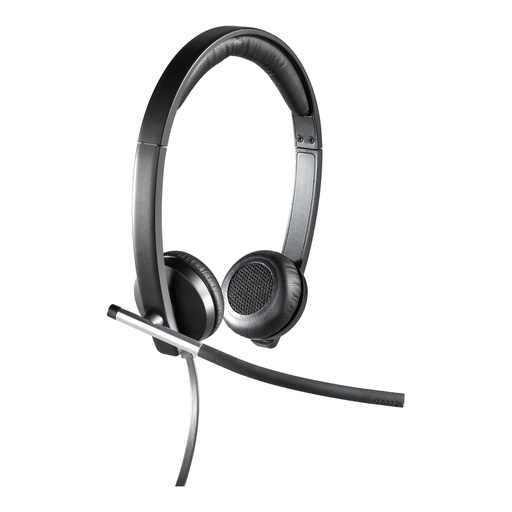 Image unavailable
Logitech H650e Stereo Wired
A wired headset with a microphone for computer use, without a separate microphone stand.
The product description mentions a USB connection and in-line controls.
View at Joybuy
 Image unavailable
Logitech H340 USB Headset Black, Wired
A wired USB headset for computer recording when you don’t want to use a separate microphone stand.
The description mentions an adjustable microphone boom and volume and mute controls.
View at Joybuy
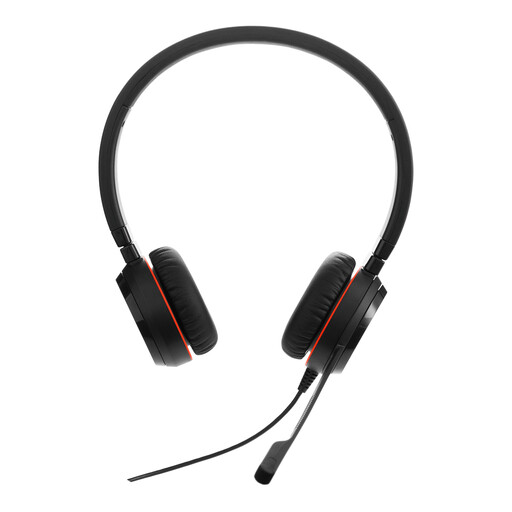 Image unavailable
Jabra EVOLVE 30 II MS Stereo
A wired headset with a microphone for a setup where you don’t want a separate desktop microphone.
The description mentions a 3.5 mm connection and an included USB controller. The stated cable length is 0.95 m.
View at Joybuy
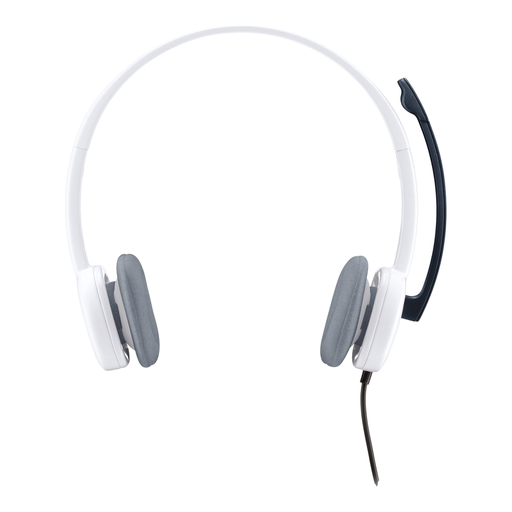 Image unavailable
Logitech H150 white, 981-000350
A wired headset with a microphone for a device with a compatible 3.5 mm combo jack.
The description lists an adjustable, rotatable microphone boom and a 1.8 m cable. If your device has separate headphone and microphone ports, you may need a splitter; the description says one isn’t included.
View at Joybuy
Frequently asked questions
Can I connect any broadcast headset straight to my laptop?
No. First check the plugs and inputs on the exact version. The standard Audio-Technica BPHS1 has separate XLR and 6.3 mm plugs, while the Logitech H390 version described uses USB-A. Compare these connections with those on your computer or audio interface.
How do I connect the RØDE NTH-100M to record and listen at the same time?
According to RØDE, the supplied splitter cable separates the microphone and headphone signals into two 3.5 mm plugs. For use with an XLR microphone input, RØDE describes a suitable adapter that supplies plug-in power; check that this connection setup works with your mixer.
What should I check after connecting my headset?
Select the right microphone input in your recording software, position the boom and listen back to a test recording. Check your voice, background noise and any cable noise.
What are my rights when buying online in the Netherlands?
When you buy from a business at a distance, you usually have a 14-day cooling-off period, with some exceptions. The Dutch government also says you’re entitled to a product that works properly, and that statutory guarantees in the Netherlands have no fixed time limit. Check the relevant sales and returns terms too.
Do I need permission to record my spoken weather forecast?
The Dutch Data Protection Authority’s guidance on images doesn’t, by itself, provide a definitive answer for every audio recording. If you also record other identifiable people or publish information about them, consider the privacy implications separately.


