
Vandaag of morgen in huis

Kwaliteit gegarandeerd

Welkomstaanbiedingen ontgrendelen: GRATIS bezorging | Tot 80% korting | Gratis 30 dagen JoyPlus-proefperiode
Download de app
A wearable hands-free breast pump can be useful when you want to express milk while working from home, travelling or caring for your baby. However, models vary considerably in fit, controls, battery life and cleaning. A low price or a claim about “natural” pumping doesn’t tell you much about how a pump will perform day to day.
As Joybuy Product Recommendation Officer, I focus on the product details that matter in practice. This can help you distinguish marketing claims from specifications you can check.
A 24 mm breast shield won’t automatically be the right fit. The wrong size can lead to a poor seal, leaks or discomfort. Check which sizes are included and whether separate inserts are available.
A model with several sizes, such as 17, 19, 21 and 24 mm, gives you more options to find the right fit. Also consider the shape of the shield and how your nipple sits in the tunnel.
A wireless breast pump usually doesn’t need to be plugged in while you’re expressing, but its battery still needs charging. Check:
A fully wearable model usually sits inside your bra. With a system that has a separate motor, the cups are lighter, but the tube and motor may get in the way when you move around.
Milk comes into contact with parts such as the breast shield, valve, membrane and collection container. These parts need to be cleaned after use according to the instructions. An electric pump must not be submerged in water.
Don’t just look at the number of parts. Also check how long they take to dry, whether silicone parts can be replaced and whether they’re dishwasher-safe. A BPA-free breast pump made with food-grade silicone may have a clear material specification, but always check exactly which parts are BPA-free.
An electric breast pump with multiple suction settings lets you adjust the intensity. More settings don’t automatically mean better performance. The main benefit is being able to gradually find a level that feels comfortable for you.
Many models have a stimulation phase and an expression phase. Some also have a mixed mode. The Momcozy M5 product description lists three modes and nine suction settings. The Momcozy M9 offers up to fifteen adjustable suction settings and app control.
Don’t use a higher setting just because it’s available. Stop or lower the setting if you feel pain or ongoing discomfort, and follow the instructions. For personal advice about expressing milk, speak to a midwife, lactation consultant or doctor.
A good seal helps reduce loss of suction and leaks. Check whether the product has a double-sealed breast shield, extra inserts or different sizes.
Also check the capacity of the collection container. A larger container can be useful for longer sessions, but it can make a wearable pump heavier. A more compact breast pump for on the go fits more easily under clothing, while a heavier model may feel less discreet.
“Quiet” is a relative term. The Momcozy M9 product description mentions quiet operation. This is a claim made by the brand, not a guarantee that the pump will be inaudible in every setting. With a quiet breast pump, the motor noise, fit and sound of the valves all play a part.
Compare the weight of the cups and motor, too. The Medela Solo, for example, lists a collection cup weighing 76 grams. The Medela Freestyle Mini uses a separate motor with a clip and lists up to two hours of use per charge. Check the latest instructions and packaging for each model, as the accessories included may vary between versions.
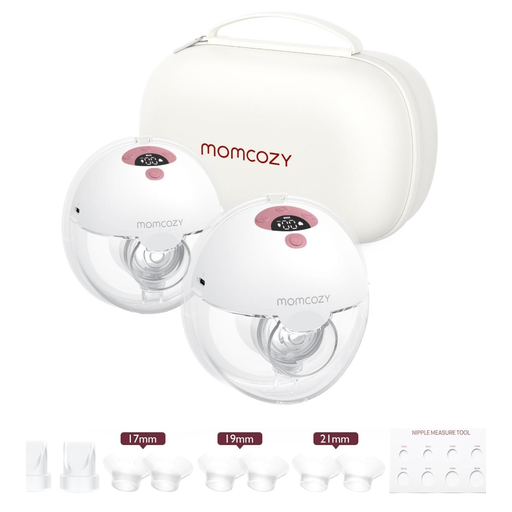
Why it suits this profile: A practical entry-level option if you want to express hands-free and wirelessly without needing app controls. This model is sold as a single pump.
The product information lists four flange sizes, from 17 to 24 mm, so you’re not limited to just one standard size.
Three modes, nine suction settings, USB-C charging and food-grade, BPA-free silicone according to the product description.
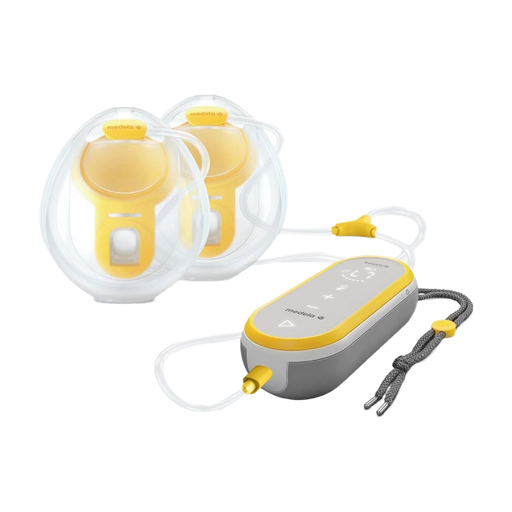
Why it suits this profile: A good option if you’re considering a double breast pump with a separate portable motor system and app connectivity.
The product description lists three parts per cup, which can be cleaned by hand or in the dishwasher.
Double pumping, transparent cups, three parts per cup and connection to the Medela Family app, according to the product information.
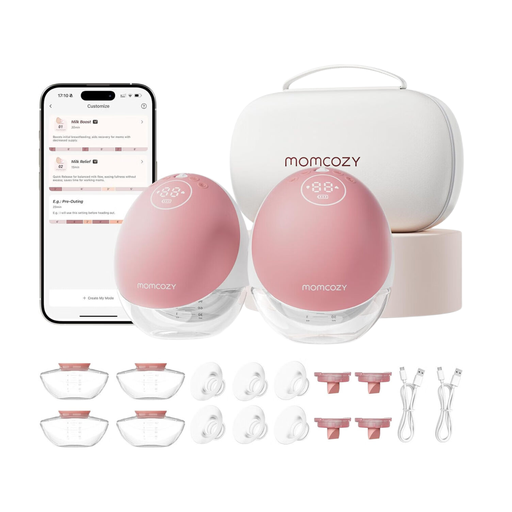
Why it suits this profile: For anyone who wants to express from both breasts at once and values smartphone controls while working or getting on with everyday tasks.
The set includes 17, 19 and 21 mm flange inserts alongside the 24 mm cups, so you can find a more precise fit.
Two pumps, app controls, up to fifteen suction settings, multiple modes and a storage case, according to the product description.
We’ve put together a complete, up-to-date list of products that meet these strict selection criteria and the applicable European safety regulations.
After each session, take apart all the parts that have come into contact with milk. Wash them with warm water and washing-up liquid according to the instructions, then leave them to dry completely before reassembling the pump. Keep the motor, charging port and cable away from water. Before each use, check the valves, seals and silicone parts for signs of wear.
Its lifespan depends on how often you use it, how well you maintain it, how you charge it and whether replacement parts are available. Silicone parts may wear out sooner than the motor. Some product descriptions recommend replacing silicone components after around three months, or as soon as performance declines. Always follow the replacement schedule in the instructions for your model.
No. A breast pump with an app can track sessions or let you manage settings from your phone, but its main purpose is still to express milk. If simplicity matters to you, focus instead on physical buttons, clear suction settings, fit and cleaning. An app is most useful if you want to track your data or control the pump remotely.
