
Vandaag of morgen in huis

Kwaliteit gegarandeerd

Welkomstaanbiedingen ontgrendelen: GRATIS bezorging | Tot 80% korting | Gratis 30 dagen JoyPlus-proefperiode
Download de app
Choosing a waterproof outdoor jacket might seem straightforward at first. Yet many buyers fall into the same traps: a jacket that performs well only in light rain, a fit that leaves no room for a fleece, or a breathable rain jacket that still feels clammy when you’re active. For cycling, walking and camping trips in the Netherlands, waterproofing isn’t the only thing that matters. Ventilation, freedom of movement and care are important too.
In this guide, I’ll explain, as a Joybuy Product Recommendation Officer, which specifications to check before buying a waterproof outdoor jacket. Then I’ll share a few options for different needs.
“Waterproof” on its own says little about the conditions a jacket is suited to. Check whether the product description gives a hydrostatic head rating, a membrane or another measurement. Pay attention to the seams, zips and adjustable cuffs too. A jacket may use waterproof fabric but still let water in through poorly sealed seams.
A fully sealed jacket keeps rain and wind out, but it also needs to let moisture escape from the inside. High moisture vapour transmission is particularly useful when you’re walking briskly, cycling or heading uphill. So look for an MVTR rating, ventilation zips or a mesh lining. Without this information, “breathable” is mostly a marketing claim.
A waterproof walking jacket is often worn over a shirt or fleece. A fit that’s too tight restricts your movement and makes insulating layers less useful. Measure your chest, shoulder width and sleeve length using the size guide for the specific model. With a hardshell jacket, sizing up may be practical if you wear a thick mid-layer in colder months.
Hydrostatic head is measured in millimetres of water pressure. A higher figure indicates greater resistance to water pressure under the stated test method. For example, the PELLIOT 3-in-1 models specify 35.900 mm H₂O according to JIS. This is a product specification from the product information; actual protection also depends on wear, care, and the construction of the zips and seams.
Also check:
For breathable rain jackets, moisture vapour transmission is often shown as MVTR, for example in grams per square metre per 24 hours. The PELLIOT fleece-lined models specify 16.000 g/m²/24 hours according to JIS. This is a technical value from the product description, not a guarantee that you’ll stay dry in all conditions.
Underarm ventilation zips are useful for intense activities. The yellow PELLIOT model features longer openings under the arms, so you can adjust airflow during a strenuous walk.
A hardshell jacket is usually designed as a protective outer layer. You’ll need a fleece, down jacket or thermal mid-layer for warmth. A 3-in-1 outdoor jacket combines an outer layer with a removable lining. You can wear the layers separately or together, which is useful when temperatures vary.
The product information for certain PELLIOT models specifies 40.000+ abrasion cycles and a thermal inner lining. Treat this as a stated product test result, not a prediction of the exact lifespan. Abrasion from rucksack straps, mud, incorrect washing and prolonged exposure to sunlight can all affect performance.
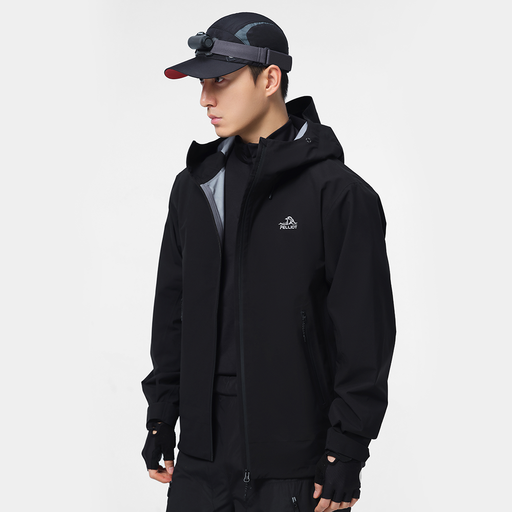
Why it suits this profile: This unisex outdoor jacket is a good option for everyday wear, short walks and commuting when you’re looking for a lightweight protective layer.
The product information mentions water- and wind-resistant properties, a breathable technical lining and durable fabric, rather than making only a general claim about rain protection.
Available in several sizes; the size guide gives a chest measurement of 112 cm for size S. The outer fabric is described as a nylon or polyester blend with waterproof lamination.
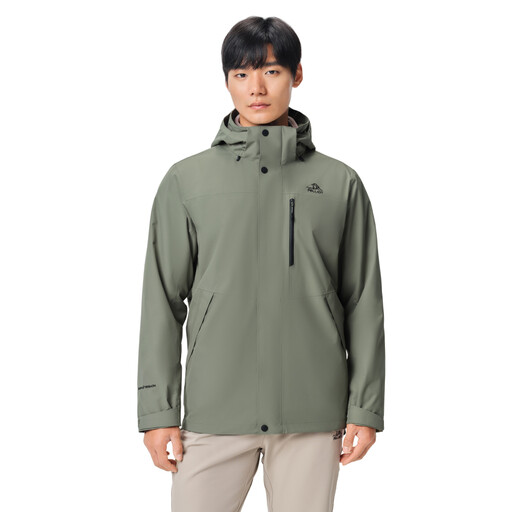
Why it suits this profile: A practical choice if you want one jacket for camping, hillwalking and your daily commute.
The 3-in-1 design means you don’t need a separate jacket for every season. According to the product description, you can wear the outer layer and lining separately.
The product information specifies a 35.900 mm H₂O hydrostatic head, an MVTR of 16.000 g/m²/24 hours and 40.000+ abrasion cycles.
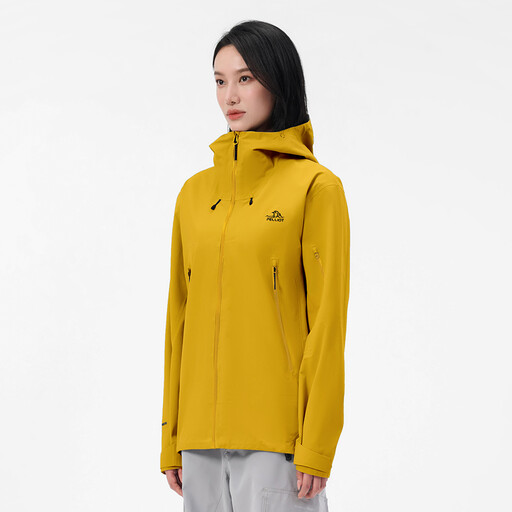
Why it suits this profile: The bright colour and extra ventilation make this a good option for hikers, campers and cyclists who want to stay visible while out and about.
The product description mentions not only water and wind resistance, but also longer underarm zips for extra airflow when you’re active.
According to the product information, the jacket has a more elastic shell fabric, a sleeve pocket and a RECCO reflector for search teams in mountainous areas.
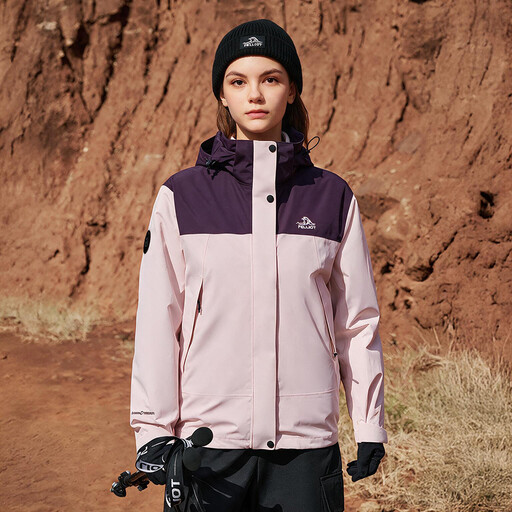
Why it suits this profile: The combination of a protective shell and thermal lining makes this jacket suitable for camping, cold walks and everyday wear.
The 3-in-1 design lets you adapt the layers to the temperature and activity. The product description also mentions taped seams.
A microporous STORMS BREATH membrane, thermal lining and adjustable fit are listed as product features.
We’ve put together a complete, up-to-date list of products that meet these strict selection criteria and the applicable European safety regulations.
Even a durable waterproof walking jacket needs care. Fasten the zips and hook-and-loop fasteners before washing, use a delicate cycle and always follow the care label. Don’t use fabric softener if the product information advises against it. Leave the jacket to air dry and avoid direct heat. At the end of each season, check the seams, cuffs and water-repellent outer layer.
Yes, provided the jacket gives you enough room to move and the sleeves and hem fit well. Ventilation zips and an adjustable hood are useful for longer bike rides. A bright colour can also help you stay visible, but it’s no substitute for bike lights or reflective accessories.
A hardshell jacket is primarily a protective outer layer against rain and wind. A fleece-lined jacket combines that outer layer with extra insulation. Choose a hardshell if you want the flexibility to wear different mid-layers; choose a 3-in-1 model if you want one system you can wear in several combinations.
Its lifespan depends on use, friction, washing and storage. A jacket made from durable fabric may be suitable for intensive use, but a high test rating doesn’t mean its waterproofing will last indefinitely. Store the jacket clean and dry, follow the washing instructions and check the seams and zips regularly.
