
Vandaag of morgen in huis

Kwaliteit gegarandeerd

Welkomstaanbiedingen ontgrendelen: GRATIS bezorging | Tot 80% korting | Gratis 30 dagen JoyPlus-proefperiode
Download de app
In the Netherlands, a waterproof outdoor jacket needs to do more than simply keep out a brief shower. Whether you are cycling to work, walking in the Veluwe or spending a weekend camping, you may encounter rain, wind, mud and changing temperatures. However, an expensive jacket is not automatically suitable for your needs.
The biggest buying mistakes usually result from three pitfalls:
Check whether the product information states a hydrostatic head rating. This value is expressed in millimetres of water pressure. A higher rating indicates greater resistance to water pressure, but the testing method and construction remain important.
According to the product description, the PELLIOT fleece-lined jackets have a hydrostatic head rating of 35.900 mm H₂O according to JIS. The same description mentions taped seams. These are verifiable specifications, but they do not guarantee that a jacket will keep you completely dry in every situation. Wear and tear, incorrect care and open zips can all affect its protection.
Also look for:
A waterproof jacket can keep moisture from getting in, but your body produces heat and perspiration during exercise. That is why breathability matters to walkers, cyclists and mountaineers.
According to the product description, the PELLIOT 3-in-1 models have an MVTR rating of 16.000 g/m² per 24 hours. This is a technical indication of moisture transport through the fabric. A higher value can be beneficial during exercise, but your actual experience also depends on temperature, humidity, clothing layers and the fit.
For intensive use, additional ventilation openings are useful. For example, the PELLIOT Rock Shell features longer underarm zips. This allows you to increase airflow during a climb or brisk walk without unzipping the jacket completely.
A fleece-lined jacket is suitable when you want to combine warmth and rain protection in one garment. A 3-in-1 outdoor jacket usually consists of an outer layer and a removable inner layer. You can wear the layers separately or together:
Always check the size guide before ordering. Do not just look at your usual clothing size; also check your chest measurement, shoulder width and sleeve length. If you want to wear a fleece or jumper underneath the jacket, leave enough room for layers. A jacket that is too tight restricts freedom of movement and can reduce ventilation.
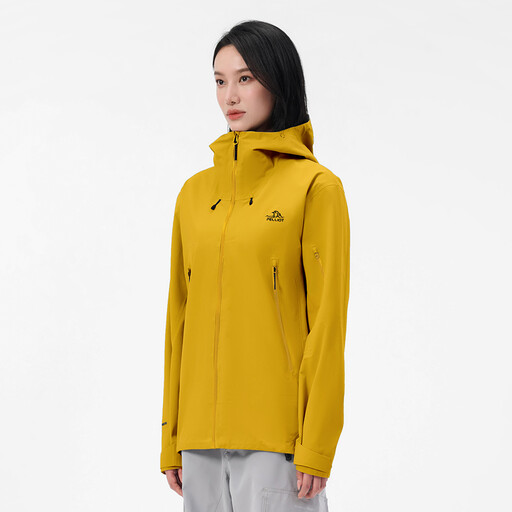
Why it suits this profile: This unisex shell is a practical choice for commuting, walks and occasional camping trips when you mainly need a protective outer layer.
The product description mentions waterproofing, windproofing, breathability and abrasion-resistant properties. It also includes underarm ventilation zips.
Lightweight, stretchy outer fabric, breathable mesh lining, zipped sleeve pocket and sizes from XS to XXL.
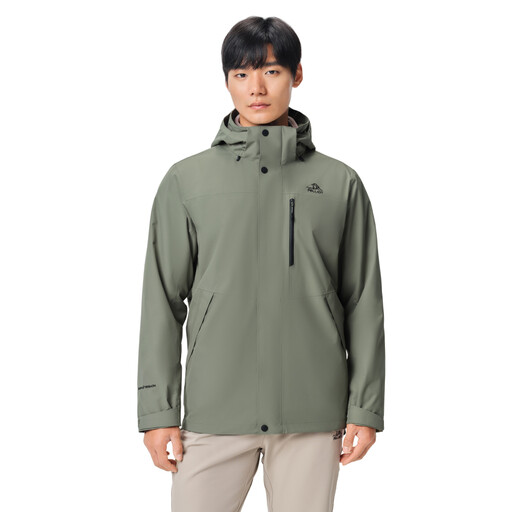
Why it suits this profile: This 3-in-1 outdoor jacket is ideal for campers and travellers who want one system to use across several seasons.
Rather than simply providing a warm outer jacket, this model has a separate lining and outer layer. The product description also mentions sealed seams and an adjustable hood, hem and cuffs.
According to the product description: 35.900 mm H₂O hydrostatic head, MVTR 16.000 g/m²/24 hours and more than 40.000 abrasion cycles.
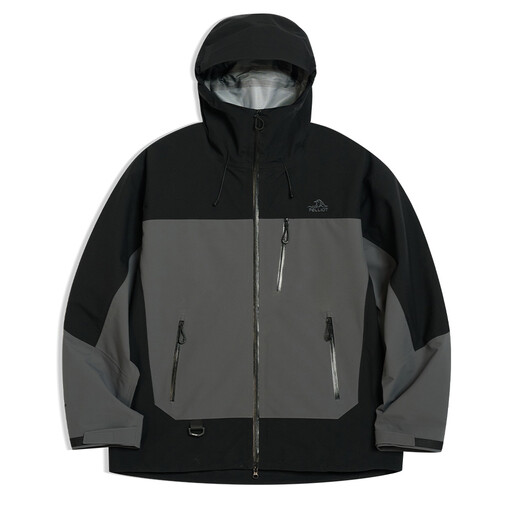
Why it suits this profile: A mountaineering or hardshell jacket is suitable for trekking, more rugged terrain and days when rain and wind can change quickly.
The description mentions not only waterproofing, but also breathable, windproof and abrasion-resistant fabric. This means the jacket is not based solely on one marketing term.
Wind-resistant and abrasion-resistant outer fabric, improved moisture management and a colour-block design for outdoor and urban use.
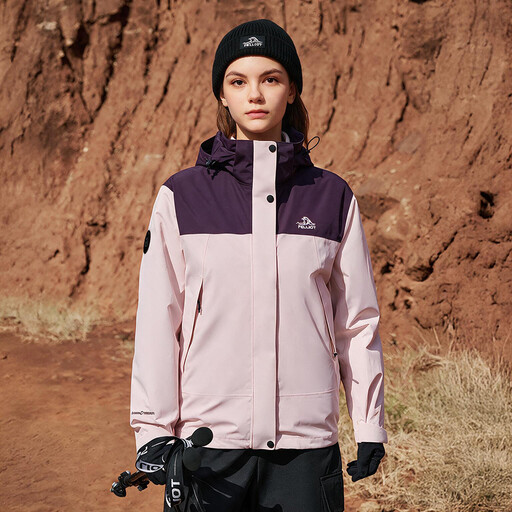
Why it suits this profile: The removable layers make this waterproof jacket for women suitable for walks, travel and everyday cycling in changing temperatures.
The product description mentions a microporous waterproof membrane, taped seams and an adjustable windproof construction. The jacket is therefore not focused solely on insulation.
Wear the shell, lining or both together; the stated temperature guidance ranges from approximately -5 to 25 °C, depending on the layer selected.
We have put together a complete, up-to-date list of products that fully meet these strict selection criteria and the applicable European safety regulations.
The durability of an outdoor jacket depends on more than just the material. Proper care helps prevent the outer layer from losing its performance too quickly.
A waterproof jacket for men and a waterproof jacket for women differ in more than colour. Pay particular attention to the stated body measurements, sleeve length and room for layers. The product page should be your guide if the fit differs from your usual size.
Not always. A hardshell jacket mainly protects against rain and wind, but usually offers little insulation. Choose a fleece-lined jacket or 3-in-1 outdoor jacket if you also need warmth. With a separate shell, you can add your own fleece or warm mid-layer.
Its lifespan depends on how often it is worn, friction from rucksack straps, exposure to dirt and how well it is cared for. A jacket made from abrasion-resistant material may be suitable for more intensive use, but no fabric remains in the same condition indefinitely. Check the seams, zips and water-repellent outer layer regularly.
A standard rain jacket can keep rain out, but does not always release enough moisture during exercise. A breathable rain jacket uses fabric that allows water vapour to escape. Look for a stated MVTR rating and ventilation options, rather than relying solely on the words “breathable” or “all-weather”.
