
Vandaag of morgen in huis

Kwaliteit gegarandeerd

Welkomstaanbiedingen ontgrendelen: GRATIS bezorging | Tot 80% korting | Gratis 30 dagen JoyPlus-proefperiode
Download de app
A waterproof outdoor jacket needs to cope with more than a short shower in the Netherlands. The weather can change during a walk, rain often blows in from the side when you’re cycling, and you soon notice whether a jacket is breathable enough on a trekking trip. However, a striking product title does not tell you everything about real-world performance.
Pay attention to the construction, performance figures and fit. That way, you can avoid buying a jacket that starts leaking after a few showers, feels clammy during exercise or does not leave enough room for a fleece.
A water-repellent jacket temporarily allows light rain to roll off the surface. That is not the same as a waterproof rain jacket with a membrane, taped or properly sealed seams, and a construction designed to keep out prolonged rainfall.
Check whether the product information refers to a waterproof membrane, taped seams or a hydrostatic head rating. The word ‘outdoor’ alone does not tell you enough about rain protection.
A breathable outdoor jacket helps move moisture and heat away from your body. This is less critical when walking gently than when hillwalking, cycling or trekking at a faster pace. Marketing terms such as ‘high breathability’ are only useful when they are accompanied by a test method or performance figure.
An MVTR value, expressed in g/m²/24 hours, indicates how much water vapour can pass through the fabric according to a particular test method. Results are not directly comparable when brands use different testing methods. Treat the figure as one indication alongside ventilation zips, fit and your layering system.
A technical jacket may fit well on its own but feel restrictive once you wear a base layer and fleece underneath. Pay attention to shoulder width, sleeve length and chest measurement. An adjustable hood, cuffs and hem help keep wind and rain out.
With a hardshell jacket, a little extra room is often practical. A close-fitting design restricts your freedom of movement and makes it harder to add layers in changing conditions.
Hydrostatic head is usually expressed in millimetres or mm H₂O. The higher the figure, the more water pressure the material can withstand in testing. However, a high figure does not guarantee that a jacket will keep you dry in every situation. Seams, zips, wear and incorrect care also play a part.
For everyday commuting, a simpler waterproof jacket may be sufficient. For prolonged rain, camping or a jacket for hillwalking, a waterproof membrane and finished seams are more important.
Breathable fabric does not stop you from sweating. It mainly helps remove water vapour when there is a difference between the temperature and humidity inside and outside the jacket. Underarm openings, a two-way zip or an adjustable collar can provide extra airflow during exercise.
According to the product information for the PELLIOT Fleece-lined jacket for Woman Purple M, an MVTR of 16,000 g/m²/24 hours is quoted, measured according to JIS. This is a claim from the brand’s product information; your actual experience will also depend on your activity, clothing worn underneath and the weather conditions.
A nylon or polyester blend with a membrane can be lightweight and hard-wearing. For trekking and camping, reinforced areas and fabric that can withstand branches or rocks are useful. Also check the washing instructions. Fabric conditioner can affect the performance of certain technical fabrics. Always follow the care label and allow the jacket to air-dry if instructed by the manufacturer.
A windproof jacket with adjustable cuffs and a closed hem provides better protection against draughts. That does not automatically mean the jacket is warm: a hardshell jacket is generally designed as an outer layer. For cold weather, you will need a fleece, down or insulated layer.
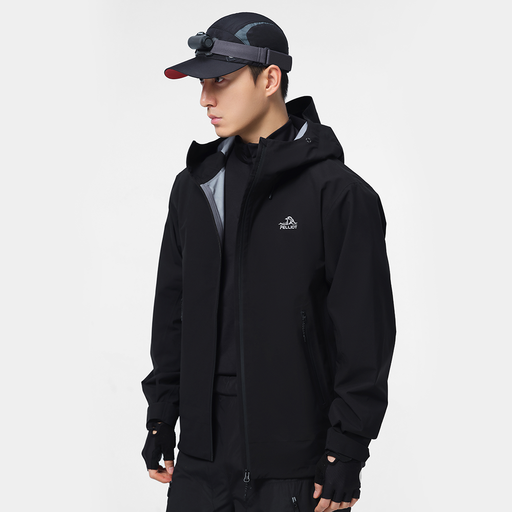
Why it suits this profile: This unisex hardshell is suitable for walking, everyday travel and recreational outdoor activities where you want a separate outer layer. The size chart states a chest measurement of 112 cm for size S.
The product information refers to a waterproof laminate construction, wind resistance and a breathable mesh or technical lining. However, check the current product specifications and seam sealing before ordering.
Unisex design, hard-wearing material according to the product description, and sizes ranging from XS to XXL. The product information recommends considering one size larger for thick mid-layers.

Why it suits this profile: This 3-in-1 jacket is designed for anyone who wants to use one system while camping, trekking and commuting in changing temperatures.
According to the product information, the jacket consists of an outer layer and a separate lining. You can wear the shell, the liner or both together, allowing you to adapt your layering system to the weather.
According to PELLIOT’s own product information, the jacket has a hydrostatic head of 35,900 mm H₂O and an MVTR of 16,000 g/m²/24 hours according to JIS. It also has an adjustable hood, hem and cuffs.
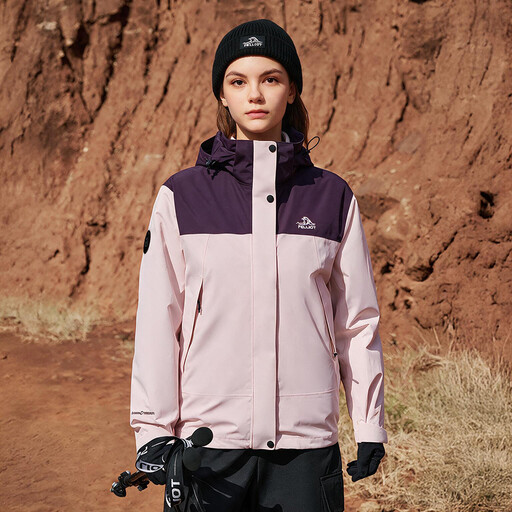
Why it suits this profile: The combination of shell and thermal liner suits campers and walkers who regularly spend time outdoors and need different ways to wear their jacket.
The 3-in-1 design means you do not need a different jacket for every temperature. The manufacturer states that it has a wind-resistant construction and a lining with an anti-static treatment; check the care label to help preserve the materials.
Shell and liner can be worn separately, with hard-wearing outer fabric according to the product description and sizes from S to XXXL. The stated temperature ranges are brand claims and not a guarantee for every user.
We have put together a complete, up-to-date list of products that fully meet these strict selection criteria and the applicable European safety regulations.
Its lifespan depends on use, friction, washing and storage. A jacket that frequently rubs against rocks, branches or rucksack straps will wear out more quickly. Wash it according to the care label, do not use fabric conditioner unless the manufacturer allows it, and store the jacket somewhere dry. Regularly check the seams, zips and outer water-repellent layer.
A hardshell jacket may have a breathable membrane, but breathability varies according to the material and testing method. Even a good jacket can feel clammy when you are exercising intensely in high humidity. Wear suitable layers and use ventilation zips where available.
The price is influenced by factors including the material, membrane, seams, zips, lining and additional features. First decide what you will use the jacket for. For everyday use, you may not need a lined 3-in-1 jacket, while a trekker may benefit from a technical jacket with more adjustment options and performance figures. Always compare the product specifications and care instructions, not just the price.
