
Vandaag of morgen in huis

Kwaliteit gegarandeerd

Welkomstaanbiedingen ontgrendelen: GRATIS bezorging | Tot 80% korting | Gratis 30 dagen JoyPlus-proefperiode
Download de app
In the Netherlands, a waterproof outdoor jacket needs to cope with more than a short shower. Whether you are walking in the Veluwe, cycling to work or spending a weekend camping, you may encounter rain, wind, changing temperatures and perspiration. Yet a jacket labelled “waterproof” is not automatically suitable for every situation.
The biggest buying mistakes usually come down to three pitfalls:
Waterproofing is often expressed as a hydrostatic head rating in millimetres (mm H₂O). A higher rating indicates greater resistance to water pressure, but it does not tell you everything about the overall construction. Also look for:
A jacket may be waterproof through the fabric while allowing water in through the zips or seams. For that reason, check the product description rather than relying solely on the term “storm-proof”. According to PELLIOT’s own product information, several hardshell models are designed for prolonged rain, although specific technical values are not provided for every model.
For relaxed commuting, a basic rain jacket for walking is often sufficient. When walking briskly, climbing or cycling, breathability becomes more important. One technical measure is MVTR: the weight of water vapour that passes through one square metre of fabric in 24 hours, for example 16,000 g/m²/24 hours.
This figure does not guarantee that you will always stay dry. A rucksack, high humidity and several warm layers can limit moisture transfer. Underarm ventilation zips are therefore useful on a trekking jacket. According to the product description, the yellow PELLIOT Pro version has longer underarm zips for improved air circulation.
A windproof jacket keeps cold air out, but its warmth depends on the lining and the layers worn underneath. Choose:
Measure your chest and compare it with the size chart for the specific model. Sizes vary between brands and sometimes between product ranges as well. If you plan to wear a fleece or thick jumper underneath, allow extra room across the chest and shoulders. A jacket that is too tight restricts movement and can reduce the insulating performance of your mid-layers.
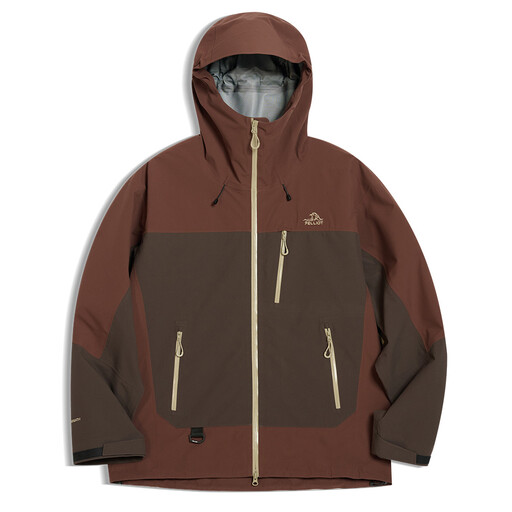
Why it suits this profile: This unlined unisex hardshell is designed for everyday use, camping and walking. Its colour and design work equally well for commuting and the trail.
The product description lists waterproof, windproof and abrasion-resistant properties. Before buying, however, check the current details on the seams and care requirements.
Available in sizes XS to XXL, with a size chart covering chest, sleeve length and body length. Machine washing on a cold cycle is recommended.

Why it suits this profile: The Triclimate design is ideal for anyone who wants one system for changing conditions, from rainy walks to cold outdoor activities.
According to the product information, the outer layer and insulating inner layer can be worn separately or together. That means you do not need to buy a different jacket for every season.
Featuring a water-resistant outer layer, taped seams, underarm ventilation zips and an inner jacket with 550 fill power down insulation, according to the product specifications.
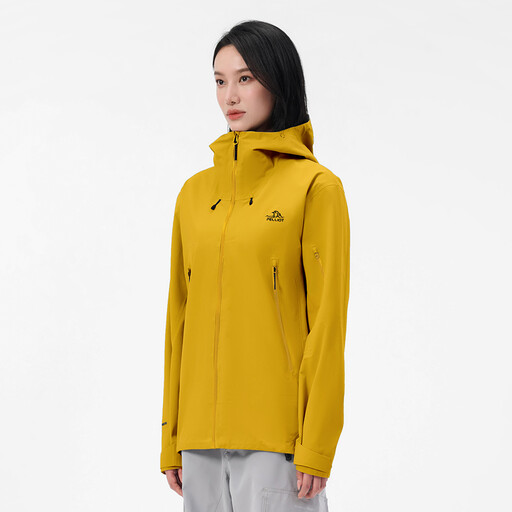
Why it suits this profile: This Pro-shell is designed for intensive trekking, rougher terrain and activities where ventilation, freedom of movement and visibility matter.
Alongside the stated water- and wind-resistant properties, this model has long underarm zips. This is a practical solution when exertion quickly leads to increased heat and moisture.
The product information mentions a more elastic fabric, a sleeve pocket and a RECCO reflector. According to PELLIOT’s own information, the reflector is intended to support detection by professional mountain rescue teams.
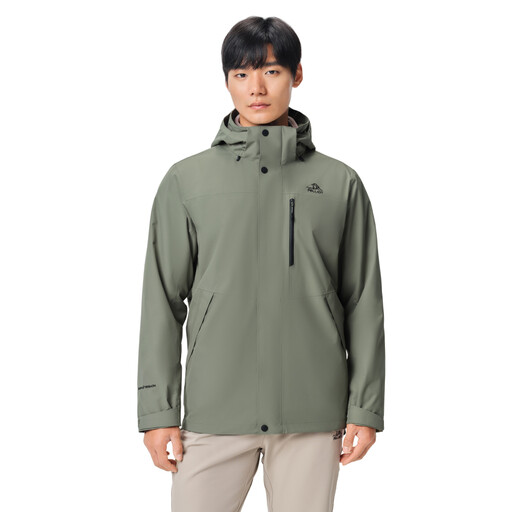
Why it suits this profile: This 3-in-1 outdoor jacket is practical for camping, commuting and cold walks when you want to use the outer layer and lining separately.
The stated construction combines a waterproof outer layer with a separate thermally lined inner layer. This lets you adjust the warmth to suit the weather.
According to PELLIOT’s own product information, the jacket has a hydrostatic head rating of 35,900 mm H₂O, an MVTR of 16,000 g/m²/24 hours and abrasion resistance of more than 40,000 cycles. The jacket is available in several sizes.
We have compiled a complete, up-to-date list of products that fully meet these strict selection criteria and the applicable European safety regulations.
Check the following points before ordering:
Not always. An unlined shell mainly protects against rain and wind. For cold weather, pair it with a fleece or thermal mid-layer. A 3-in-1 model often already includes an inner jacket, making it more versatile.
Its lifespan depends on use, washing, friction and care. Rucksack straps can put stress on the outer fabric, while frequent washing may affect the water-repellent finish. Air the jacket after use, follow the care label and only reproof the fabric if the manufacturer permits it.
That depends on your activity. If you are standing still and waiting in heavy rain, waterproofing is particularly important. For walking, cycling and trekking, a combination of waterproofing, breathability and ventilation zips is more practical. Look at specific ratings, construction details and the fit rather than relying solely on marketing terms.
