
Vandaag of morgen in huis

Kwaliteit gegarandeerd

Welkomstaanbiedingen ontgrendelen: GRATIS bezorging | Tot 80% korting | Gratis 30 dagen JoyPlus-proefperiode
Download de app
A waterproof outdoor jacket needs to do more in the Netherlands than withstand a brief shower. Rain can continue for hours during a bike ride, the weather changes quickly on the Veluwe, and a mountain path can expose you to wind, branches and strenuous activity. Even so, a smooth outer fabric or the word “stormproof” alone says little about everyday use.
As a Joybuy Product Recommendation Officer, I filter product information for practical details. Below, you’ll find what to look for, which marketing claims to treat with caution and which type of jacket suits your needs.
A jacket may keep out the rain, yet feel warm and clammy during a brisk walk. As well as waterproofing, look at breathability, such as the MVTR rating. This indicates how much water vapour the material can let through under a specific testing method. A higher rating may be beneficial for trekking or cycling, but real-world performance also depends on temperature, exertion, clothing layers and ventilation zips.
A 3-in-1 outdoor jacket usually consists of a waterproof outer jacket and a removable inner layer. This is practical, but check how both layers fit separately. An overly roomy shell can be inconvenient for everyday use, while a tight fleece lining leaves little room for an extra jumper.
Temperature ranges in product descriptions are the brand’s indications, not a guarantee for every user. According to PELLIOT’s product information, the combination of shell and lining in certain models is intended for colder conditions. Your own activity and layering remain decisive.
A unisex hardshell jacket often has a straighter cut and more room around the chest. A women’s model may be narrower at the shoulders and waist. Always use the product size chart in centimetres and check whether the stated chest measurement refers to the jacket or body measurement. If you plan to wear a fleece or insulated layer, you may want to consider sizing up for some models, as advised in the product information for PELLIOT hardshells.
The hydrostatic head is usually expressed in millimetres of water pressure. A higher value indicates greater resistance to water pressure during rain or when a rucksack presses against the fabric. Also pay attention to taped or well-finished seams. Water often does not enter through the middle of the fabric, but through zips, shoulder seams, the hood and pocket openings.
For a PELLIOT fleece-lined jacket for women and men, the product information states a hydrostatic head of 35,900 mm H₂O according to JIS. This is a product specification taken from the brand and product information; it does not mean that the jacket will keep you dry indefinitely in all conditions.
For walking, trekking and mountaineering, a breathable rain jacket is usually more comfortable than a simple poncho or unlined rain jacket. Check whether the brand states a testing method and an MVTR rating. For a PELLIOT fleece-lined jacket, 16,000 g/m²/24 hours according to JIS is specified. Treat this as a comparison point within the product information, not as a prediction of exactly how comfortable it will feel during your activity.
Underarm ventilation zips are another practical detail. They give you more control when walking uphill, cycling or hiking with a rucksack.
A windproof jacket for everyday commuting does not need the same level of abrasion resistance as a trekking jacket for rocky terrain. Therefore, check:
According to the product information, PELLIOT fleece-lined models state an abrasion resistance of 40,000+ rubbing cycles. This is a stated product test result, not a promise that the jacket will remain undamaged under every type of use.
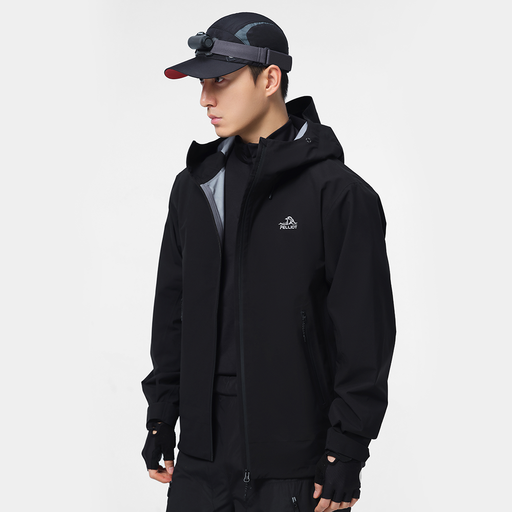
Why it suits this profile: This unisex hardshell jacket is suitable for anyone looking for one lightweight outer layer for commuting, walking and changeable weather. The size chart states a jacket length of 72 cm and a chest measurement of 112 cm for size S.
The product information mentions a waterproof, wind-resistant construction, breathable lining and abrasion-resistant fabric. However, check the current size chart and care instructions before buying.
Unisex fit, mesh or technical lining and a nylon or polyester blend with waterproof laminate, according to the product description.

Why it suits this profile: This fleece-lined jacket offers a versatile 3-in-1 system for camping, winter walks and everyday use. According to the product description, you can wear the shell, liner or both layers together.
The stated hydrostatic head, MVTR rating and abrasion resistance make the technical properties easier to verify than a general “all weather” claim alone.
35,900 mm H₂O hydrostatic head, 16,000 g/m²/24 hours breathability and a removable thermal liner, according to PELLIOT’s own product information.
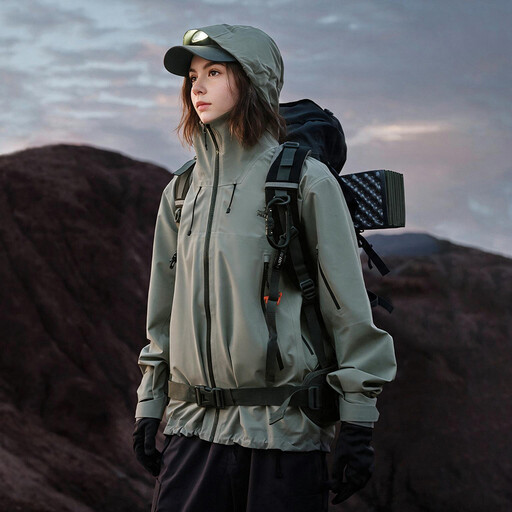
Why it suits this profile: This mountaineering jacket is designed for intensive activities and rougher terrain. The product information mentions longer underarm ventilation zips, a zipped pocket and a RECCO reflector.
Ventilation zips help during exertion, while the described stretchy, abrasion-resistant outer fabric is suited to trekking and camping. Always check the latest safety and usage information before using it in the mountains.
Lighter, stretchier fabric, longer underarm ventilation and a stated RECCO reflector, according to the product description.
We’ve put together a complete, up-to-date list of products that fully meet these strict selection criteria and the applicable European safety regulations.
The lifespan of a waterproof walking jacket depends heavily on proper care. Always follow the care label for the model you choose. Several PELLIOT models specify washing on a cold, delicate cycle without bleach or fabric conditioner. Fasten zips and hook-and-loop closures before washing, then leave the jacket to air-dry away from direct heat.
Do not iron at a high temperature, and store the jacket only when it is completely dry. A shell that is washed frequently or treated with unsuitable products may lose its water-repellent properties more quickly.
Yes, provided the jacket offers enough freedom of movement, an adjustable hood and cuffs that fasten securely. For intensive cycling, ventilation zips and breathable fabric are useful. Also check that the jacket is not too short when you are leaning forwards.
A hardshell jacket is primarily designed as a protective outer layer against rain and wind. A fleece-lined or 3-in-1 jacket combines this outer layer with insulation. A hardshell is more flexible across different temperatures, while a fleece-lined jacket provides more warmth straight away.
The price depends on the material, hydrostatic head, breathability, seams, zips, lining and additional features. Therefore, do not compare prices alone; compare the stated specifications and size chart as well. This helps you avoid paying for general marketing language without practical information.
