
Vandaag of morgen in huis

Kwaliteit gegarandeerd

Welkomstaanbiedingen ontgrendelen: GRATIS bezorging | Tot 80% korting | Gratis 30 dagen JoyPlus-proefperiode
Download de app
A waterproof outdoor jacket needs to cope with more than a passing shower in the UK. Whether you’re cycling, walking or camping, you may encounter rain, wind, mud and changeable temperatures. Yet a headline term such as “stormproof” doesn’t tell you much on its own. The construction, fit and testing method all affect how comfortable a jacket is in real-world conditions.
A high hydrostatic head rating sounds impressive, but it doesn’t tell you everything about comfort. A jacket may keep the rain out but still feel stuffy when you’re climbing or cycling. So check its breathability too, for example by looking for an MVTR rating. Also look for ventilation zips, a mesh lining and adjustable openings.
A hardshell jacket is often worn over a fleece or warm mid-layer. If you only allow room for a T-shirt, you may find it restricts your movement when the weather turns colder. Check the chest, shoulder and sleeve measurements in centimetres. A roomier size can be useful for layering, but a jacket that’s too big may let wind in at the hem and cuffs.
A 3-in-1 outdoor jacket usually consists of an outer layer and a removable inner layer. This gives you flexibility, but insulation and fit vary from model to model. Check whether you can wear both parts separately, and what temperatures the manufacturer recommends it for. Temperature guidance is just that: guidance, not a guarantee for every wearer.
Hydrostatic head is measured in millimetres of water pressure. A higher figure indicates greater resistance to water pressure according to the stated test method. Check the seams, zips and hood too. Waterproof fabric alone won’t make a jacket waterproof if the seams aren’t properly finished.
According to the product description, the PELLIOT 3-in-1 models have a hydrostatic head rating of 35,900 mm H₂O according to JIS. No specific figure is given for some other models. So don’t compare general marketing terms as if they all refer to the same test.
Breathability is often given as MVTR, in grams per square metre per 24 hours. According to the product description, the PELLIOT fleece-lined 3-in-1 jacket has an MVTR of 16,000 g/m²/24 hours according to JIS. This figure describes how much water vapour can pass through the material under a particular test condition. In everyday use, exertion, temperature, clothing layers and ventilation all play a part too.
A breathable rain jacket is especially practical when you’re active. For a leisurely commute, a simple waterproof and windproof jacket may be enough.
For trekking, camping and hill walking, hard-wearing fabric, adjustable cuffs and a hood that fastens securely are all worth considering. According to the product description, the fleece-lined PELLIOT version has been tested to more than 40,000 abrasion cycles. This is a stated product specification; actual lifespan also depends on use, washing and care.
Also check for:
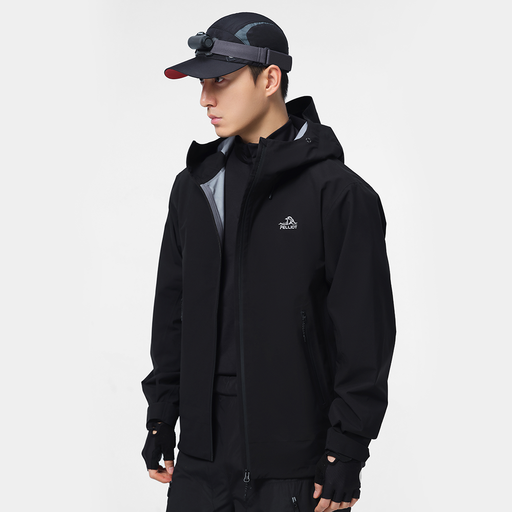
Why it suits this type of user: This unisex outdoor jacket is suitable for everyday cycling, travelling and gentle walks. Its simple hardshell construction makes it a straightforward choice if you’re buying a waterproof jacket for the first time.
The product description lists a windproof, waterproof and hard-wearing outer layer. Be sure to check the size guide and leave room for a thin mid-layer.
Mesh or technical lining according to the product description, a unisex fit and a choice of sizes.
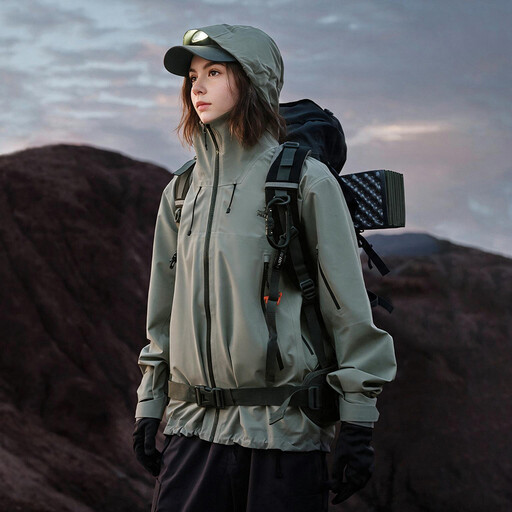
Why it suits this type of user: According to the product description, this trekking jacket is designed for demanding outdoor use, with extra ventilation and a stretchier outer fabric to help you move over rough terrain.
The longer underarm zips provide a practical way to ventilate. The RECCO reflector is a safety feature, but it’s no substitute for preparation or rescue equipment.
According to the product description: longer ventilation zips, hard-wearing fabric and a RECCO reflector.
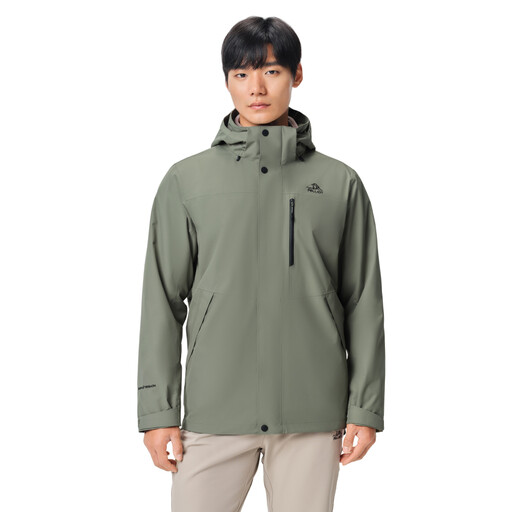
Why it suits this type of user: This 3-in-1 outdoor jacket is designed for camping, trekking and commuting in changeable conditions. According to the product description, you can wear the shell and inner layer separately or together.
The product description gives figures for hydrostatic head, breathability and abrasion resistance. This lets you compare more than just the word “waterproof”.
35,900 mm H₂O, 16,000 g/m²/24 hours MVTR and more than 40,000 stated abrasion cycles, according to the product description.
We’ve put together a complete, up-to-date list of products that meet these strict selection criteria and the applicable European safety regulations.
Not necessarily. Waterproofing and breathability are separate properties. Look for a stated MVTR rating, ventilation zips and a lining that can help wick away moisture. Bear in mind that vigorous activity always generates more heat and sweat.
Follow the care label on the specific garment. The PELLIOT models mentioned, for example, are listed as suitable for a cold, gentle wash. Don’t use fabric softener, do up the zips before washing, and air-dry the jacket if the instructions recommend it. Heat, harsh cleaning products and incorrect drying can affect the fabric and coating.
It depends on use, friction, washing and storage. A jacket worn for everyday cycling will wear differently from one used for the occasional walk. Store it dry, follow the care instructions and check the seams, zips and water-repellent outer layer regularly. A stated abrasion-resistance test is a useful point of comparison, not a guaranteed lifespan.
