
Vandaag of morgen in huis

Kwaliteit gegarandeerd

Welkomstaanbiedingen ontgrendelen: GRATIS bezorging | Tot 80% korting | Gratis 30 dagen JoyPlus-proefperiode
Download de app
A waterproof outdoor jacket may seem straightforward to choose at first glance. However, small differences in materials, seams and fit can determine whether a jacket remains comfortable during a walk through the dunes or is mainly suitable for everyday use. Marketing terms such as “all-weather”, “stormproof” or “thermal” do not tell you enough on their own.
Focus instead on verifiable product information. A jacket described as waterproof does not automatically have warm insulation. A padded jacket may provide warmth, but it is not always designed for prolonged rain. Keep these points in mind to avoid making the wrong purchase.
A DWR finish helps raindrops roll off the outer material. This is not the same as a fully waterproof construction. Check whether the product description also mentions a waterproof membrane, sealed seams or a waterproof outer layer.
In heavy rain, the seams, zips and hood are particularly important. A jacket without taped or sealed seams may let moisture through more quickly at these points, even if the fabric itself repels water.
A rain jacket or windproof jacket often protects against precipitation and wind, but may offer little insulation. For cold bike rides or winter walks, you need enough room for a fleece or down jacket underneath. An insulated winter jacket is more comfortable in low temperatures, but may become too warm during strenuous activity.
So start by considering how you will use it: are you looking for a walking jacket for active movement, a men's jacket for commuting or a men's parka for waiting outdoors for long periods?
A standard fit may feel comfortable over a T-shirt, but become tight with a fleece-lined jacket underneath. Check the chest, waist and arm measurements in centimetres and compare them with a jacket you already find comfortable. Also consider the length: a longer jacket offers extra coverage, while a shorter sports jacket can provide greater freedom of movement.
Look for the following in the product specifications:
According to the product descriptions of various The North Face models, the DryVent jackets in question are designed to be waterproof and windproof. Treat this as a brand product specification, and also check the specific construction, care instructions and intended use.
A padded jacket with polyester filling is practical for everyday use and cold days. Pay attention to the difference between:
A 3-in-1 jacket can be flexible because you can wear the layers separately or together. This makes such a model useful in changeable weather, but check that the inner and outer jackets fit together properly.
An outdoor jacket with a hood is more practical when rain arrives unexpectedly. An adjustable hood stays in place better in windy conditions than a loose, oversized hood. Elasticated or adjustable cuffs help prevent cold air from getting in. Secure hand and chest pockets keep keys, your phone and travel card safely in place.
Also check the zip. A storm flap behind or over the zip can provide extra protection, while underarm zips are useful when walking or cycling.
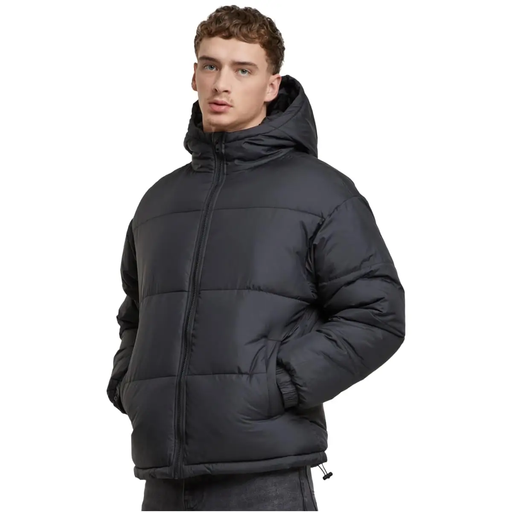
Why it suits this profile: This padded jacket is designed for everyday use on cold days and has a hood for extra coverage.
The material composition is clearly stated: a polyamide outer layer, polyester filling and polyester lining. As a result, the jacket is not automatically presented as fully waterproof.
Polyester filling, a hood and machine washing according to the product information. Suitable for everyday use, but check the label for the exact care instructions.

Why it suits this profile: According to the product description, the Triclimate construction combines a protective outer layer with a warm down inner jacket.
According to the product information, the two layers can be worn separately or together. This means you do not have to look for warmth and rain protection in one fixed layer.
Adjustable hood, underarm zips, taped outer seams and 550 fill power down according to the product description.

Why it suits this profile: According to the product description, this women's jacket is designed as a shell for walking and changeable conditions.
The product description mentions sealed seams, an adjustable hood, elasticated cuffs and a drawcord at the hem. These are more specific details than simply using the term “all-weather”.
DryVent material, mesh lining and two secure hand pockets according to the product information. The jacket has a standard fit.
We have put together a complete, up-to-date list of products that fully meet these strict selection criteria and the applicable European safety regulations.
Measure your chest while wearing a thin shirt and compare it with the size chart for the specific model. A men's jacket may require extra room for a mid layer. For a women's jacket, shoulder width, chest measurement and arm length are often more important than the clothing size alone.
Wash a waterproof outdoor jacket according to the label. Close the zips and hook-and-loop fastenings, use a mild detergent and avoid bleach. A DWR layer can become less effective through use and washing. According to the care information for some The North Face models, the water-repellent performance can be reactivated if the care label permits this. Do not use a tumble dryer if the label advises against it.
Not always. A shell mainly protects against rain and wind, but may offer little insulation. Pair this type of walking jacket with a fleece, or choose an insulated winter jacket when warmth is your top priority.
This depends on use, washing, friction and care. Over time, the outer fabric may become less effective at repelling droplets. Follow the care label and regularly check the seams, zips and outer layer.
A rain jacket is usually a lightweight protective layer against precipitation. A 3-in-1 jacket consists of an outer layer and an inner layer that can be worn separately or together. This flexibility is useful for travelling, walking and commuting, but the jacket may be heavier and bulkier.
