
Vandaag of morgen in huis

Kwaliteit gegarandeerd

Welkomstaanbiedingen ontgrendelen: GRATIS bezorging | Tot 80% korting | Gratis 30 dagen JoyPlus-proefperiode
Download de app
Choosing a waterproof outdoor jacket might seem straightforward at first. However, differences in seams, fit, lining and breathability can determine whether your jacket stays comfortable on a walk or spends most of its time in the wardrobe. For cycling, commuting, camping and trekking in the Netherlands, rain, wind and changing temperatures are key things to consider.
Look out for these three common pitfalls too:
Don’t look only for the word “waterproof”. Check whether the description also gives information about a hydrostatic head rating, welded or taped seams, and a storm flap behind the zip. A higher hydrostatic head rating indicates greater resistance to water pressure, but real-world protection also depends on the construction, wear and care of the jacket.
According to the product specifications, the PELLIOT women’s fleece-lined jacket has a hydrostatic head rating of 35,900 mm H₂O and taped seams. These are verifiable specifications from the product information; they don’t guarantee that the jacket will keep you completely dry in every situation.
For everyday use, a men’s or women’s waterproof jacket with an adjustable hood, cuffs and hem may be enough. For prolonged rain on a trek, a hardshell jacket and well-sealed seams matter more than a fashionable fit alone.
A waterproof layer keeps rain out, but it can also slow the release of body heat and perspiration. Look for an MVTR measurement, expressed in grams per square metre over 24 hours. The higher the stated figure, the more moisture the fabric can release according to that test method. Different testing methods aren’t always directly comparable.
According to the product information, the PELLIOT fleece-lined jacket has a breathability rating of 16,000 g/m²/24 hours. The PELLIOT Rock Shell also states that it has improved waterproofing and a breathable construction, with extra underarm zips for ventilation. This information comes from the product specifications and isn’t an independent performance guarantee.
For commuting and leisurely walks, a simple rain jacket with a hood is often enough. For brisk walks, climbing or cycling, ventilation openings, a mesh lining and a fit that isn’t too tight are more useful.
An outdoor jacket should have room for a T-shirt, fleece or lightweight mid-layer. Measure your chest and compare it with the size chart for the specific product. An oversized jacket can give you more freedom of movement, but it may not fit as closely in strong winds.
Also look for:
Don’t use fabric softener if the product information advises against it. Fasten the zips and hook-and-loop fastenings before washing, and usually leave the jacket to air-dry. An outer layer that’s regularly washed incorrectly may lose its water repellency sooner.
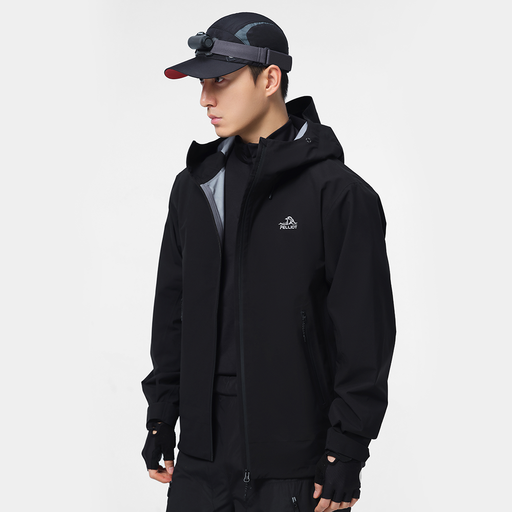
Why it suits this profile: This unisex hardshell is a good choice if you want one jacket for rainy bike rides, walks and travel. It’s available in sizes XS to XXL.
The description mentions waterproofing, wind resistance, breathability and hard-wearing fabric, rather than making only a general claim about rain protection.
Mesh or technical lining according to the product information, a utility fit and a recommendation to size up if you plan to wear layers underneath.

Why it suits this profile: This 3-in-1 outdoor jacket is designed for changeable conditions and offers several ways to wear it for walks, travel and everyday use.
According to the product description, you can wear the outer layer and inner jacket separately or together. That means you don’t need a different jacket for every season.
GORE-TEX outer fabric according to the product specifications, taped seams, ventilation zips and an insulating inner layer with 550 fill power down.
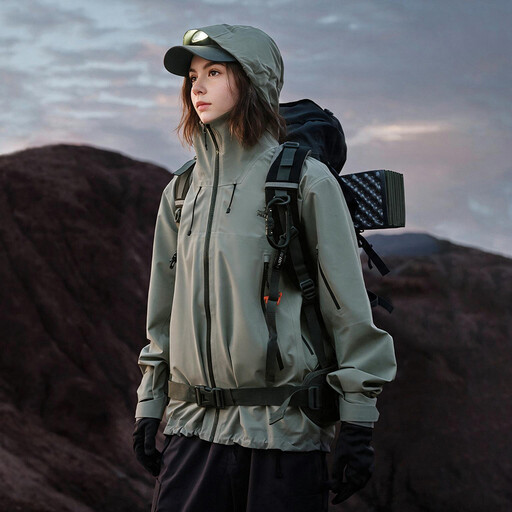
Why it suits this profile: The extra ventilation and hard-wearing features make it a good match for trekking, camping and activities where the jacket may rub against branches or rocks.
The product information mentions longer underarm zips, wind-resistant properties and a hard-wearing construction. Be sure to check the latest size and product details when buying.
Underarm ventilation, a zipped chest pocket and a RECCO reflector according to the product description.
We’ve put together a complete, up-to-date list of products that meet these strict selection criteria and the applicable European safety requirements.
That depends on the lining. A hardshell jacket mainly protects you from rain and wind, and is often worn with a fleece or insulating mid-layer. A fleece-lined jacket or 3-in-1 outdoor jacket offers more flexibility when temperatures vary considerably.
How long it lasts depends on how often you wear the jacket, friction from a rucksack and how you wash it. Always follow the care label. If water no longer beads on the surface, a suitable reproofing treatment may help when used according to the instructions. This won’t automatically restore all the properties of a worn-out membrane or damaged seams.
Compare your chest, waist and sleeve measurements with the size chart for the model you’ve chosen. If you plan to wear a fleece or thick jumper underneath, allow extra room. For unisex styles, check the shoulder width and back length too; these often have more of an effect on comfort than the letter size alone.
