
Vandaag of morgen in huis

Kwaliteit gegarandeerd

Welkomstaanbiedingen ontgrendelen: GRATIS bezorging | Tot 80% korting | Gratis 30 dagen JoyPlus-proefperiode
Download de app
A waterproof outdoor jacket needs to cope with more than a brief shower in the Netherlands. Whether you are walking through the Veluwe, cycling to work or spending a weekend camping, you may encounter rain, wind, mud and changing temperatures. Yet a prominent label featuring “stormproof” or “breathable” does not tell you everything.
The right choice depends on the construction, fit and intended use. Below are the key points to check, followed by several product options for different situations.
A water-repellent coating initially makes raindrops roll off the fabric. That is different from a waterproof rain jacket with a membrane, laminated layer or fully sealed seams. So check whether the product information mentions a hydrostatic head rating, membrane or sealed seams.
Also pay attention to the zips, pockets and hood. Waterproof fabric is of little help if rain gets in through an open zip or a poorly adjusted hood.
“Breathable” usually means that moisture in vapour form can escape through the material. Its performance also depends on exertion, humidity, ventilation zips and the layers you wear underneath. During an intensive trek, a jacket may still feel clammy.
A mesh lining, underarm ventilation openings and adjustable cuffs are therefore practical additions. If you mainly go for relaxed walks or cycle, you may need less ventilation than someone climbing a mountain trail.
A jacket that is too tight leaves no room for a fleece or insulating layer. One that is too loose may let wind in and make movement less comfortable. Do not just look at S, M or L; compare your chest measurement, sleeve length and jacket length with a well-fitting garment.
With a unisex outdoor jacket, it is worth paying extra attention to shoulder width and cut. If you want to wear several layers in winter, only go up a size if the size chart supports it.
Hydrostatic head is expressed in millimetres, for example 35.900 mm H₂O. This is a laboratory measurement of the pressure the material can withstand. A higher figure indicates greater resistance to water pressure, but it does not tell you on its own how a jacket will perform in practice. Seams, zips, wear and maintenance remain important.
The product description of the PELLIOT fleece-lined jacket states a hydrostatic head of 35.900 mm H₂O according to JIS. Treat this as a verifiable product specification, not a guarantee for every weather condition.
Breathability is often expressed as MVTR, in grams per square metre per 24 hours. According to the product description, the PELLIOT 3-in-1 jacket for women has an MVTR of 16.000 g/m²/24 hours, also according to JIS. In practice, comfort varies depending on the activity and clothing layers.
A hardshell jacket is primarily intended as a protective outer layer. For warmth, you will generally need a fleece, wool jumper or synthetic insulation layer. A fleece-lined jacket combines protection and insulation in one garment, but may be too warm in mild weather.
For walking and everyday cycling, an adjustable hem, hood and cuffs are practical. For trekking and camping, the following points are also relevant:
According to the product description, the PELLIOT Pro outdoor jacket features underarm ventilation zips and a RECCO reflector. The performance and suitability of features like these depend on the conditions and how they are used; always follow local safety advice in mountainous areas.
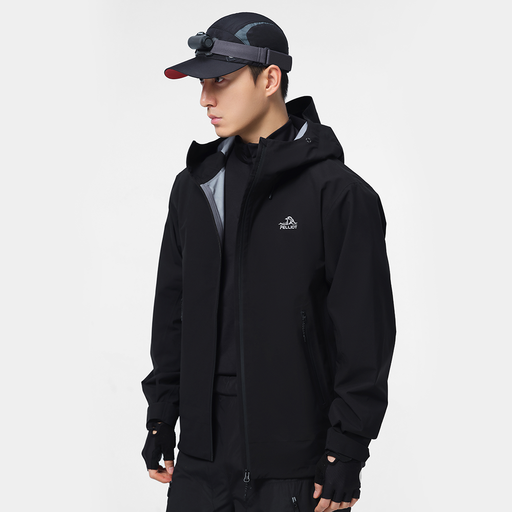
Why it suits this profile: This unisex hardshell jacket is suitable for commuting, walks and occasional trekking. The neutral black colour is easy to combine with existing layers.
The product description mentions a waterproof and wind-resistant construction, breathable technical fabric and a hard-wearing outer layer. However, check the current product details and size chart before buying.
Unisex fit, mesh or technical fabric for moisture management, and a choice of several sizes and colours.

Why it suits this profile: A women’s outdoor jacket for walks and changeable weather, with a recognisable technical construction and a standard fit.
According to the product description, the jacket has fully sealed seams and DryVent material described as waterproof, windproof and breathable. These are brand and product claims; assess them alongside the specific construction details.
Adjustable hood, elasticated cuffs, drawcord at the hem and two zipped pockets.

Why it suits this profile: This 3-in-1 outdoor jacket is designed for camping, colder walks and travel when you want the flexibility to switch between an outer layer, lining or combination of both.
The product description mentions a separate outer layer and inner lining, allowing you to adjust the warmth. The stated performance figures come from the brand’s product information and are not a general guarantee.
According to the product specifications: 35.900 mm H₂O hydrostatic head, MVTR of 16.000 g/m²/24 hours and an abrasion resistance of more than 40.000 rubbing cycles.
Measure your chest while wearing a thin shirt and compare it with the chart for the specific model. For a women’s outdoor jacket, also check your waist and hip measurements. A walking jacket should allow plenty of movement around the shoulders; a jacket for mountain walking should also have room for an insulating mid-layer.
Care affects the garment’s lifespan. Close zips and fasten hook-and-loop closures before washing, use a mild detergent and always follow the care label. Avoid fabric softener with technical fabrics. Allow the jacket to air-dry if recommended by the manufacturer, and only reproof a DWR finish with a suitable care product.
We have put together a complete, up-to-date list of products that fully meet these strict selection criteria and the applicable European safety regulations.
That depends on use, friction, washing and care. A jacket worn daily with a rucksack will wear more quickly around the shoulders and hips than one used for occasional walks. Regularly check the seams, coating, zips and water-repellent performance.
Usually not without an additional layer. A hardshell jacket mainly protects against rain and wind. Wear it with a fleece or insulating mid-layer. A 3-in-1 model with a fleece lining can be more practical if you want one system for several seasons.
The price is influenced by the material, brand, sealed seams, ventilation, lining and technical details. So do not compare the price alone; also consider the hydrostatic head, breathability, fit and care instructions. This will help you avoid paying for marketing terms that do not suit the way you use the jacket.
