
Vandaag of morgen in huis

Kwaliteit gegarandeerd

Welkomstaanbiedingen ontgrendelen: GRATIS bezorging | Tot 80% korting | Gratis 30 dagen JoyPlus-proefperiode
Download de app
A waterproof outdoor jacket needs to cope with more than a brief shower in the Netherlands. The weather can change during a walk, cycling exposes you to wind, and when camping you may wear a jacket for hours at a time. Even so, a prominent product claim does not always tell you enough about real-world performance.
As a Joybuy Product Recommendation Officer, I filter product information based on verifiable features. This helps you avoid paying solely for a brand name, a high waterproof rating or an appealing photo.
A jacket may keep out the rain but still become uncomfortable during a strenuous walk. Without sufficient ventilation, perspiration remains trapped on the inside. As well as waterproofing, check the breathability, for example through an MVTR rating in grams per square metre per 24 hours.
Pay attention to the construction too. Waterproof fabric is less practical if zips, pockets or seams are not adequately sealed. With a hardshell jacket, taped seams and an adjustable hood are therefore important features.
An all-weather jacket can be versatile, but the insulation, fit and protection vary from one model to another. A thin windproof jacket is useful in spring, but is not automatically warm enough for winter walks. A fleece-lined jacket provides more warmth, but may become too hot during intensive trekking.
Think beforehand about how you will use the jacket: commuting, day trips with a waterproof walking jacket, camping or trekking in more rugged terrain.
You will often wear an outdoor jacket over a fleece or woollen jumper. A close-fitting design can restrict your freedom of movement. However, a jacket that is too loose may let in wind and feel less comfortable when cycling or climbing.
Measure your chest, shoulder width and sleeve length, then compare these measurements with the size chart for the specific model. With a 3-in-1 outdoor jacket, also check the measurements of both the outer jacket and the inner jacket.
The hydrostatic head indicates how much water pressure a material can withstand according to a particular test. A higher value suggests greater resistance to water pressure, but on its own it does not indicate how a jacket will perform in everyday use. The testing method, seams, zips and wear also play a part.
According to their product descriptions, the PELLIOT fleece-lined models list a hydrostatic head of 35.900 mm H₂O according to JIS. This is a verifiable product specification from the listing information, not a guarantee for every use case. Always check the current product page and care instructions.
MVTR stands for Moisture Vapour Transmission Rate. The value indicates how much water vapour a material can allow through under a particular testing method. A higher value can be beneficial during active use, but your experience also depends on clothing layers, temperature, exertion and ventilation zips.
The PELLIOT women’s model lists an MVTR of 16.000 g/m²/24 hours according to JIS. According to the product description, the model is designed for camping, trekking and everyday commuting. Treat this as the brand’s product information and compare the measurement method with other models before making your choice.
A waterproof walking jacket has to withstand plenty of wear from rain, shoulder straps and branches. So look out for:
The product description for the PELLIOT hardshell model mentions a windproof and abrasion-resistant outer fabric. As no specific hydrostatic head is given for this model, it is wise not to rely solely on the term “storm-proof”.
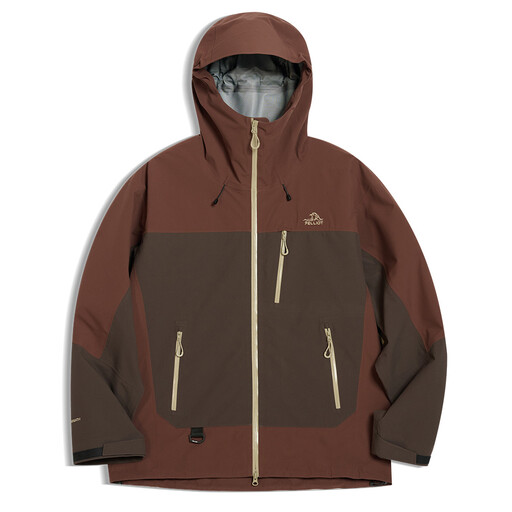
Why it suits this profile: A versatile outer layer for everyday rain, walking and straightforward camping trips, without fixed winter insulation.
The product description mentions windproof and abrasion-resistant properties. However, check the current size and material information before ordering.
Unisex design, a choice of several sizes and a design suitable for both urban and outdoor environments.

Why it suits this profile: Suitable for anyone looking for a technical waterproof jacket for training, commuting and active outdoor use.
According to the product description, the model features seam-sealed DryVent fabric and a hood. Check the current information on fit and care.
100% recycled polyester according to the product information, with a Non-PFC DWR finish and zipped pockets.
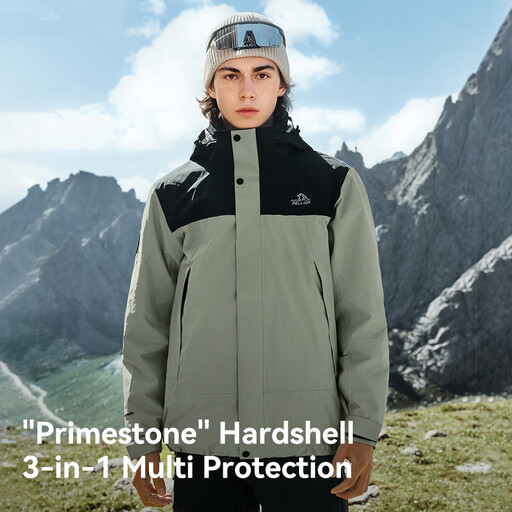
Why it suits this profile: A 3-in-1 outdoor jacket for campers and trekkers who want to switch between the outer layer, lining or both layers.
The separate layers mean you do not need a different jacket for every season. Check that the selected size leaves enough room for extra clothing.
STORMS BREATH membrane, thermal lining and sizing with separate outer and inner measurements according to the product description.
We have put together a complete, up-to-date list of products that fully meet these strict selection criteria and the applicable European safety regulations.
Its lifespan depends on use, friction, washing and storage. A jacket worn every day under a heavy rucksack will wear out faster than a model used for occasional walks. Wash it according to the label, fasten the zips before washing and avoid products that may damage the coating. Allow the jacket to dry completely before storing it.
Not necessarily. A hardshell jacket is primarily designed as a protective outer layer against rain and wind. A fleece-lined jacket adds insulation. With a 3-in-1 outdoor jacket, you can combine both functions or use the layers separately. For intense activity, a separate layer is often more flexible, while a lined jacket may be practical for gentle walks or everyday use.
The price varies depending on the membrane, seams, material, brand, insulation and finish. So do not compare the price alone; also consider the hydrostatic head, MVTR, abrasion resistance, size range and care requirements. A jacket with more technical features is not always necessary for commuting, but extra protection and adjustable features can be valuable for trekking.
