
Vandaag of morgen in huis

Kwaliteit gegarandeerd

Welkomstaanbiedingen ontgrendelen: GRATIS bezorging | Tot 80% korting | Gratis 30 dagen JoyPlus-proefperiode
Download de app
A waterproof outdoor jacket needs to cope with more than a brief shower in the UK. Whether you’re cycling through town, walking in the countryside or heading off for a camping weekend, you may face rain, wind, mud and changing temperatures. But a bold claim such as “waterproof” doesn’t tell you everything about comfort or durability.
The right choice depends on three things: waterproofing, breathability and how you plan to use the jacket. Read on to find out what to look for and which styles suit different needs.
A fully sealed jacket can keep the rain out, but heat and moisture can build up inside when you’re walking briskly or cycling. So don’t just look for a water-repellent outer layer. Check whether the jacket also has a breathable membrane, mesh lining or a stated MVTR rating.
A breathable outdoor jacket is especially useful for trekking, commuting and other activities where you’ll stay active for longer periods. For low-key everyday wear, a simpler style may be enough.
A hardshell jacket usually protects you from rain and wind, but is often designed to be worn as an outer layer. If you want to stay warm in autumn or winter, you’ll need a fleece, jumper or insulating mid-layer underneath. A fleece-lined jacket or 3-in-1 jacket can be more practical if you’d rather not combine several separate garments.
Pay attention to the hood, cuffs and hem, too. An adjustable fit helps close gaps around your neck, wrists and waist.
A jacket that fits well without a mid-layer may feel too tight over a fleece or thick jumper. Check the chest, sleeve and back lengths in centimetres. With a unisex style, the shoulder and chest proportions may differ from those of a women’s outdoor jacket.
If you’re unsure, start by choosing your size using the specific product’s size guide. Going up a size only makes sense if you deliberately need extra room for layers.
Hydrostatic head is measured in millimetres, for example 35,900 mm H₂O. It’s a laboratory measure of the pressure the fabric can withstand under the stated test method. The figure doesn’t tell you everything about how the jacket will perform in practice: seams, zips, the hood and wear and tear all have an impact, too.
So check whether the jacket has taped or fully sealed seams. For an everyday rain jacket, secure zips and an adjustable hood are important as well.
An MVTR rating, such as 16,000 g/m²/24 hours, indicates how much water vapour the fabric can let through under a particular test method. Conditions when you’re wearing the jacket are different from those in a laboratory, though. So even a breathable jacket can feel warm during vigorous activity.
For a waterproof walking jacket or trekking jacket, ventilation options, a mesh lining and a fit that isn’t too tight are useful extras.
Nylon and polyester are widely used in outdoor jackets. A hard-wearing fabric is useful if you walk past branches, carry a rucksack or wear your jacket frequently. Check the care instructions, too. Fabric conditioner can damage technical finishes, and some jackets shouldn’t be tumble-dried.
A water-repellent finish can become less effective over time. According to some brands’ product information, re-treating the jacket in line with the washing and care instructions can help keep the outer fabric water-repellent for longer. This won’t fix a damaged membrane or leaking seam.
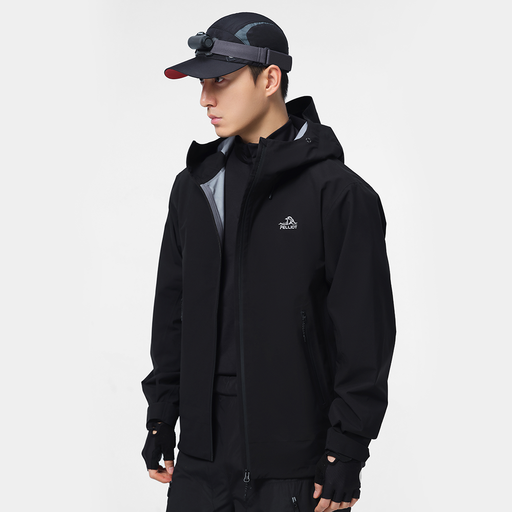
Why it suits this profile: This unisex hardshell is a good choice if you’re looking for one jacket for walks, commuting and light outdoor activities. The product information describes a utility fit, with sizing that allows room for layers if you choose a size up.
The product description mentions water- and wind-resistant features, breathable mesh or technical fabric, and a hard-wearing outer fabric. Before buying, check the latest size guide and details of the fastenings.
A unisex fit, a choice of sizes and a design intended for both town and trail, according to the product information.

Why it suits this profile: This women’s outdoor jacket is designed for walking in changeable conditions. According to the product description, it features DryVent fabric, fully sealed seams, an adjustable hood and a mesh lining.
The description mentions more than just a waterproof outer fabric: it also specifies sealed seams and adjustable features. According to the brand’s product information, the water-repellent finish can be re-treated in line with the care instructions.
Fully sealed seams, a breathable mesh lining, an adjustable hood and two zipped pockets.
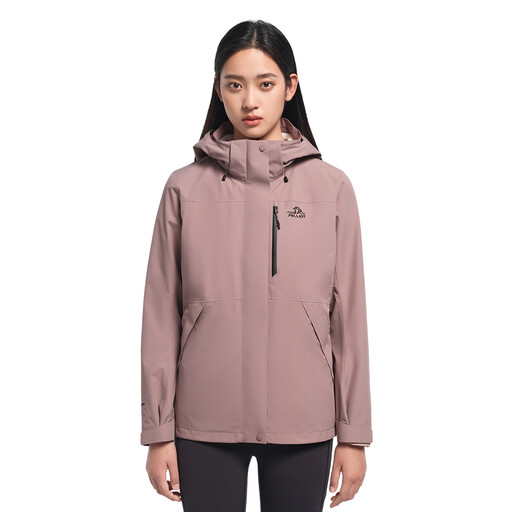
Why it suits this profile: This women’s jacket is suited to camping, trekking and cold-weather commutes. According to the product information, it can be worn as a 3-in-1 jacket: with just the outer layer, just the lining or both together.
The separate layers let you adjust the warmth to suit the weather. The stated product ratings are a hydrostatic head of 35,900 mm H₂O and an MVTR of 16,000 g/m²/24 hours. These figures are given according to the stated JIS method.
3-in-1 versatility, an adjustable hood, hem and cuffs, plus a stated abrasion resistance of more than 40,000 rub cycles.
We’ve put together a complete, up-to-date list of products that meet these strict selection criteria and the applicable European safety regulations.
Yes, but look for visibility, freedom of movement and ventilation. A jacket with adjustable cuffs, a hood that stays in place and zipped pockets is practical for commuting. For more intensive cycling, a breathable style may feel more comfortable than a heavily lined jacket.
That depends on how you use, wash and care for it, as well as how much friction it’s exposed to. The outer water-repellent layer may become less effective over time. Follow the care label, avoid fabric conditioner and regularly check the seams, zips and fabric. A damaged jacket may let water through, even if it’s been well cared for.
It depends on how you’ll use it. A 3-in-1 jacket gives you flexibility, as you can wear the layers separately. If you already own a good fleece and rain jacket, you may be paying twice for features you already have in your wardrobe. So compare the fabric, sizing, care requirements and how you’ll actually use the jacket.
