
Vandaag of morgen in huis

Kwaliteit gegarandeerd

Welkomstaanbiedingen ontgrendelen: GRATIS bezorging | Tot 80% korting | Gratis 30 dagen JoyPlus-proefperiode
Download de app
In the Netherlands, a waterproof outdoor jacket needs to cope with more than a brief shower. During a walk, rain can turn into strong winds, while cycling or trekking can quickly leave you feeling hot and clammy. Even so, marketing claims can be difficult to assess. A jacket labelled “waterproof” is not automatically suitable for mountain walking, and a warm winter coat is not always breathable enough for active use.
With these practical checks, you can compare a hardshell jacket, unisex rain jacket or 3-in-1 outdoor jacket based on verifiable product information.
Water-repellent and waterproof do not mean the same thing. A DWR finish can temporarily make raindrops roll off the fabric, but it says little about the seams, zips and membrane construction. Check whether the product description mentions taped seams, a waterproof membrane or a stated hydrostatic head.
A jacket may be described as breathable, but ventilation remains important during strenuous walking. Look for underarm zips, mesh, adjustable cuffs and a fit that leaves room for a base layer. Without these features, even a breathable walking jacket can feel clammy when cycling, trekking or climbing stairs.
A waterproof jacket for men or a unisex rain jacket is often worn over a fleece or down jacket. If you only wear a T-shirt when trying it on, you can easily choose a size that is too tight. Check the chest measurement, sleeve length and jacket length in centimetres. A slightly roomier fit can be more practical for walking and camping, as long as the cuffs and hem remain adjustable.
A hardshell jacket is designed as a protective outer layer. Pay attention to these points:
For example, the PELLIOT fleece-lined jacket for men lists a hydrostatic head of 35.900 mm H₂O according to JIS. The same product information states an MVTR of 16.000 g/m²/24 hours and more than 40.000 abrasion cycles. These are technical details from the product description. They are useful for comparison, but do not guarantee performance in every situation.
For a windproof outdoor jacket used during a strenuous walk, breathability and ventilation are more important than simply having a thick fabric. Underarm zips, a mesh lining and elasticated or adjustable cuffs help release excess heat.
A jacket for mountain walking must also provide enough freedom of movement across the shoulders and arms. Check whether the sleeves are long enough when you stretch your arms forwards. For cycling and commuting, a slightly longer back is often practical; for climbing and trekking, a shorter, more flexible cut may feel more comfortable.
A shell jacket mainly protects against rain and wind, but does not automatically provide enough warmth. Combine it with a fleece or insulating mid-layer. A 3-in-1 outdoor jacket offers greater flexibility: the outer layer, inner layer or both together can be worn separately, according to the product description.
Maintenance is also important. Wash a technical jacket according to the care label, fasten zips and hook-and-loop fastenings, and do not use fabric softener if the product instructions advise against it. Damaged coating, clogged fabric or incorrect drying can affect performance. A durable outdoor jacket is therefore not only hard-wearing, but also easy to care for properly.
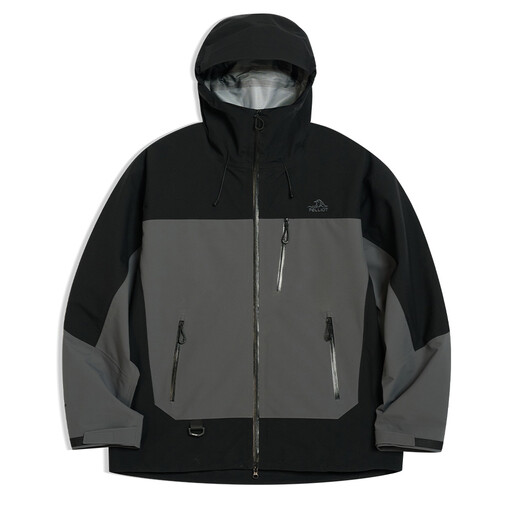
Why it suits this profile: This unisex hardshell is designed for rainy commutes, walks and occasional camping trips. The product information describes a waterproof, breathable and hard-wearing outer layer.
The description mentions not only rain protection, but also breathability, wind resistance and hard-wearing material. Before buying, check the size and the amount of room you need for layering.
Unisex fit; hardshell construction; according to the product information, suitable for the city, camping and trekking.

Why it suits this profile: According to the product information, the Triclimate system combines a protective outer layer with a down inner jacket. This makes it suitable for travel, walking and changing temperatures.
You do not have to choose between a separate rain layer and an insulated jacket: according to the description, the layers can be worn separately or together.
3-in-1 use; taped outer seams; underarm zips; 550 fill power down according to the product information.
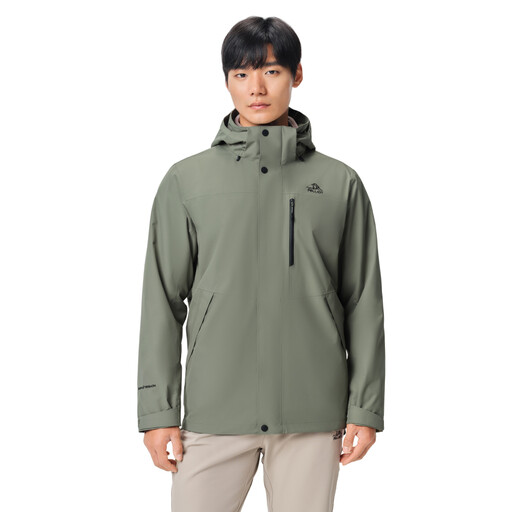
Why it suits this profile: According to the product information, this 3-in-1 outdoor jacket is intended for trekking, camping and everyday use in colder conditions.
The jacket consists of a shell and thermal inner layer. This allows you to adjust the insulation instead of relying on one heavy jacket for every type of weather.
35.900 mm H₂O hydrostatic head, 16.000 g/m²/24 hours MVTR and more than 40.000 abrasion cycles according to the product description.
We have put together a complete, up-to-date list of products that fully meet these strict selection criteria and the applicable European safety regulations.
No. Waterproofing and breathability are different properties. Check whether the manufacturer mentions a membrane, MVTR value, ventilation zips or a breathable lining. According to PELLIOT’s own product information, certain models have an MVTR value; compare these details with the level of activity you expect to undertake.
Always follow the care label and product instructions. Fasten zips and hook-and-loop fastenings, do not use fabric softener if this is discouraged, and allow the jacket to dry in the prescribed way. Some models may need their water-repellent outer layer to be treated again. Check first that the manufacturer permits this.
That depends on how you plan to use it. For short walks in mild rain, a separate hardshell jacket with a fleece may be sufficient. If you camp, travel or regularly move between cold, wind and rain, a 3-in-1 system could be beneficial. When choosing one, consider the weight, packability and space for an additional base layer.
