
Vandaag of morgen in huis

Kwaliteit gegarandeerd

Welkomstaanbiedingen ontgrendelen: GRATIS bezorging | Tot 80% korting | Gratis 30 dagen JoyPlus-proefperiode
Download de app
A waterproof outdoor jacket needs to cope with more than a brief shower in the UK. During a walk, strong winds, rain and falling temperatures can all occur at once. If you focus mainly on colour, brand name or an impressive waterproof rating, you could still end up with an impractical jacket.
The right choice depends on how you plan to use it. Are you looking for a jacket for commuting, a multi-day trek, camping or a mountain trip? Pay particular attention to the following pitfalls and check the product specifications you can verify.
A fully sealed jacket can keep rain out effectively, but during strenuous walking or climbing, body heat and moisture can build up. Check whether the product information also gives a breathability rating, for example using MVTR in grams per square metre per 24 hours.
A breathable outdoor jacket helps transfer moisture away from the body, but your experience also depends on exertion, base layers, temperature and ventilation zips. A brand’s claim about comfort or staying dry should therefore be read as a claim made by the brand, not a guarantee for every wearer.
A fleece-lined jacket or warm winter coat can be comfortable on cold days, but may quickly become too warm in milder weather. A 3-in-1 outdoor jacket offers greater flexibility: wear the outer layer, the inner layer or both together. Check, however, that the layers can be securely fastened together and that the fit leaves room for an extra shirt or jumper.
A high hydrostatic head rating is useful as a technical indication, but also look for taped seams, finished zips, adjustable cuffs and a close-fitting hood. Seams, pockets and openings are particularly important areas where rain can get in. Durability also matters if you walk with a rucksack or pass through rocky areas and branches.
Hydrostatic head is expressed in millimetres or, in some product descriptions, as mm H₂O. The figure indicates how much water pressure the material can withstand according to a particular test method. Always check whether the rating is linked to a standard or test method. For example, PELLIOT jackets are listed with a hydrostatic head of 35,900 mm H₂O according to JIS. According to PELLIOT’s product information, the outer fabric also has a highly abrasion-resistant construction.
That figure does not replace practical details. For walking and trekking, an adjustable hood, sealed cuffs and a drawcord at the hem are at least as relevant.
Breathability is often shown as MVTR, for example 16,000 g/m²/24 hours. This is a laboratory value for the amount of water vapour that can pass through the material according to the stated test method. The PELLIOT product description gives this rating according to JIS.
A higher figure does not automatically guarantee that you will feel dry during every activity. Wear a suitable base layer too, and use ventilation zips where available.
A windproof jacket reduces the impact of cold air, but warmth comes from the combination of clothing layers and fit. Look for:
For camping and winter walks, combining a waterproof outer layer with an insulating inner layer may be more practical than one heavily padded jacket. For intensive trekking, ventilation is often more important than maximum insulation.
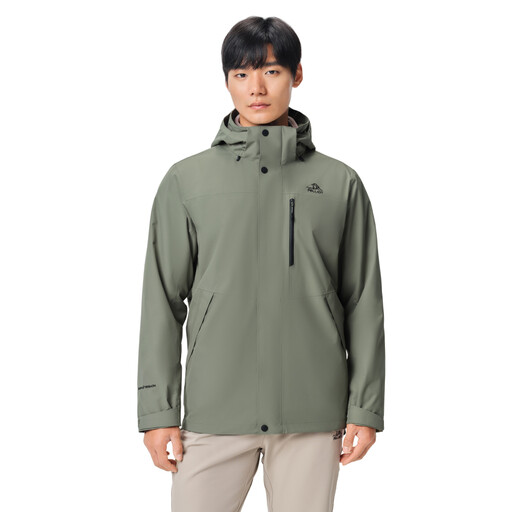
Why it suits this profile: The 3-in-1 design makes this men’s outdoor jacket suitable for commuting, walks and camping in different seasons.
The product description lists an outer layer, separate lining and the option to wear them together. This means you do not need a separate jacket for every type of weather.
According to the product specifications: 35,900 mm H₂O according to JIS, MVTR 16,000 g/m²/24 hours and abrasion resistance of more than 40,000 rub cycles.

Why it suits this profile: This technical jacket is designed for users looking for a system for changing outdoor conditions, with a protective outer layer and an insulated inner jacket.
According to the product description, the layers can be worn separately or together. This prevents a warm jacket from feeling unnecessarily heavy in milder weather.
The product specifications mention a GORE-TEX outer material made from recycled polyester, taped outer seams and 550-fill-power down insulation.
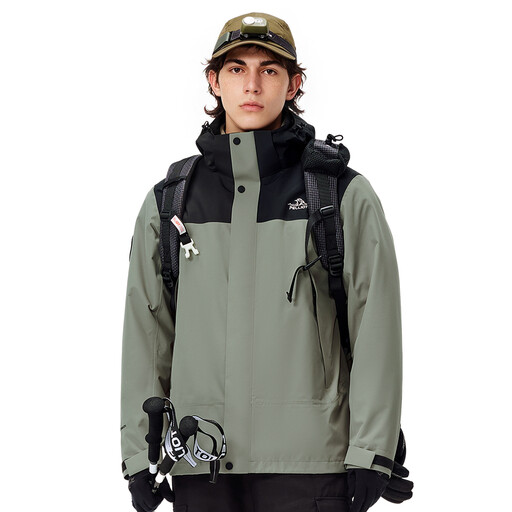
Why it suits this profile: This trekking jacket is intended for camping trips, rougher terrain and activities where it may be exposed to abrasion from branches, rocks or a rucksack.
The product description mentions a microporous STORMS BREATH membrane, seam taping and a scratch- and abrasion-resistant outer material. Check the current sizing and care information before buying.
According to the product information, the three wearing options are suitable for different temperature ranges; the hood, hem and cuffs are adjustable.
We have put together a complete, up-to-date list of products that fully meet these strict selection criteria and the applicable European safety regulations.
Measure your chest and compare it with the size chart for the specific model. Allow room for a fleece or jumper underneath. A jacket that is too tight restricts freedom of movement and can reduce the insulating effect of your layers.
Wash a waterproof walking jacket according to the care label. Close the zips, do not use bleach and avoid fabric softener if the manufacturer advises against it. The PELLIOT models specify cold washing on a delicate programme, no tumble drying and closing all zips before washing. An outer layer may become less water-repellent over time due to dirt, friction and repeated washing. Regularly check the seams, zips and hood.
That depends on the insulation. A separate shell keeps rain and wind out, but provides little warmth without an additional layer. Choose a fleece-lined jacket, a down inner jacket or a 3-in-1 model if you will also be outdoors in low temperatures.
Its lifespan depends on use, friction, washing and storage. A jacket that is often worn with a heavy rucksack will wear out faster than one used around town. Allow the jacket to dry completely before storing it and follow the care label.
For gentle use in the rain, waterproofing and effective fastenings are often the priorities. When walking, cycling or trekking, breathability and ventilation play a greater role. Look at both ratings and choose according to the intensity of your activity.
