
Vandaag of morgen in huis

Kwaliteit gegarandeerd

Welkomstaanbiedingen ontgrendelen: GRATIS bezorging | Tot 80% korting | Gratis 30 dagen JoyPlus-proefperiode
Download de app
A waterproof outdoor jacket needs to do more in the Netherlands than simply withstand a short shower. During a walk, cycle ride or camping trip, you may face gusty winds, prolonged rain and changing temperatures. At the same time, you do not want to end up in a heavy jacket that traps perspiration.
However, the product description does not always tell the whole story. Pay particular attention to the construction, specifications and fit. This helps you avoid paying for a jacket that becomes less comfortable after a few months or is not suited to how you plan to use it.
A jacket may be described as waterproof, but that tells you nothing about how comfortable it will be during active use. Also check whether the seams are taped or sealed and whether the jacket has a breathable membrane. Without properly sealed seams, rain can enter through the stitch holes.
A windproof jacket with a robust outer layer is not automatically warm either. A lightweight shell mainly protects you from rain and wind; for cold days, you will need a fleece or insulating layer.
A thick winter jacket can be comfortable when you are standing still, but may become too warm when trekking or cycling. A 3-in-1 jacket offers greater flexibility: wear the outer layer in the rain, the inner layer in mild cold or both layers together when it is cold and wet.
Do check whether the inner and outer jackets can be worn separately and how they attach to one another. Not every model with a removable lining offers the same options.
A walking jacket should leave enough room for a base layer and, if necessary, a fleece. A jacket that is too tight restricts your freedom of movement and can reduce the effectiveness of layering. A jacket that is too loose, on the other hand, allows wind in.
So look at chest, shoulder and sleeve measurements. Some models list body measurements, while others give the actual garment measurements. These are not the same thing.
The hydrostatic head, expressed in millimetres H₂O, indicates how much water pressure a fabric can withstand in a test. A higher value generally suggests greater protection against heavy rain, but real-world performance also depends on the seams, zips, hood and wear.
According to the product information, the PELLIOT fleece-lined women’s jacket has a hydrostatic head of 35.900 mm H₂O, measured according to JIS. This is a test result provided by the brand and is not a guarantee for every usage scenario. Also check whether the product description provides information about taped seams.
Some jackets express breathability as MVTR, meaning the amount of water vapour that can pass through one square metre of fabric in 24 hours according to a test. A higher MVTR value can help during exercise, but ventilation zips, clothing layers, temperature and humidity also have an impact.
The product information for the same PELLIOT women’s jacket lists an MVTR of 16.000 g/m²/24 hours. Treat this as a technical indication rather than a promise that the jacket will feel dry in all conditions.
Pay attention to these features before buying a women’s outdoor jacket or men’s outdoor jacket:
Wash the jacket according to the care label. Close the zips, use a suitable mild detergent and avoid bleach. A jacket that is not properly maintained may lose its water-repellent properties more quickly.

Why it suits this profile: This shell is designed for walking and everyday use in changeable weather. According to the product information, it has a standard fit, plus an adjustable hood, cuffs and hem.
The product information describes a waterproof, windproof and breathable DryVent layer with fully sealed seams. This means you are looking beyond the word “waterproof” alone.
According to The North Face, the shell is made from 100% recycled polyester with a PFC-free DWR finish. The jacket has two zipped pockets and a mesh lining.

Why it suits this profile: This Triclimate jacket is designed for anyone who wants to use one system for walks in cold, changeable conditions.
According to the product description, the two layers can be worn separately or together. This means you do not need a separate jacket for every season.
The product information lists a water-resistant outer layer with taped seams, underarm ventilation zips and a down lining with 550 fill power.
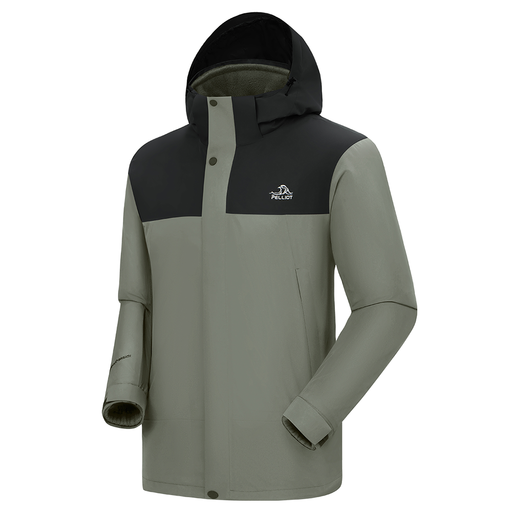
Why it suits this profile: This men’s outdoor jacket is well suited to camping, trekking and commuting, where protection from wind, rain and cold is important.
The 3-in-1 design allows it to be used as a shell, a lining or a combined jacket. The product description also mentions a microporous membrane and taped seams.
According to PELLIOT, the jacket has a thermal inner layer, a wind-resistant construction and a scratch- and abrasion-resistant outer fabric. Check the size guide and allowance for layers before buying.
We have put together a complete, up-to-date list of products that fully meet these strict selection criteria and the applicable European safety regulations.
No. Waterproofing and breathability are different properties. Look for a stated MVTR value, a membrane and ventilation options. A mesh lining or ventilation zip can improve comfort, but the result also depends on your level of exertion, base layers and weather conditions.
This depends on usage, washing, friction and care. The water-repellent DWR layer on the outside may become less effective over time. Follow the care label and only use a suitable reproofing treatment when recommended by the manufacturer. Also look out for wear on the shoulders and hips caused by a rucksack.
It can be, provided the lining offers enough warmth and the outer layer protects against rain and wind. Check the construction, fit and recommended operating temperature. For strenuous walking, a lighter combination with a breathable waterproof jacket may feel more comfortable than a heavily insulated jacket.
