
Vandaag of morgen in huis

Kwaliteit gegarandeerd

Welkomstaanbiedingen ontgrendelen: GRATIS bezorging | Tot 80% korting | Gratis 30 dagen JoyPlus-proefperiode
Download de app
A waterproof outdoor jacket needs to cope with more than a brief shower in the Netherlands. When cycling, walking or commuting, you often face rain, wind and changing temperatures. Even so, it is not wise to rely solely on terms such as “stormproof”, “all-weather” or “breathable”. These descriptions only mean something when the product details also include verifiable specifications.
As a Joybuy Product Recommendation Officer, I filter the most important information from product descriptions so that you can compare products with confidence. Below, you will discover what to look for, which pitfalls often lead to a disappointing purchase and which type of jacket best suits your needs.
A water-repellent coating initially makes raindrops roll off the fabric. That is not necessarily enough for prolonged rain. Look for terms such as hydrostatic head, taped seams and a specific waterproof rating.
A DWR coating, as found on various The North Face models, helps water bead on the surface. According to the product information, the coating may need to be reapplied over time. Its effectiveness therefore depends on care and use.
A thick winter jacket, men’s parka or fleece-lined jacket can be comfortable when you are sitting still, but during running, trekking or brisk walking, heat can quickly build up. A separate hardshell jacket with a fleece or insulating layer offers greater flexibility.
Pay attention to the difference between:
A walking jacket or trekking jacket should provide enough room for a shirt, fleece or lightweight down jacket. A jacket that is too tight restricts your freedom of movement and can put unnecessary strain on the zip or seams. Always check the size guide for the specific model; a size M is not the same across every brand.
Hydrostatic head is expressed in millimetres, or sometimes as mm H₂O. A higher figure indicates greater resistance to water pressure, but the jacket’s construction also matters. Seams, zips and the hood can all be potential weak points.
According to its own product description, the PELLIOT 3-in-1 fleece-lined jacket has a hydrostatic head of 35.900 mm H₂O according to JIS. The same description states an abrasion resistance of 40.000+ rub cycles. These are verifiable product details, but they do not show exactly how the jacket will perform in every type of weather in the Netherlands.
A breathable jacket moves moisture and heat from the inside to the outside. This is particularly relevant when cycling, walking, running or walking uphill. Look for the MVTR rating, expressed in g/(m²·24 hours), when available.
The product information for the PELLIOT jacket states an MVTR of 16.000 g/(m²·24 hours), according to JIS. Treat this as a comparison point, not a guarantee that you will stay dry in all conditions. The clothing worn underneath the jacket, the outside temperature and your level of exertion also affect comfort.
A windproof jacket needs more than a tightly woven outer fabric. Adjustable cuffs, a drawcord at the hem, a close-fitting hood and a storm flap behind the zip help prevent draughts.
For intensive use, underarm zips or other ventilation openings are practical. A waterproof jacket with a hood is also more convenient during sudden showers than a model that requires a separate rain cover.
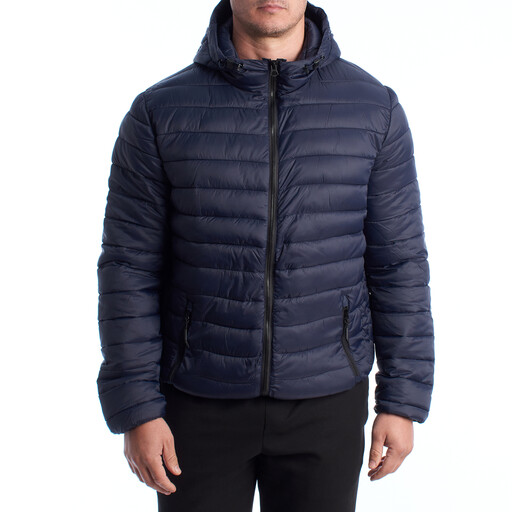
Why it suits this profile: A practical men’s winter jacket for everyday use, short walks and cold journeys around town.
The description includes specific details such as an adjustable hood, elasticated cuffs and an inside and outside pocket, rather than relying solely on general weather claims.
100% polyester according to the product information, with a hood, elasticated waistband and two pockets. The manufacturer recommends hand washing and advises against tumble drying.

Why it suits this profile: Designed for anyone who wants to use one system in changing conditions while walking, travelling or enjoying outdoor activities.
It is a 3-in-1 system: the outer layer and down-filled inner layer can be worn separately or together. This means you do not need a separate jacket for every type of weather.
According to the product information, the jacket has a GORE-TEX outer fabric, taped seams, underarm zips and a down insulation layer with 550 fill power.

Why it suits this profile: For camping, trekking and commuting when you want to combine protection from rain, wind and cold.
The jacket consists of an outer layer and a removable liner. You can therefore adjust the warmth instead of wearing a heavy winter jacket in milder weather.
The product description states a 35.900 mm H₂O hydrostatic head, MVTR of 16.000 g/(m²·24 hours), 40.000+ abrasion resistance cycles and an adjustable hood, hem and cuffs.
We have compiled a complete, up-to-date list of products that fully meet these strict selection criteria and the applicable European safety regulations.
Measure your bust, waist and hips while wearing a thin layer of clothing. Then compare these measurements with the jacket’s size guide. A trekking jacket or 3-in-1 jacket needs extra room around the shoulders and arms. Also check the sleeve length if you use long walking poles or a rucksack.
Care has a direct effect on waterproofing. Wash according to the care label, close zips and hook-and-loop fastenings, and do not use bleach. According to The North Face product information, a jacket with a DWR finish may need to be reproofed. Do not routinely wash a hardshell with fabric conditioner, as this can affect the performance of technical fabrics.
There is no fixed lifespan for every waterproof jacket. Frequent washing, abrasion from rucksack straps and prolonged exposure to sunlight or dirt can reduce performance. Regularly check the seams, zips and outer layer.
Not always. A hardshell jacket mainly protects against rain and wind, but often provides little insulation. Combine it with fleece or thermal clothing, or choose a fleece-lined jacket, padded jacket or 3-in-1 model when warmth is important.
Follow the care label, close all zips and use a mild detergent. Allow the jacket to air-dry when instructed. A DWR coating may need to be reapplied, so check the brand’s care instructions.
A breathable hardshell jacket with an adjustable hood, secure pockets and room for layers is practical. If you also need warmth, choose a 3-in-1 jacket or a separate fleece as a mid-layer. Focus on specific product details and fit, rather than just the brand name.
