
Vandaag of morgen in huis

Kwaliteit gegarandeerd

Welkomstaanbiedingen ontgrendelen: GRATIS bezorging | Tot 80% korting | Gratis 30 dagen JoyPlus-proefperiode
Download de app
A waterproof outdoor jacket needs to do more in the UK than simply cope with a brief shower. During a walk, bike ride or camping weekend, you may encounter rain, wind, changing temperatures and sometimes strenuous activity. Yet product pages are not always easy to compare.
Many buyers focus mainly on the brand name, an appealing photo or the term “water-repellent”. As a result, a jacket may disappoint in practice: it may not keep out rain for long enough, fail to wick away perspiration effectively or offer enough room for an extra layer. Use the following checks to choose more confidently between a women’s jacket, men’s jacket, rain jacket or trekking jacket.
A water-repellent jacket often has a coating that makes raindrops temporarily roll off the fabric. This is useful in light rain, but says little about prolonged rainfall. For more demanding use, the seams, zips and hood are also important.
Look out for terms such as:
A thick winter coat can be comfortable when you are sitting still, but may become too warm when walking or running. Conversely, a thin shell is suitable for protection from rain and wind, but may not be warm enough to serve as a winter coat.
A 3-in-1 jacket offers more ways to combine layers: an outer layer for rain and wind, an inner layer for warmth, or both together. However, check that the fit leaves enough room to wear layers without restricting your freedom of movement.
A breathable jacket can help move moisture from the inside to the outside, but the result also depends on exertion, temperature, base layers and ventilation options. A jacket with underarm zips and a mesh lining may be more practical during active use than a fully closed model.
Brand specifications are not a universal guarantee for every user. When a manufacturer makes a performance claim, you should read it as a claim based on the brand’s own research or testing method. Always compare the test method and consider the design as well.
A higher hydrostatic head rating generally indicates greater resistance to water pressure, but the figure is only properly comparable when the same test method has been used. For example, the manufacturer lists a hydrostatic head of 35.900 mm H₂O according to JIS and an abrasion resistance of more than 40.000 rub cycles for the PELLIOT fleece-lined outdoor jacket. These are product specifications from PELLIOT’s product description, not an independent assessment.
For everyday use, an adjustable hood, sealed cuffs, a drawcord in the hem and a storm flap can be at least as relevant as a high figure.
Breathability is often expressed as MVTR, for example in grams per square metre per 24 hours. The PELLIOT 3-in-1 jacket mentioned above is listed by the manufacturer as having 16.000 g/m²/24 hours according to JIS. Treat this as a standardised product value, not a promise that you will stay dry during every activity.
For walking, trekking and commuting, these details are also important:
A shell made from polyester, nylon or a technical blend does not automatically protect against every weather condition. Look at the construction, coating, lining and care instructions. According to the product information, a PELLIOT 3-in-1 model combines a waterproof outer layer with a fleece-like inner layer. The layers can be worn separately or together.
According to the product description, a The North Face Quest model uses 2L DryVent fabric, a mesh lining and a DWR finish. The manufacturer states that the water-repellent finish can be maintained again when necessary. Always follow the care label: incorrect washing, fabric softener or high drying temperatures can affect the finish.

Why it suits this profile: The combination of an outer layer and fleece inner layer makes this model suitable for travelling, camping, commuting and walking in changeable conditions.
According to the manufacturer, the shell and inner layer can be worn separately. This means you do not need a separate jacket for every type of weather.
According to the product description: hydrostatic head of 35.900 mm H₂O according to JIS, MVTR of 16.000 g/m²/24 hours, and an adjustable hood, hem and cuffs.

Why it suits this profile: According to the product description, this women’s jacket is designed for walking and changeable weather, with a technical outer layer and a standard fit.
The product information mentions fully sealed seams, an adjustable hood and an adjustable hem. These are verifiable details that go beyond simply calling a product water-repellent.
According to The North Face: DryVent fabric, windproof and breathable construction, mesh lining and two zipped pockets.
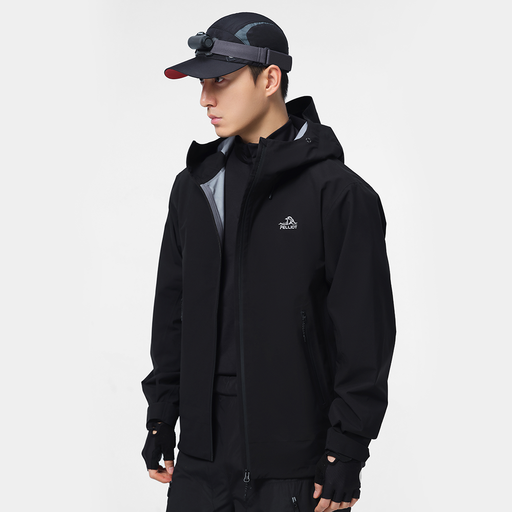
Why it suits this profile: This unisex hardshell is designed for users looking for a lightweight outer layer for trekking, water sports, travelling and everyday cycling.
The product description mentions a roomier utility fit and recommends choosing one size larger for thick mid-layers. Check the measurements before ordering.
According to the manufacturer: waterproof and wind-resistant construction, moisture-regulating properties and hard-wearing material for more rugged terrain.
Measure your chest, waist and arm length and compare them with the size chart for the specific model. Sizes vary by brand and sometimes by product range. For a walking or trekking jacket, you should also allow room for a fleece jacket or thermal layer underneath.
When trying it on, check for:
Wash a waterproof outdoor jacket according to the care label and do not use fabric softener if it is not recommended. Close the zips before washing and allow the jacket to dry as instructed. A DWR finish may need maintenance; for this, follow the manufacturer’s instructions only.
We have put together a complete, up-to-date list of products that fully meet these strict selection criteria and the applicable European safety regulations.
Not always. A hardshell mainly protects against rain and wind and often provides little insulation. Wear a fleece jacket or down layer underneath, or choose an insulated 3-in-1 jacket if you want one system for several seasons.
This depends on use, friction, washing and care. The outer fabric may remain technically waterproof while the water-repellent finish becomes less effective. Check the care label and only treat the jacket with a suitable waterproofing product.
For short journeys in persistent rain, waterproofing is often more important. On longer bike rides, walks or runs, breathability, ventilation zips and a good fit are more important. Choose the specifications based on your daily route and level of exertion.
