
Vandaag of morgen in huis

Kwaliteit gegarandeerd

Welkomstaanbiedingen ontgrendelen: GRATIS bezorging | Tot 80% korting | Gratis 30 dagen JoyPlus-proefperiode
Download de app
A waterproof outdoor jacket needs to cope with more than a brief shower in the Netherlands. Whether you are walking, cycling, camping or commuting, you may encounter wind, prolonged rain and changing temperatures. Yet a striking marketing term means little if you do not know which specifications support it.
As a Joybuy Product Recommendation Officer, I therefore focus primarily on verifiable product information. Before buying, look out for these three common pitfalls:
The hydrostatic head is usually expressed in millimetres H₂O. This indicates the pressure that a fabric can withstand according to a particular test method. A higher rating does not automatically guarantee long-lasting protection in every situation, but it does provide a useful point of comparison.
According to the product information, the PELLIOT fleece-lined models have a hydrostatic head rating of 35,900 mm H₂O according to JIS. They are also described as having an abrasion resistance of more than 40,000 rub cycles. The PELLIOT hardshell jacket is described as having a stormproof, windproof and abrasion-resistant outer fabric. However, the product description does not state a specific hydrostatic head rating. It is therefore best to compare this jacket primarily in terms of construction, fit and intended use.
Seams are another important consideration. According to the product information for the PELLIOT 3-in-1 jackets, the seams feature high-density taping. This can help limit water ingress through the seams, but the overall protection also depends on the zips, hood and care.
A waterproof jacket can keep rain out, but you also want moisture from perspiration to escape. So look at MVTR, meaning the amount of water vapour a fabric can release over 24 hours. This is expressed in g/m²/24 hours.
According to its own product information, the PELLIOT fleece-lined jacket has a breathability rating of 16,000 g/m²/24 hours according to JIS. This is a technical product specification, not a guarantee that everyone will feel dry in the jacket under all conditions. Temperature, clothing layers and activity level also play a part.
If you mainly go on short walks, a basic waterproof jacket may be sufficient. For trekking, cycling or an outdoor jacket for camping and trekking, ventilation is more important. A hardshell jacket usually works well as a protective outer layer, while a fleece-lined jacket provides more warmth.
A 3-in-1 outdoor jacket consists of an outer jacket and an inner layer that can be worn together or separately. This is practical in changeable weather:
According to the product description, the PELLIOT fleece-lined jackets have a thermal inner layer, adjustable hood, cuffs and hem. This makes the combined jacket suitable for different seasons, provided the fit leaves room for an additional base layer.
A fleece-lined jacket is particularly appealing if warmth is your priority. A hardshell jacket is lighter and more flexible as a rain and wind layer, but according to the stated product information it does not have a separate insulating lining. For every jacket, check the size chart in centimetres rather than relying solely on S, M or L.
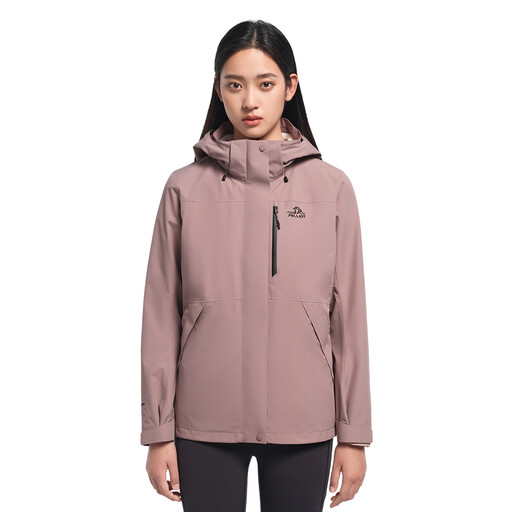
Why it suits this profile: A versatile jacket for walking, travel, everyday use and light camping trips. The outer layer and lining can be worn separately.
The product information states a hydrostatic head rating of 35,900 mm H₂O, taped seams and adjustable sections. However, check the size and room for layers before ordering.
3-in-1 construction, fleece lining, stated breathability of 16,000 g/m²/24 hours and sizes S to XXXL.
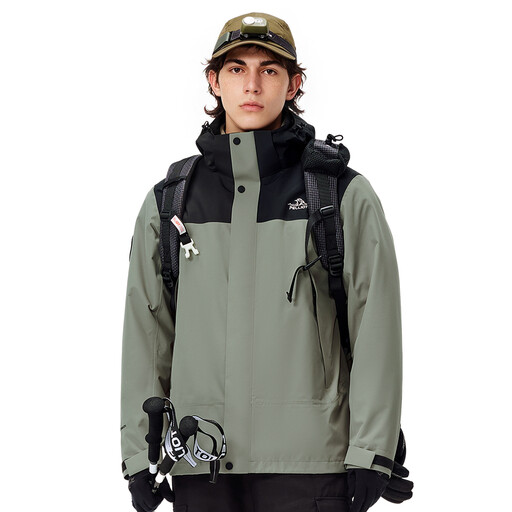
Why it suits this profile: Designed for users who want one jacket for trekking, camping, commuting and several seasons.
According to the product description, the jacket has a STORMS BREATH membrane, taped seams and an abrasion-resistant outer layer. The stated temperature indications are brand information, not a guarantee for every use.
Separate shell and lining, windproof construction, adjustable layering and sizes S to XXXL.
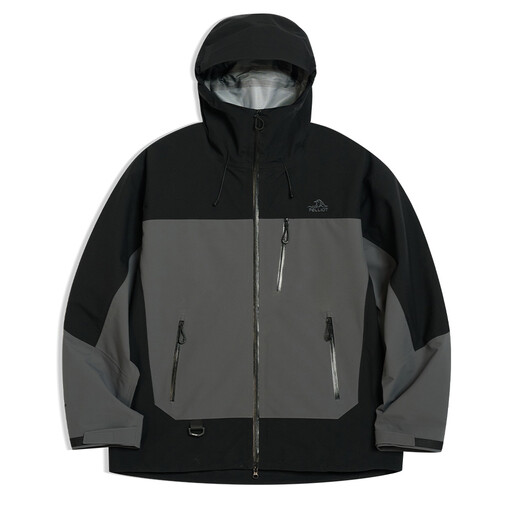
Why it suits this profile: A practical outer layer for rainy walks, trekking, cycling and everyday use when a separate insulating layer is preferred.
The product information describes a windproof, waterproof and abrasion-resistant outer fabric. As no hydrostatic head rating is provided, it is not possible to compare it on the basis of that figure alone.
Hardshell design, unisex fit, wind protection and sizes XS to XXL.
A waterproof outdoor jacket performs better when the clothing underneath can wick moisture away. A quick-drying sports shirt made from technical fibres is more practical than a heavy cotton shirt during intense exercise.
According to the product information, the PELLIOT shirts use Toray STORMDRY technology and POLYGIENE treatment. The stated product values include a water-spreading time of less than one second, an absorption rate of 243% and a drying value of 0.38 g/h. These are stated product specifications; the experience may vary depending on the activity and wash cycle. The brand describes the treatment as antibacterial for odour control. This is not a medical claim.
For everyday use, a lightweight short-sleeved shirt or cotton T-shirt is also suitable. When putting together outdoor clothing for men and women, it is a good idea to consider the fit, freedom of movement and care instructions for each layer.
We have put together a complete, up-to-date list of products that fully meet these strict selection criteria and the applicable European safety regulations.
Always follow the care label and product information. The PELLIOT jackets mentioned are stated to be machine-washable on a cold, gentle cycle. Do not use bleach, fasten the zips before washing and avoid tumble drying. A low ironing temperature is recommended, but with technical fabrics, ironing directly over prints or membranes is best avoided.
Store the jacket completely dry and check the zips, cuffs and seams after each season. A water-repellent finish can diminish with use and washing; only reproof the jacket if the care label permits it.
Not necessarily. Check whether the manufacturer provides an MVTR rating or comparable test information. A jacket with a membrane can keep water out while allowing vapour to escape, but exercise, temperature and clothing layers affect wearing comfort.
A hardshell jacket is generally a protective outer layer against rain and wind. A 3-in-1 outdoor jacket combines this outer layer with a removable inner layer. This allows you to adapt the jacket to the weather, although the complete jacket may be heavier.
Measure your chest, shoulders and sleeve length, then compare them with the size chart for the specific model. If you want to wear a fleece or thick jumper underneath, allow extra room for movement. Do not choose based solely on your usual letter size.
