
Vandaag of morgen in huis

Kwaliteit gegarandeerd

Welkomstaanbiedingen ontgrendelen: GRATIS bezorging | Tot 80% korting | Gratis 30 dagen JoyPlus-proefperiode
Download de app
A waterproof outdoor jacket needs to cope with more than a brief shower in the Netherlands. The weather can change quickly while you’re out walking, and cycling or camping can also mean dealing with wind, damp and restricted movement. But a bold product name doesn’t tell you much about how a jacket performs day to day. Check its construction, performance figures, fit and care instructions instead.
A jacket may keep the rain out but still feel uncomfortable on a brisk walk. Without enough ventilation, perspiration can build up inside. So don’t just look for water resistance: choose a breathable outdoor jacket with details about moisture transfer or ventilation zips, too.
A lightweight waterproof jacket for walking may fit well over a T-shirt but feel restrictive over a fleece or insulating layer. Check the chest, shoulder and sleeve measurements in centimetres. If you’re trekking in colder conditions, you’ll need room for a mid-layer. Going up a size may help, provided the size guide and your build support it.
Terms such as “storm-proof”, “extreme protection” and “all-weather” are product claims. The manufacturer’s product description says these PELLIOT jackets are designed for rain, wind and rougher terrain, but how well they suit your needs also depends on the seams, zips, hood, care and duration of use. Check which performance figures are actually provided.
Hydrostatic head indicates how much water pressure a material can withstand under a particular test method. A higher figure may suggest better protection in prolonged rain, but it doesn’t automatically tell you everything about finished seams or zips. According to the product information, the PELLIOT fleece-lined models have a hydrostatic head of 35,900 mm H₂O according to JIS. The same description also gives a breathability rating of 16,000 g/m²/24 hours according to JIS.
For a hardshell jacket, also look for:
A waterproof jacket for walking should let moisture escape from the inside. An MVTR figure, such as 16,000 g/m²/24 hours for the 3-in-1 models mentioned, can help you compare products more objectively. Test methods and conditions can vary, so use figures like these mainly to compare products within the same category.
Ventilation zips can be useful during strenuous activity. According to the product description, the PELLIOT Rock Shell styles have longer underarm zips. These let in extra air without you having to unzip the whole jacket.
A windproof jacket for walking or camping needs to do more than keep out the rain: it should also stand up to regular use. Hardshells are often made from nylon or polyester blends with a waterproof membrane. The product information for the black and purple PELLIOT jackets lists a nylon or polyester blend, a waterproof laminate layer and a mesh or technical lining.
A 3-in-1 jacket consists of an outer layer and a removable inner layer. You can wear the shell in the rain, wear the fleece on its own in dry weather or combine both in colder conditions. According to the product description, the green fleece-lined style has an abrasion resistance rating of 40,000+ rub cycles. Treat this as a stated product specification, not a guarantee of a particular lifespan.
You don’t always need a technical mountain jacket for a short cycle ride. For everyday wear, weight, packability and a neutral colour may matter more. If you go on long walks, camping trips or mountain treks, you’ll get more use from ventilation, adjustability and hard-wearing fabric.
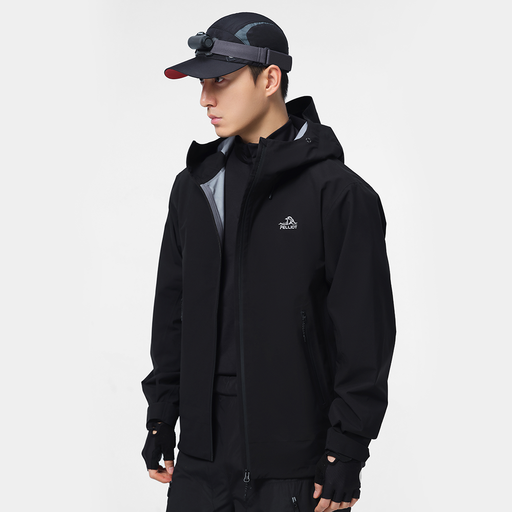
Why it suits this profile: According to the product description, this unisex outdoor jacket has a utility fit and is designed for everything from city commutes to walking routes. Its black colour is easy to pair with everyday clothes.
The size guide lists the length, chest, shoulders and sleeves. That lets you compare the fit instead of relying on the letter size alone.
Hardshell construction, wind-resistant properties and a mesh or technical lining described as breathable.
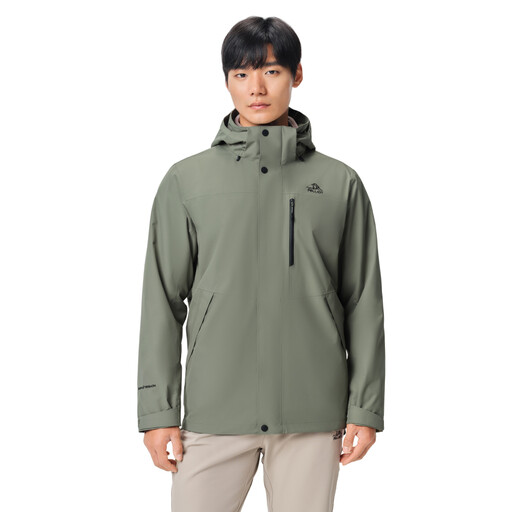
Why it suits this profile: The 3-in-1 design suits anyone looking for a single system to wear when camping, trekking or commuting in changeable temperatures.
The specifications give clear figures for hydrostatic head, breathability and abrasion resistance. That gives you more to go on than a general storm-proof claim.
35,900 mm H₂O hydrostatic head, breathability of 16,000 g/m²/24 hours, and can be worn as a shell, lining or combined jacket.
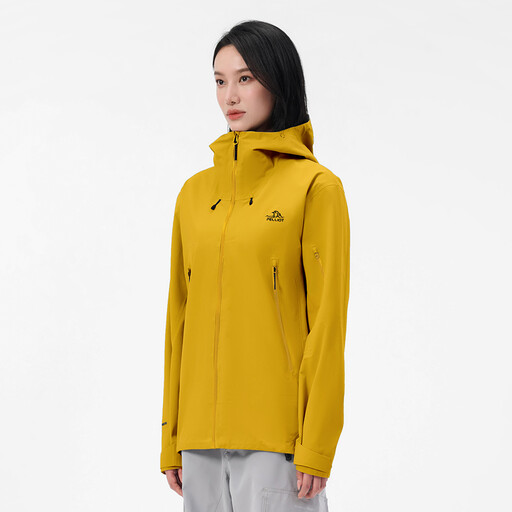
Why it suits this profile: According to the product description, this Pro version is designed for intensive activities and varied terrain. The yellow colour may also help you stay visible outdoors.
The longer underarm ventilation zips offer a practical way to regulate heat and moisture during activity.
Lighter, stretchier fabric according to the product description, ventilation zips and a RECCO reflector to help search teams in mountain areas.
We’ve put together a complete, up-to-date list of products that meet these strict selection criteria and current European safety regulations.
Ideally, try a jacket on over the layers you plan to wear. Check that you can move freely at the shoulders, and make sure the sleeves are long enough when you reach forwards. A jacket that’s too roomy can let the wind in; one that’s too tight can restrict ventilation and movement.
Care affects how well a waterproof trekking jacket performs. Always follow the care label. For the PELLIOT models mentioned, the advice includes washing gently in cold water, not using bleach, closing the zips and leaving the jacket to air-dry. Fabric softener can damage the properties of technical fabrics. Don’t iron or tumble-dry the jacket if the product instructions advise against it.
It can be, especially if it has an adjustable hood, plenty of room to move and good ventilation. For strenuous cycling, ventilation zips and a breathable construction matter more than a high hydrostatic head alone.
Its lifespan depends on how you use, wash, rub and store it. Hard-wearing fabric can help when trekking, but no product specification guarantees a set lifespan. Hang the jacket up to dry, follow the care label and regularly check the seams, zips and water-repellent outer layer.
Choose a hardshell if protection from rain and wind is your main priority and you prefer to manage your own layers. A 3-in-1 style is more practical if you want one jacket for different seasons and situations. Bear in mind, though, the extra weight and the fit of the inner layer.
