
Vandaag of morgen in huis

Kwaliteit gegarandeerd

Welkomstaanbiedingen ontgrendelen: GRATIS bezorging | Tot 80% korting | Gratis 30 dagen JoyPlus-proefperiode
Download de app
A waterproof outdoor jacket needs to cope with more than a brief shower in the UK. The weather can change quickly during a walk, while cycling, camping and commuting all place different demands on fit and ventilation. Yet a catchy product name tells you little about how a jacket performs day to day.
Three common pitfalls are worth watching out for:
So don’t rely on the marketing copy alone. Check the test figures, construction, materials and care instructions.
For a hardshell jacket, the hydrostatic head rating indicates the pressure the fabric can withstand in a particular test. For example, the PELLIOT 3-in-1 models list 35.900 mm H₂O according to JIS. This is a product specification from the manufacturer’s description, not a guarantee that the jacket will keep you dry in every situation.
Also look for:
According to its product description, the THE North Face Quest Jacket is made with fully sealed seams and DryVent fabric. These are specific features you can check, unlike general claims such as “stormproof”.
A waterproof walking jacket should let moisture escape from the inside. The MVTR rating is often used for this: the number of grams of water vapour that pass through one square metre of fabric in 24 hours, according to a test.
The PELLIOT fleece-lined 3-in-1 jacket lists an MVTR of 16.000 g/m²/24 hours according to JIS. Its product description says the fabric is designed to wick away moisture during activity. Treat this as a useful comparison, not a guaranteed result for every wearer. Your level of exertion, the temperature, your clothing layers and the ventilation openings all affect comfort.
A mesh lining, underarm zips or a looser fit can also make a difference in practice. So a breathable outdoor jacket won’t necessarily feel cool when you’re walking at a brisk pace.
The outer fabric matters too, especially for trekking, camping and rocky terrain. The PELLIOT 3-in-1 jacket mentioned above lists 40.000+ abrasion cycles in its product information. According to the manufacturer, the fabric is designed to cope with brushing against branches and rough surfaces. For long-term use, check the seams, zips and attachment points too.
On cold days, a 3-in-1 winter jacket may be more practical than a single thick layer. You can wear the outer layer for protection from rain and wind, wear the inner layer on its own, or combine the two. A fleece-lined jacket provides extra warmth, but may feel too hot on a strenuous walk. A separate fleece as a mid-layer gives you more flexibility.
The selection below matches product specifications to familiar situations. Before buying, always check current size availability and the full product page.
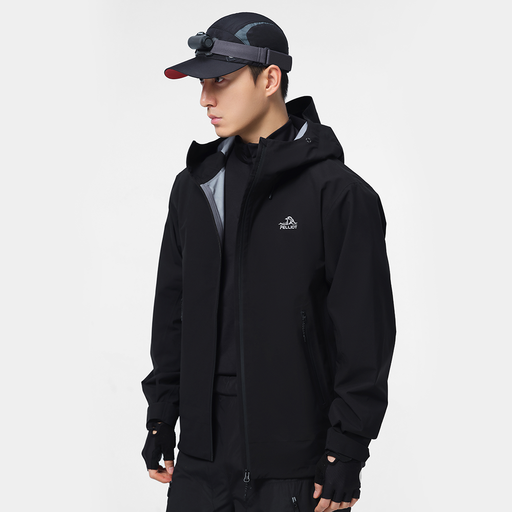
Why it suits this profile: According to its product description, this unisex hardshell is designed for rain, wind, walking and everyday use. The size chart gives a chest measurement of 112 cm for size S; check that this is right for you before ordering.
The description mentions not only water and wind resistance, but also a mesh or technical lining and a durable outer fabric. The fit is backed up with specific measurements.
A unisex design, room to adjust your layers thanks to its utility fit, and an outer fabric that the description says is abrasion-resistant.

Why it suits this profile: This walking rain jacket is a good option if you’re looking for a familiar shell style with specific features for changeable weather and commuting.
According to the product description, the jacket has sealed seams, an adjustable hood, adjustable cuffs and a drawcord at the hem.
2L DryVent fabric, a mesh lining, two zipped pockets and a DWR finish, according to the product information.
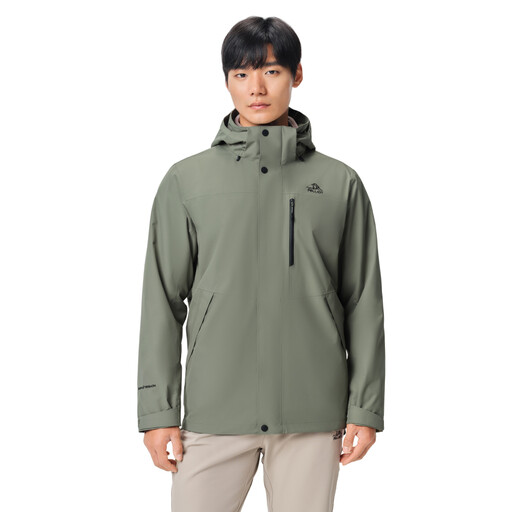
Why it suits this profile: This fleece-lined jacket is designed for camping, trekking and cold commutes where warmth and flexible layering are important.
The product description lists different ways to wear it: the shell on its own, the lining on its own, or both together. This lets you adapt the jacket to the temperature and your level of activity.
According to the manufacturer: 35.900 mm H₂O, 16.000 g/m²/24 hours and more than 40.000 abrasion cycles. The jacket also has an adjustable hood, hem and cuffs.
We’ve put together a complete, up-to-date list of products that meet these strict selection criteria and the applicable European safety requirements.
Measure your chest while wearing a thin shirt, then compare the measurement with the size chart for the specific model. Allow room for a fleece or thermal top as a mid-layer. If you’re between sizes, the larger one may be more practical for layering, but check the sleeve length and jacket length too.
Wash your waterproof outdoor jacket according to the care label. Don’t use fabric softener on technical fabrics, and fasten the zips before washing. Leave the jacket to air-dry if the product information recommends it. The water-repellent finish may become less effective over time; check the label before applying a reproofing treatment.
That depends on its breathability, fit and how hard you’re walking. Look for a stated MVTR rating and practical ventilation. No specification can predict exactly how comfortable a jacket will feel for every walker.
Its lifespan depends on how you use it, friction, washing and care. Check the seams, zips and water-repellent layer regularly. A jacket that often rubs against branches or rocks will wear out faster than one used for city walks.
Not necessarily. A hardshell with a separate fleece is more flexible if you often switch between wet weather and activity. A 3-in-1 model is especially practical if you want one system for rain, wind and cold days. Consider how warm it is, how each layer fits and whether you can wear them separately.
