
Vandaag of morgen in huis

Kwaliteit gegarandeerd

Welkomstaanbiedingen ontgrendelen: GRATIS bezorging | Tot 80% korting | Gratis 30 dagen JoyPlus-proefperiode
Download de app
Choosing a waterproof outdoor jacket might seem straightforward at first. However, many shoppers fall for the same marketing claims. For example, a jacket can be water-repellent without being able to withstand prolonged rain. Similarly, a thickly padded jacket might feel warm, but it could offer too little ventilation during a brisk walk.
For UK conditions, three things are particularly important: protection from rain and wind, sufficient breathability, and a fit that allows you to move freely and wear layers. Below, you'll find what to look out for before buying a waterproof outdoor jacket.
A Durable Water-Repellent (DWR) coating helps raindrops roll off the outer fabric. However, this doesn't automatically mean the jacket is waterproof for long periods. Therefore, always check if the product description mentions a waterproof membrane, welded or taped seams, and an adjustable hood.
A waterproof walking jacket with well-sealed seams and a close-fitting collar is more practical during prolonged downpours than a jacket that's only been treated on the outside.
A fleece-lined jacket or a 3-in-1 outdoor jacket can be useful in changeable temperatures. While extra insulation is nice for leisurely camping, heat can build up during a fast-paced walk or climb. Look for ventilation zips, a mesh lining, and the option to zip out the inner layer.
A jacket that's too tight will pull at the shoulders and can restrict your freedom of movement. A jacket that's too loose will let in the wind and make layering unnecessarily difficult. Don't just look at S, M, or L; compare the chest circumference, back length, shoulder width, and sleeve length with your own measurements.
For a hardshell jacket that you'll wear over a fleece or an insulation layer, you might need to go one size up. Always follow the size chart for the specific model.
Waterproofness is sometimes indicated by a water column rating in millimetres. According to the product description for the PELLIOT fleece-lined jacket for Woman Purple, the stated water column is 35,900 mm H₂O according to JIS. The same description mentions taped seams. These are verifiable product specifications, but the actual protection also depends on wear and tear, maintenance, and correctly fastening the zips and cuffs.
Also, look for:
A breathable rain jacket wicks moist air away from your body. This is particularly relevant if you're using a trekking jacket during a strenuous climb or a long walk. A commonly used value is the Moisture Vapour Transmission Rate (MVTR), expressed in grams per square metre per 24 hours.
The aforementioned PELLIOT fleece-lined jacket states an MVTR of 16,000 g/m²/24h according to JIS. Think of this as a product specification, not a guarantee that you'll stay dry in all conditions. High humidity, multiple layers and a backpack can all affect ventilation.
Ventilation zips under the armpits (pit zips) are also useful. The product description for the PELLIOT Rock Shell Pro mentions longer pit zips for extra air circulation.
A hardshell is usually an outer layer that protects against rain and wind. Warmth then comes from a fleece, jumper or insulated jacket worn underneath. A 3-in-1 outdoor jacket combines these layers into a single system: you can wear the shell, the inner layer, or both together.
Before you buy, check:
According to the product information for various PELLIOT models, recycled material is used in the outer fabric. Check the product page to see which model and composition this applies to.
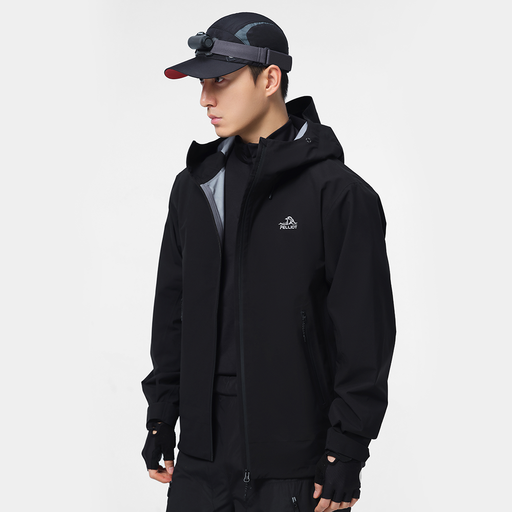
Why it's a good fit: This unisex outdoor jacket is a practical outer layer for daily cycling, walking and occasional trekking. The black colour goes with various clothing styles.
The product description mentions a waterproof and wind-resistant hardshell, a breathable mesh or technical lining, and a durable fabric. Be sure to check current size availability and maintenance instructions.
Unisex fit, sizes XS to XXL according to the product information, and a design suitable for everything from the city to the trail.

Why it's a good fit: This waterproof women's jacket is designed for walking and daily use in changeable weather, with a standard fit and a wide range of EU sizes.
According to the product description, the jacket has fully taped seams, DryVent fabric, an adjustable hood and elasticated cuffs. This makes its construction more verifiable than a simple 'rain-resistant' claim.
100% polyester outer fabric according to the product information, a mesh lining and two zipped pockets. The stated size L corresponds to an EU 42.
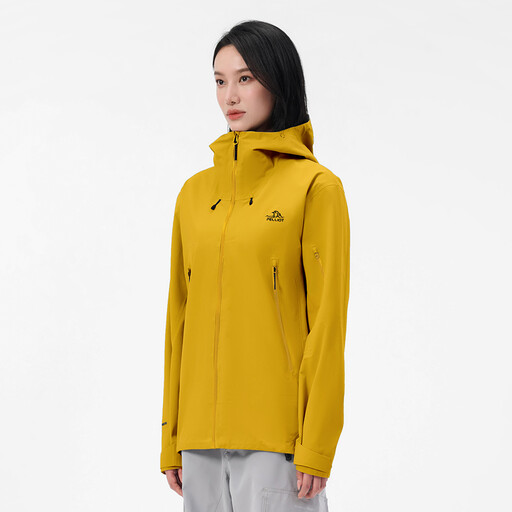
Why it's a good fit: The yellow colour increases your visibility on hiking trails and while travelling. The product specifications are geared towards trekking, camping and varied terrain.
The product description mentions pit zips for ventilation, a more elastic outer material and a durable construction. This shows a greater focus on ventilation and freedom of movement than you'd find in a basic rain jacket.
According to the product information, it has long pit zips, a zipped pocket on the sleeve and a RECCO reflector. These features are aimed at outdoor use, but they are not a substitute for proper mountain safety planning.

Why it's a good fit: This 3-in-1 outdoor jacket is ideal for those who want a single system for commuting, camping and walking in different seasons.
The product description mentions three ways to wear it: outer layer, inner layer, or combined. This allows you to adjust the warmth instead of using one heavy jacket for every situation.
Shell and thermal lining can be worn separately, plus sizes S to XXXL are available according to the product information. Check the stated temperature ranges against your own activity level and layering system.
We have compiled a complete, up-to-date list of products that fully meet these strict selection criteria and comply with current European safety regulations.
Use this quick checklist before you buy:
A waterproof outdoor jacket for mountaineering has higher requirements for durability, ventilation and freedom of movement than a jacket for urban use. A simpler model may be sufficient for a cycle ride around town. For multi-day treks, maintenance, layering options and pocket layout become more important.
The lifespan depends on how you use it, friction from a backpack, washing, and how you maintain the outer layer. Wash it according to the label, close all zips and hook-and-loop fasteners, and avoid fabric softener if the product information advises against it. Over time, check the seams, coating and zips for wear.
Yes, a breathable rain jacket can be suitable, but its effectiveness depends on your level of exertion, the temperature and the humidity. Pit zips and a mesh lining help with ventilation. It's best to wear several thin layers so you can better regulate your temperature and manage moisture.
A breathable hardshell jacket is primarily a protective outer layer against rain and wind. A 3-in-1 model usually combines a shell with a warm inner layer. The hardshell is lighter and more flexible for layering, while the 3-in-1 outdoor jacket offers more versatility from a single purchase.
