
Vandaag of morgen in huis

Kwaliteit gegarandeerd

Welkomstaanbiedingen ontgrendelen: GRATIS bezorging | Tot 80% korting | Gratis 30 dagen JoyPlus-proefperiode
Download de app
A waterproof men's jacket needs to do more than withstand a brief shower in the UK. Whether you're cycling, walking or camping for the weekend, you'll face wind, prolonged rain and changing temperatures. Yet a prominent label such as “stormproof” or “breathable” doesn't automatically tell you how well a jacket will perform in everyday use.
Focus instead on features you can check: seam construction, breathability, fit and care instructions. Read on to find out which common pitfalls can lead to a costly mistake, and which styles suit different needs.
A jacket may have a waterproof outer layer, yet water can still get in through zips, stitched seams or the hood. Check whether the product description mentions taped or sealed seams. According to its product description, the The North Face NF0A8DY2 uses seam-sealed DryVent fabric. This is a product specification, not a guarantee that the jacket will keep you completely dry in every weather condition.
Breathable fabric helps release moisture and heat, but comfort also depends on how much you're exerting yourself, the layers you're wearing and the ventilation. Where possible, look for a measurement such as MVTR. According to its product description, the PELLIOT fleece-lined jacket has an MVTR of 16,000 g/m²/24 hours. Use figures like this mainly to compare different styles; performance in practice can vary depending on your activity and the weather.
A fleece-lined jacket or men's winter jacket is comfortable when you're standing still, but can get too warm on a trek. Conversely, a lightweight hardshell jacket can work well as an outer layer, but may not provide enough insulation in winter. Before you buy, think about whether you need a jacket for commuting, an active walking jacket or a 3-in-1 jacket for different seasons.
A hardshell jacket is designed to protect you from rain and wind as an outer layer. Look for:
According to its product information, the PELLIOT fleece-lined jacket has a hydrostatic head rating of 35,900 mm H₂O and withstands more than 40,000 abrasion cycles. These figures come from the brand's product description. They're useful for comparison, but don't tell you everything about how long the jacket will last with intensive use.
Moisture management matters when you're walking, cycling or running. A jacket with underarm zips, a mesh lining or a breathable membrane may be more practical than a fully closed style. A windproof jacket with no ventilation can feel stuffy when you're active, even if the outer fabric keeps the rain out.
If possible, measure your chest and compare it with the size chart for the specific product. Sizes vary between brands and styles. If you're choosing an outdoor jacket for men, allow room for a fleece or thermal layer underneath.
For example, the PELLIOT Green hardshell jacket lists a length of 74 cm, a chest measurement of 127 cm and a sleeve length of 61.7 cm for size L. The North Face NF0A8DY2 uses chest, hip and arm length measurements. So don't just look at “L” or “XL”: check the measurements too.
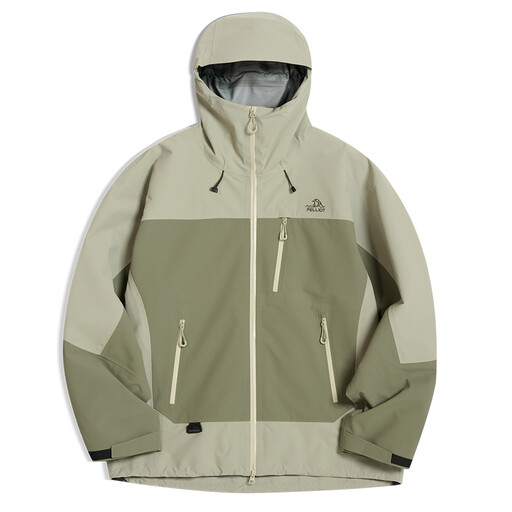
Why it suits this profile: This unisex hardshell is designed for everyday use, travel and light outdoor activities. The product description mentions protection from rain, wind and abrasion.
The description covers waterproofing, breathability and abrasion resistance rather than making only a general claim about rain protection.
Adjustable fit according to the product information; size chart with separate length, chest, shoulder and sleeve measurements.

Why it suits this profile: The Triclimate design is made for changeable conditions. You can wear the outer shell and down inner jacket separately or together.
The 3-in-1 design means you don't need a separate jacket for every season, as long as the fit and warmth suit your needs.
According to the product description: taped seams, an adjustable hood, underarm ventilation and an inner layer with 550 fill power down.
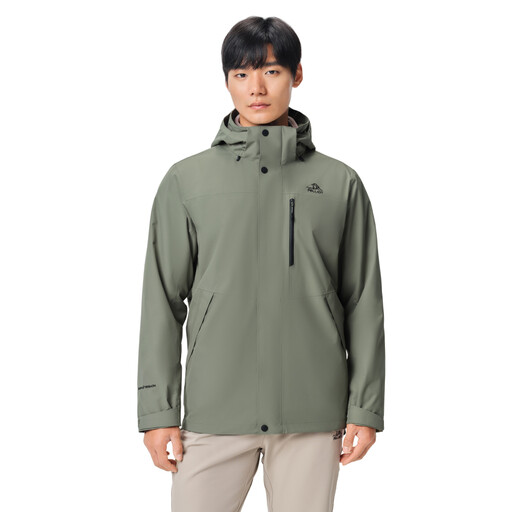
Why it suits this profile: This fleece-lined jacket is designed for camping, trekking and cold-weather commuting when you want warmth and protection in one garment.
The stated hydrostatic head rating, breathability figure and abrasion test results make the technical claims easier to check than a general term such as “waterproof”.
According to the product information: 35,900 mm H₂O hydrostatic head, an MVTR of 16,000 g/m²/24 hours and a removable inner layer that can also be worn separately.
We've put together a complete, up-to-date list of products that meet these strict selection criteria and the applicable European safety regulations.
Even a technical men's outdoor jacket can lose performance if it's washed incorrectly. Always follow the care label and keep these points in mind:
A DWR finish is a water-repellent treatment applied to the outer fabric. According to The North Face's product information, reproofing may be needed to maintain its water-repellent performance. This is care advice from the brand, not a promise of a fixed lifespan.
No. A lightweight hardshell jacket mainly protects you from rain and wind, but offers little insulation. For cold days, you'll need a fleece, down layer or lined inner jacket. A 3-in-1 jacket combines these layers in one system.
It depends on how you'll use the jacket. For relaxed travel or everyday use, rain protection is often the priority. For walking, cycling and trekking, breathability is just as important, as you build up heat and moisture more quickly when you're active.
Measure your chest and check the specific size chart. Allow extra room if you want to wear a fleece or jumper underneath. Also check the sleeve length and shoulder width, and see whether the hem and cuffs can be adjusted.
