
Vandaag of morgen in huis

Kwaliteit gegarandeerd

Welkomstaanbiedingen ontgrendelen: GRATIS bezorging | Tot 80% korting | Gratis 30 dagen JoyPlus-proefperiode
Download de app
In the Netherlands, a waterproof men’s jacket needs to do more than simply keep out a brief shower. Whether you’re cycling to work, walking in the Veluwe or spending a weekend camping, you’ll encounter rain, wind, changing temperatures and physical exertion. A jacket that is only warm can quickly feel stuffy. A lightweight men’s rain jacket, on the other hand, offers little comfort on colder days.
What the product description says does not always correspond to a verifiable performance level. Before buying, therefore, pay attention to the construction, technical specifications and fit.
A DWR finish or water-repellent outer layer can temporarily make raindrops bead up and roll off. That does not automatically mean the jacket can cope with prolonged rain. Check whether it has a waterproof membrane, welded or taped seams, and a storm flap behind the zip.
A men’s jacket with a thick fleece lining can feel comfortable when you’re sitting still, but heat and moisture can build up when walking or cycling. When looking at a breathable men’s outdoor jacket, check for a stated MVTR rating or a clearly described membrane construction. Without technical information, “breathable” remains little more than a marketing term.
A men’s trekking jacket should offer enough room for a shirt and, if needed, a fleece or insulating layer. If it is too tight, you’ll have less freedom of movement and the zips may be under pressure. If it is too loose, draughts can get in. Always check the size guide for the specific model; sizes vary between brands and cuts.
A hydrostatic head rating is expressed in mm H₂O. The higher the value, the more water pressure the fabric can withstand according to the measurement method used. The product description for the PELLIOT fleece-lined jacket states a hydrostatic head of 35.900 mm H₂O according to JIS. This is a product specification provided by the brand, not a general guarantee for every weather condition.
Also look for:
A men’s hardshell jacket is generally designed to protect against rain and wind. It usually has little insulation, so you add your own mid-layer.
Breathability is often stated as MVTR, for example in grams per square metre over 24 hours. The PELLIOT 3-in-1 fleece-lined jacket lists 16.000 g/m²/24 hours according to JIS. According to the product description, this construction helps move moisture outwards during physical activity. Treat this as a technical indication rather than a promise that you’ll stay dry in all conditions: your pace, humidity, clothing layers and ventilation options also play a part.
For strenuous walks, underarm zips, a lightweight shell and a good fit are useful. For commuting, a slightly heavier windproof men’s jacket may be more practical.
A 3-in-1 men’s jacket consists of an outer layer and a removable inner layer. You can wear the layers separately or together. This makes one jacket suitable for different temperatures, but do check how easily the layers can be attached to one another.
Also consider:
The PELLIOT product description states an abrasion resistance of 40.000+ rub cycles for one of the models. According to PELLIOT’s own product information, the outer fabric is also resistant to abrasion. The The North Face DryVent jacket is described as having an outer layer made from 100% recycled polyester and a PFC-free DWR finish. Information like this is more verifiable than general terms such as “extremely strong”.
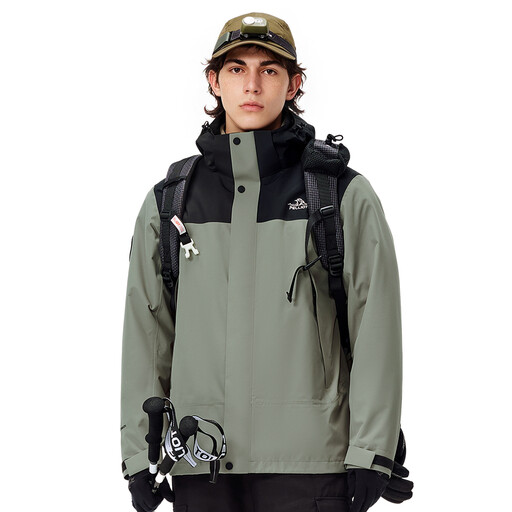
Why it suits this profile: The 3-in-1 design offers an outer layer, inner layer or combination for commuting, walking and camping.
You’re not choosing based on warmth alone: the product description mentions a microporous waterproof membrane, taped seams and three ways to wear it.
Fleece lining, adjustable fit and a scratch-resistant outer layer according to the product information.

Why it suits this profile: This Triclimate 3-in-1 system is designed for changing conditions during travel, outdoor activities and everyday use.
The outer layer has taped seams and an adjustable hood; the two layers can be worn separately or together.
GORE-TEX fabric made from recycled polyester, a PFC-free DWR finish and 550 fill power down according to the product information.
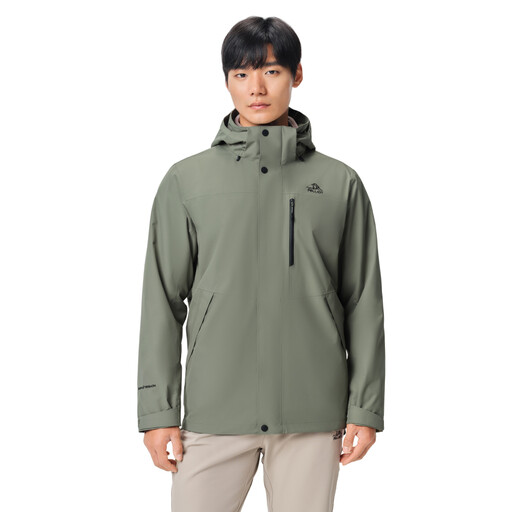
Why it suits this profile: Designed for trekking, camping and intensive outdoor activities where abrasion resistance, rain protection and ventilation are important.
The stated hydrostatic head, MVTR rating and abrasion resistance make its technical performance easier to compare than vague marketing terms.
35.900 mm H₂O, 16.000 g/m²/24 hours and 40.000+ rub cycles according to PELLIOT’s own product information.
We’ve put together a complete, up-to-date list of products that fully meet these strict selection criteria and the applicable European safety regulations.
That depends on the insulation. A men’s shell or rain jacket mainly protects against rain and wind. For colder days, you’ll need a fleece lining, down layer or additional mid-layer. A 3-in-1 model may therefore be more practical than a single unlined hardshell.
Always follow the care label. Fasten the zips, use a mild detergent and avoid fabric softener. According to the manufacturer, some coatings can be reactivated using low heat, but only do this if the label permits it. In most cases, leave the jacket to air-dry and re-treat the outer layer when its water repellency visibly decreases.
Its lifespan depends on how it is used and washed, as well as exposure to abrasion and the level of maintenance. A durable outdoor jacket with an abrasion-resistant fabric may last longer when walking and camping, but even a robust jacket can gradually lose its water-repellent performance. Check the zips, seams and coating regularly, and choose a model suited to how you actually use it.
