
Vandaag of morgen in huis

Kwaliteit gegarandeerd

Welkomstaanbiedingen ontgrendelen: GRATIS bezorging | Tot 80% korting | Gratis 30 dagen JoyPlus-proefperiode
Download de app
In the Netherlands, a waterproof men’s jacket needs to do more than simply withstand a brief shower. During a cycle ride, walk or train journey, you may encounter gusts of wind, drizzle and sudden changes in temperature. Yet a product name such as “waterproof”, “men’s outdoor jacket” or “hardshell jacket” does not automatically tell you enough about its practical features.
Focus instead on verifiable information: materials, seams, hood, fit, ventilation and care. Below, you’ll find the main pitfalls to watch out for, along with a selection of jackets for different situations.
A water-repellent coating can temporarily make light rain bead off. During prolonged rainfall, seams, zips and the fabric itself may still let moisture through. Check whether the description mentions a waterproof membrane, taped seams or a specific hydrostatic head rating.
A jacket without a stated technical rating is not necessarily unsuitable, but it is more difficult to compare its level of protection. Waterproofing claims should come from the manufacturer or seller; do not treat them as an independent guarantee for every weather condition.
A thick men’s winter jacket can be comfortable during the commute, but may become too warm when walking or trekking. For more intensive activity, a breathable jacket with ventilation zips is often more practical. A hardshell jacket mainly protects against rain and wind; add warmth with a fleece or insulating layer.
Pay attention to the combination of waterproofing, windproofing and breathability. These features should suit the pace and temperature in which you’ll be wearing the jacket.
A jacket that is too tight restricts your freedom of movement and leaves little room for layers. A jacket that is too loose may allow draughts or rain in around the wrists and neck. Measure your chest and compare it with the size chart for the specific model. Sizes vary between brands and sometimes between models too.
For example, the PELLIOT waterproof jackets list body and garment measurements for each size. According to the product information, the chest measurement ranges from 112 cm in size S to 120 cm in size L. If you want to wear a thick mid-layer, the same information suggests considering one size larger.
For a men’s rain jacket, not only the outer fabric but also the construction and fastenings are important. Check:
EN 343 is a European standard for protective clothing against rain. Not every waterproof jacket is certified to this standard. If the standard is not mentioned in the product information, do not draw any conclusions about certification.
A breathable jacket allows warm, humid air to escape from the inside to the outside. This is useful for cycling, walking, training and trekking. Manufacturers sometimes use MVTR or RET to describe this. A higher MVTR value generally indicates greater vapour permeability, while with RET, a lower value is usually better.
If no measurement is provided, look at the practical ventilation features instead. Underarm zips, a mesh lining and a design with room around the shoulders can help during exercise. According to the product description, the PELLIOT hardshell has a moisture-regulating lining, while The North Face Triclimate jacket features underarm ventilation zips.
Choose an unlined waterproof jacket if you want the flexibility to wear a T-shirt, fleece and insulated jacket in different combinations. For cold days, a lined jacket or parka may be more convenient. Consider the following:
A jacket with a hood, high collar and adjustable cuffs is practical in wind and rain. For everyday use, zipped hand pockets and an inner pocket are also useful.
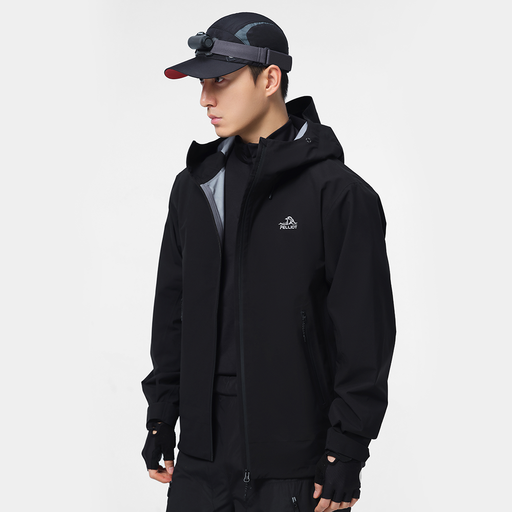
Why it suits this profile: This unisex hardshell is designed for rainy walks, travel and everyday use. The black colour is easy to pair with other clothing.
The product information mentions waterproof lamination, a wind-resistant construction and a size chart. However, check the current product page for any technical measurements.
Nylon or polyester blend with a waterproof layer; sizes XS to XXL according to the product description.

Why it suits this profile: The 3-in-1 design is ideal for anyone looking for one system for changeable weather, walks and everyday outdoor use.
The product description specifies an outer layer with taped seams, an adjustable hood and adjustable hem. The two layers can be worn separately.
GORE-TEX outer material according to the product information; 550 fill power down insulation; underarm ventilation zips.

Why it suits this profile: According to the product description, this model is intended for running and outdoor training. The standard fit and hood support active use.
The description mentions a DryVent waterproof fabric with sealed seams, zipped pockets and elasticated cuffs. Check the fit against the stated chest and arm measurements.
100% recycled polyester according to the product information; zipped chest and hand pockets; care instructions for restoring the DWR finish.
Always follow the care label in the jacket. Do not use fabric softener with technical fabrics, as it can affect the performance of a coating. Fasten zips and hook-and-loop closures before washing, and allow the jacket to dry according to the instructions.
A DWR finish may become less effective at making water bead off over time. This does not automatically mean that the membrane is faulty. Clean the jacket correctly first, and only use a suitable waterproofing treatment if permitted by the manufacturer. Avoid ironing seams, logos and coatings unless the label expressly allows it.
We’ve put together a complete, up-to-date list of products that fully meet these strict selection criteria and the applicable European safety regulations.
That depends on the lining and insulation. A lightweight hardshell protects against rain and wind, but does not automatically retain enough heat. Wear it with a fleece and an insulating layer, or choose a lined parka for relaxed everyday use in low temperatures.
Its service life varies depending on the material, frequency of use, friction and care. The outer water-repellent finish is particularly prone to wear. Regularly check the seams, zips and coating, and follow the brand’s care instructions.
For active walks, a lightweight breathable rain jacket is often more versatile, as you can add layers yourself. A lined jacket is more comfortable when you are not moving much or are mainly looking for warmth. For changeable conditions, a 3-in-1 men’s outdoor jacket can be a practical middle-ground solution.
