
Vandaag of morgen in huis

Kwaliteit gegarandeerd

Welkomstaanbiedingen ontgrendelen: GRATIS bezorging | Tot 80% korting | Gratis 30 dagen JoyPlus-proefperiode
Download de app
In the Netherlands, a waterproof jacket needs to do more than look good in a product photo. A short cycle ride in a shower calls for different features than a day of walking, mountain trekking or working outdoors. Yet many jackets are promoted with terms such as “waterproof”, “breathable” and “all-weather” without making it clear what you actually get in return.
So pay particular attention to these common pitfalls:
A rain jacket or hardshell jacket offers better protection against prolonged rainfall when the product description mentions taped or sealed seams. Water can enter not only through the fabric, but also through stitched seams, zips and cuffs.
Some products state a hydrostatic head rating, expressed in millimetres. Within the test method used, a higher value indicates greater resistance to water pressure. However, real-world conditions may differ. According to the product description, the PELLIOT women's fleece-lined jacket has a hydrostatic head of 35.900 mm H₂O according to JIS. Treat this as a product specification, not a promise that you will remain completely dry in every situation.
Also look for:
A breathable jacket allows moisture and heat to escape from the inside. This is particularly relevant when you walk quickly, cycle, climb or carry a rucksack. A jacket can be waterproof and still feel stuffy when breathability is limited.
A technical value such as MVTR, for example expressed in grams per square metre per 24 hours, indicates how much water vapour can pass through the material according to a particular test method. According to the product description, the PELLIOT fleece-lined jacket states an MVTR of 16.000 g/m²/24 hours according to JIS. Ventilation zips under the arms, a mesh lining and a fit that is not too tight can also help during active use.
For commuting, a simple windproof jacket may be sufficient. For a trekking or intensive walking jacket, breathability, room for layers and freedom of movement are more important.
A 3-in-1 jacket usually consists of an outer layer and a removable inner layer. You can wear both layers together in cold and wet weather, or use one layer on its own in milder conditions. This makes such a jacket practical for changing conditions, but always check how the layers are attached to each other.
A fleece lining or synthetic filling provides warmth, while a lightweight hardshell is primarily intended as a protective outer layer. A winter coat with polyester filling is suitable for everyday use, but is not necessarily a rain jacket. For example, the Urban Classics Basic Puffer Jacket has a polyamide outer and polyester filling; the product information positions this model for cold days and everyday use.
For professional outdoor work, visibility, fastenings and certification are particularly important. A safety jacket with a fluorescent colour and retroreflective bands is better suited to traffic, construction sites or roadside work than a black outdoor jacket.

Why it suits this profile: This women's jacket is designed as a versatile shell for walking and everyday use. The standard fit and range of sizes make it easier to compare options.
According to the product description, the jacket has fully sealed seams, an adjustable hood, adjustable cuffs and a drawcord in the hem. These are more specific details than simply calling it water-repellent.
2L DryVent material according to the product information, a mesh lining and two zipped hand pockets. The shell is made from 100% polyester.

Why it suits this profile: This men's jacket combines an outer layer with a removable insulated inner jacket. It is a good choice for users who want one system for changing conditions.
The product information mentions an adjustable hood, taped outer seams, an adjustable hem and adjustable cuffs. The layers can be worn separately or together.
3-in-1 construction, GORE-TEX outer material according to the product description and an inner layer with 550 fill power down.
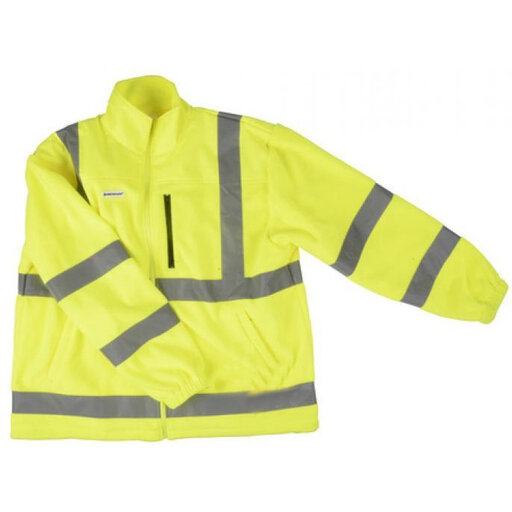
Why it suits this profile: This safety jacket is aimed at adults who work outdoors or want to remain visible in traffic and low light.
The product information mentions retroreflective bands, a fluorescent design and polyester with a polyurethane coating. For professional use, always check that the required standard and size are suitable for your work.
Mesh lining for air circulation, reinforced fastenings and, according to the product description, double sealed seams.
We have put together a complete, up-to-date list of products that fully meet these strict selection criteria and the applicable European safety regulations.
Measure your chest and compare it with the size chart for the specific model. A women's jacket, men's jacket and unisex jacket may fit differently, even when they use the same letter size. If you want to wear a fleece, jumper or thermal layer underneath, allow extra room around the chest, shoulders and arms.
Check the following when your jacket arrives:
Do not use fabric softener on technical jackets if the manufacturer advises against it. It can affect the performance of a coating. Wash according to the label, allow the jacket to air-dry when instructed and only reapply a DWR finish if the product information permits this.
This depends on use, friction, washing and care. Rucksack shoulder straps, branches and frequent cycling can put strain on the outer layer. Check the seams, zips and coating regularly. A jacket that no longer makes water bead as effectively is not automatically leaking, but it may need care or reproofing.
Not always. A hardshell mainly protects against rain and wind, but often provides little insulation. In cold weather, combine a shell with fleece or down, or choose a 3-in-1 jacket. A padded winter coat provides warmth, but check whether the outer fabric and seams are also designed for prolonged rain.
With normal use, care is generally limited to washing according to the label and drying it carefully. After intensive use, a suitable waterproofing treatment may be needed. Only use a product that is suitable for the material and follow the manufacturer's instructions.
