
Vandaag of morgen in huis

Kwaliteit gegarandeerd

Welkomstaanbiedingen ontgrendelen: GRATIS bezorging | Tot 80% korting | Gratis 30 dagen JoyPlus-proefperiode
Download de app
In the Netherlands, a waterproof jacket needs to do more than simply get you through a brief shower. Whether you are cycling, walking or commuting, you may have to contend with rain, strong winds and changing temperatures. Yet a prominent label such as “all-weather” does not always tell you enough about the jacket’s practical qualities.
The following pitfalls are common:
Check whether the product information refers to a waterproof membrane, laminated layers and taped seams. Seams are weak points: rain can get in through the stitching holes, even when the outer fabric itself repels water.
A hydrostatic head rating, expressed in mm H₂O, provides a technical indication of the pressure the fabric can withstand according to the test method used. The rating is useful for comparison, but it does not tell you everything about the hood, zips and durability. So also check:
According to the product description, the women’s version of the PELLIOT fleece-lined jacket has a hydrostatic head rating of 35.900 mm H₂O according to JIS. This is a product specification provided by the manufacturer, not a general guarantee for every weather situation.
For a walking jacket, trekking jacket or ski and sports jacket, moisture vapour permeability is important. This is often shown in g/m²/24 hours, also known as MVTR. A higher stated value may indicate greater moisture vapour permeability under the relevant test conditions.
Also look out for practical ventilation:
According to PELLIOT’s own product information, the women’s jacket mentioned has an MVTR rating of 16.000 g/m²/24 hours according to JIS. Treat this as a point of comparison and always check the full product specifications.
A waterproof jacket is not automatically a winter jacket. A hardshell mainly protects against rain and wind, while warmth usually comes from a fleece, down jacket or other mid-layer. A fleece-lined jacket combines protection and insulation, but may be too warm for summer walks.
A 3-in-1 jacket offers greater flexibility. You can wear the outer layer, inner layer or both together. Do bear the fit in mind: choose enough room for an extra layer without making the sleeves or shoulders too large. Always consult the size chart and compare the chest measurement, sleeve length and back length with a jacket that fits well.
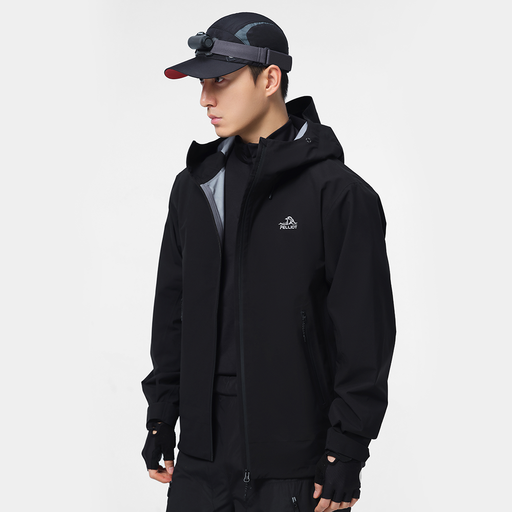
Why it suits this profile: This unisex hardshell is suitable for everyday use, commuting and beginner walks. The fit allows room for a mid-layer; according to the product information, anyone wanting to wear thicker layers may wish to consider sizing up.
The product description mentions a waterproof laminated outer layer, wind protection and a breathable technical lining. When using and caring for the jacket, be sure to check the current product information.
Hardshell construction, a chest measurement of 108 cm in size S and a design that, according to the description, can be worn from the city to the mountain trail.

Why it suits this profile: A practical choice for walkers looking for a recognisable technical shell for changeable weather and regular use.
According to the product description, the jacket has fully taped seams, DryVent fabric, an adjustable hood and elasticated cuffs. The DWR finish can be reapplied, according to the brand description.
100% polyester with mesh lining, two zipped pockets and sizes from XS to 3XL according to the stated size chart.
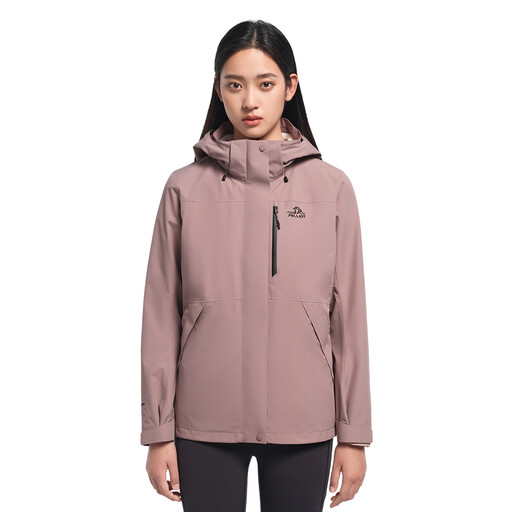
Why it suits this profile: This 3-in-1 model is suitable for camping, trekking and cold commutes when you want to wear the outer and inner layers separately or together.
The stated specifications include both a hydrostatic head and MVTR rating, and mention an adjustable hood, hem and cuffs. The manufacturer also claims abrasion resistance; check the care instructions to preserve these properties.
3-in-1 use, a stated hydrostatic head of 35.900 mm H₂O, an MVTR of 16.000 g/m²/24 hours and sizes S to XXXL.
We have put together a complete, up-to-date list of products that fully meet these strict selection criteria and the applicable European safety regulations.
Use this checklist before ordering:
A tightly woven membrane often provides protection against wind, but check the product description. Cuffs, hood, zips and hem all help determine how much draught gets in. A loose rain poncho or thin jacket without fastenings may perform differently in this respect.
Its lifespan depends on use, friction, washing and care. Rucksack straps can put strain on the outer fabric, and a water-repellent finish may become less effective over time. So follow the washing instructions and regularly check the seams, zips and coating.
The price is influenced by the material, brand, membrane, insulation and construction. Do not compare the price alone; also consider the hydrostatic head, breathability, seam finishing, fit and warranty terms. A versatile 3-in-1 jacket can be a good option if you want to use one jacket across several seasons; a lightweight rain jacket makes more sense if you mainly make short journeys.
