
Vandaag of morgen in huis

Kwaliteit gegarandeerd

Welkomstaanbiedingen ontgrendelen: GRATIS bezorging | Tot 80% korting | Gratis 30 dagen JoyPlus-proefperiode
Download de app
In the Netherlands, a waterproof jacket needs to do more than withstand a brief shower. When cycling, walking or camping, you may face prolonged rain, strong winds and changing temperatures. Yet the online selection often seems clearer than it really is. Terms such as “waterproof”, “breathable” and “all weather” do not always tell you how much protection you will actually get.
The following points will help you choose a suitable waterproof outdoor jacket, rain jacket or hardshell jacket without relying solely on marketing copy.
A jacket with a Durable Water-Repellent finish, also known as DWR, initially makes raindrops roll off the surface. That does not automatically mean the fabric will keep water out for long periods. Seams, zips and the hood in particular determine how well a jacket performs in persistent rain.
So check whether the product description refers to taped or sealed seams, a waterproof membrane and the construction of the zips. A cotton trench coat may be suitable for everyday use in dry weather, but it is not necessarily a rain jacket.
A lined winter jacket retains heat, but may become too warm when walking or running. A lightweight hardshell jacket, on the other hand, protects against wind and rain but usually offers little insulation. If you are looking for one jacket for several seasons, consider a 3-in-1 jacket: an outer layer and a separate inner layer that can be worn together or independently.
Also look for ventilation options, such as underarm zips. A jacket described as breathable will not automatically prevent you from feeling hot or clammy during intense activity. Fit, base layers and activity levels also play a role.
Sizes vary by brand, model and fit. Men's, women's and unisex jackets may also fit differently around the shoulders, chest and sleeves. So do not just look at S, M or L; compare your body measurements with the measurements given in centimetres.
Do you wear a fleece or thick jumper under your jacket in winter? Allow extra room around the chest and arms. Some PELLIOT models indicate that sizing up can be practical when wearing thick mid-layers.
A waterproof rating is often shown as a water column in millimetres. The higher the value, the greater the water pressure the fabric can withstand according to the testing method used. Always check which standard or test method is mentioned, though. A number without context is difficult to compare.
According to the product description, the PELLIOT women's fleece-lined jacket has a water column of 35.900 mm H₂O according to JIS. The same description states a breathability rating of 16.000 g/m²/24 hours. These are the manufacturer's product specifications; they should not be interpreted as a guarantee for every usage situation.
A breathable jacket allows water vapour from perspiration to escape. For quiet everyday use, this is less decisive than it is for trekking, running or cycling. For intense activities, look for:
A windproof jacket with a good hood and adjustable hem can be more comfortable in changeable weather than a heavily lined jacket.
A hardshell jacket is usually a protective outer layer. Pair it with a fleece or thermal mid-layer when you need extra warmth. A winter jacket with synthetic filling is easier for everyday use, but less flexible during active pursuits.
With a 3-in-1 jacket, you can use the outer layer as a rain and wind layer, the inner jacket in mildly cold weather, and both layers together when it gets colder. Check that the two parts can be securely attached to each other and that both layers fit well together.
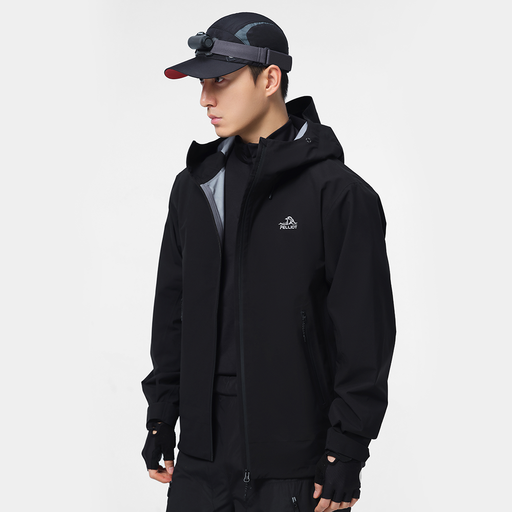
Why it suits this profile: According to the product description, this unisex hardshell jacket is designed for everyday use, trekking and water-based activities. The black colour and utility fit work equally well for commuting and a day out walking.
The description mentions a waterproof and wind-resistant construction, a breathable technical lining and hard-wearing material. Before buying, check the current size chart and seam construction.
Unisex design, sizes XS to XXL and a stated chest measurement of 112 cm in size S.

Why it suits this profile: According to the product information, this women's jacket is designed for walking and changeable weather conditions. It features an adjustable hood, cuffs and hem, plus two zipped pockets.
The product description mentions fully sealed seams and DryVent material with windproof, waterproof and breathable properties. The manufacturer states these features; check the care label and maintenance instructions for the DWR finish.
100% polyester outer layer, mesh lining and women's sizes XS to 3XL.

Why it suits this profile: This 3-in-1 model is designed for people who want one system for a range of conditions, such as trekking, camping and everyday outdoor use.
The separate outer and inner layers mean you do not need a different jacket for every season. According to the product description, it has taped seams, underarm zips, and adjustable cuffs and hem.
Two independently wearable layers, a 550-fill-power down specification and GORE-TEX outer material according to the product details.
A jacket will last longer if you follow the care instructions. Do not use fabric softener on technical fabrics, fasten zips before washing and, if the label recommends it, preferably air-dry your rain jacket. A DWR finish may become less effective over time. Some manufacturers therefore recommend reproofing; follow the label and product information when doing so.
Also look out for wear on the shoulders, cuffs and seams. A jacket with a robust outer fabric may be suitable for rocky terrain, but no fabric is completely tear-proof. Store the jacket clean and dry, and avoid keeping it in a damp bag for long periods.
We have put together a complete, up-to-date list of products that fully meet these strict selection criteria and the applicable European safety regulations.
Look for a combination of a waterproof membrane, sealed seams, a protected zip and an adjustable hood. A standalone “waterproof” claim is less informative than a stated water column, test method and clear construction details.
Not always. A hardshell jacket mainly protects against rain and wind. For cold days, you will need a fleece, down layer or synthetic insulation. A 3-in-1 jacket combines these functions in one system, while a lined winter jacket is simpler for everyday use.
This depends on use, washing, friction and care. The water-repellent outer finish may become less effective over time. Regularly check the seams and surface, and only reproof the jacket in accordance with the manufacturer's instructions.
