
Vandaag of morgen in huis

Kwaliteit gegarandeerd

Welkomstaanbiedingen ontgrendelen: GRATIS bezorging | Tot 80% korting | Gratis 30 dagen JoyPlus-proefperiode
Download de app
Want to buy a watermelon drink, but mainly seeing colourful packaging and broad claims about fruit, freshness and Asian flavours? Comparing products based only on the front of the can or bottle isn’t enough. A watermelon fizzy drink can be highly carbonated, while a fruit drink with watermelon may be more like juice. Terms such as “natural”, “light” or “real fruit” only tell you something when you check the ingredients list and nutritional information.
As a Joybuy Product Recommendation Officer, I filter product information based on practical points: flavour type, serving size, packaging, origin and ingredients. This helps you avoid a disappointing purchase and makes it easier to choose between melon drinks, Japanese soft drinks, Korean soft drinks and nata de coco drinks.
A melon-flavoured soft drink may mainly contain water, sugar, carbon dioxide and flavouring. There’s nothing wrong with that if you’re looking for a sweet, fizzy drink, but the flavour and texture differ from watermelon juice. So check whether the ingredients list contains watermelon juice, juice concentrate or flavouring only.
For example, Tomomasu Melon Soda lists melon flavouring, while Tymbark Apple Watermelon Drink contains, among other ingredients, 19% apple juice and 1% watermelon juice from concentrate. Both drinks fall into the melon soft drink or fruit drink category, but they aren’t the same type of product.
A box of 12 or 24 cans may offer better value per pack, but only if you already know you like the flavour or you’re buying for several people. Pay attention to the total volume, the best-before date on the packaging and how much storage space you’ll need at home. Small bottles of 190 to 250 ml are handy for a party or lunch, while boxes containing 330 ml cans are better suited to stocking up for several occasions.
Nata de coco consists of soft, jelly-like pieces. This creates a fun drinking experience, but not everyone enjoys pieces in their drink. Check the opening mechanism too: a watermelon ramune often comes in a glass bottle with a marble mechanism. It’s a fun choice for a meal, but requires more care to open than a can or pouch.
Always compare products on the same basis: per 100 ml. Product information lists, for example, approximately 12.5 grams of sugar per 100 ml for Tomomasu Melon Soda, 12 grams for LOTTE Milkis Melon and 7.6 grams for the various Mela fruit drinks. A smaller serving therefore doesn’t automatically mean less sugar per 100 ml.
A drink with fewer calories may also contain sweeteners. Tymbark Apple Watermelon Drink, for example, lists sucralose. If you prefer a simpler ingredient list, compare the ingredients list with the nutritional information table.
When choosing a fruit drink, check the stated juice percentage. According to the product description, Mela Watermelon Drink Original Flavor contains 99% watermelon juice. The pineapple version lists 94% watermelon juice and 5% pineapple juice. KATO Watermelon Juice with Nata de Coco contains 25% watermelon juice and 15% nata de coco.
These percentages help distinguish fruit drinks with watermelon from classic soda. They don’t determine exactly how the drink will taste, as sugar, acidity regulators and flavourings also play a part.
A carbonated drink such as a Japanese soft drink or Korean cream soda should be opened carefully and not shaken. According to the product information, LOTTE Milkis Melon contains milk and soya. Tomomasu Melon Soda does not list any of the 14 major EU allergens. Always check the physical label, as packaging and online information may differ.
Also consider the packaging format:
The following selection is based on the available product descriptions, nutritional information, ingredients and packaging details. Always check the label on the delivered packaging before consumption.
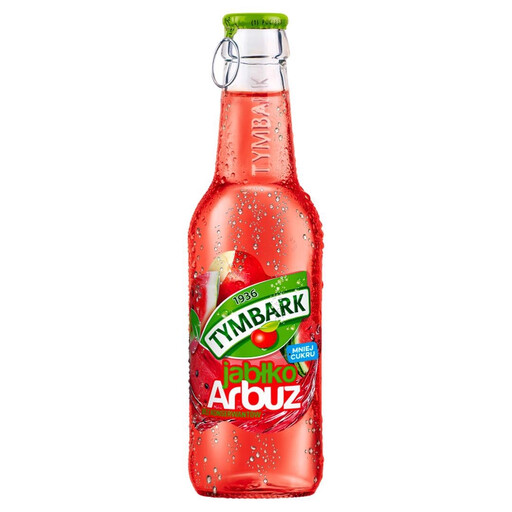
Why it suits this profile: The 250 ml serving is easy to manage, while the combination of apple and watermelon juice offers an accessible introduction to fruit drinks.
The product information clearly states 19% apple juice and 1% watermelon juice from concentrate, so you don’t have to rely on the flavour name alone.
250 ml per pack; 19 kcal and 4.6 grams of sugar per 100 ml according to the product details.
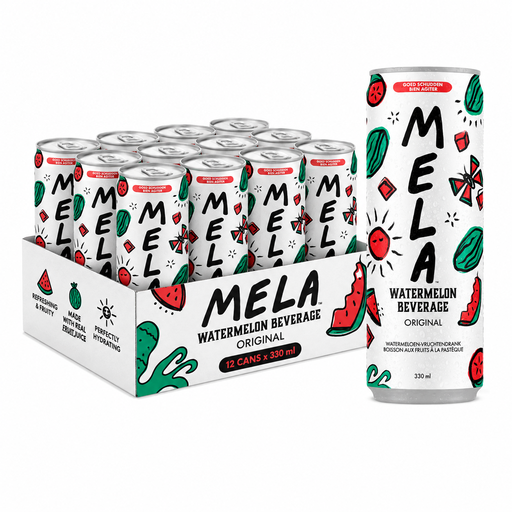
Why it suits this profile: If you’re looking for a clear fruit-based recipe and supplies for home, this box contains 12 330 ml cans.
The product description states 99% watermelon juice, making it easier to distinguish from a soft drink based mainly on flavouring.
12 × 330 ml; 30 kcal and 7.6 grams of sugar per 100 ml according to the product details.
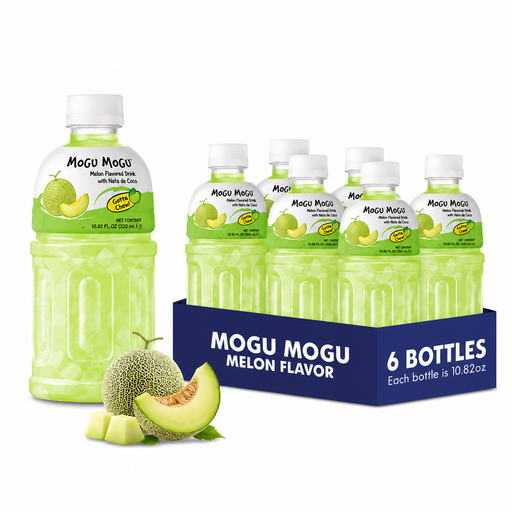
Why it suits this profile: This melon drink is designed for those looking for more than just flavour and want an eye-catching texture for parties or an Asian meal.
The product information explicitly states 15% nata de coco. You therefore know in advance that this drink contains pieces and isn’t an ordinary smooth soft drink.
Six 320 ml bottles; nata de coco and 49 kcal per 100 ml according to the product details.
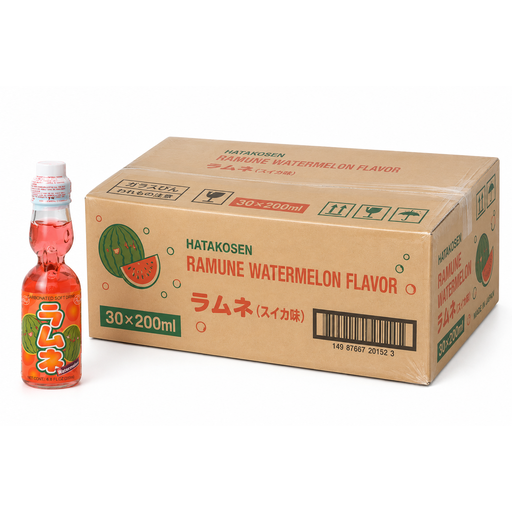
Why it suits this profile: A large supply is ideal for events, entertaining at home or fans of Japanese ramune with its distinctive glass bottle.
The multipack states the quantity of 30 bottles and 200 ml per bottle. This makes it easier to estimate how much stock you’ll need in advance.
30 × 200 ml; 41 kcal and 10.2 grams of sugar per 100 ml according to the product information.
We’ve put together a complete, up-to-date list of products that fully meet these strict selection criteria and the applicable European safety regulations.
For a party, choose smaller servings such as 190 to 250 ml, so opened packs don’t sit around for long. Watermelon ramune is a good option if you want a Japanese presentation. For larger groups, multipacks such as Mela 12 × 330 ml or HATAKOSEN 30 × 200 ml are more practical.
No. Watermelon soda usually contains carbon dioxide and may mainly consist of water, sugar and flavouring. Watermelon juice or a fruit drink will generally state a juice percentage. Check the ingredients to see which type you’re buying.
Store an opened drink according to the label, usually chilled and tightly sealed. Drink an opened product within the stated period. Store unopened bottles, cans and pouches in a cool, dry place away from direct sunlight. If in doubt, follow the information on the physical packaging.
