What should you look for when choosing?
Start with the amount you usually make and where you plan to store the complete blender. Then check the cleaning instructions and, if you want to use ice, the guidance for that specific model.
| What to consider |
What to look for |
Who should pay particular attention? |
| Space and storage |
Measure the height and width with the cup or jug fitted, and allow room for separate lids and accessories. |
If I have limited cupboard space, I want to know whether the whole appliance and its separate parts will fit. Around 36% of consumers put space requirements first. |
| Cleaning |
Check which parts are removable or dishwasher-safe, and how the blades should be cleaned according to the manual. |
After making a drink, I want to be able to clean the cup, lid and areas around the blades properly. Around 29% of consumers prioritise ease of cleaning. |
| Amount per blend |
Compare the stated cup capacity or usable liquid capacity with the number of glasses you want to make at once. |
If I want to make several glasses at once, the amount per blend matters more than having the smallest possible cup. Around 21% of consumers prioritise batch size. |
| Ice or frozen fruit |
Check the instructions for the exact model and the stated ice function; the Consumentenbond assesses ice crushing separately from smoothies. |
If I want to add ice or frozen fruit regularly, I want to know what the manufacturer allows for that model. Around 14% of consumers put this feature first. |
Blenders at Joybuy
This selection includes compact blenders with a cup or small jug for smaller quantities, as well as models with a larger jug for making several glasses. Before use, check the instructions for the cup or jug and the ingredients you want to use.
 No image available
Philips 3000 Series Mini Blender HR2510/90, 0.6 l, white and silver
The 0.6 l jug is designed for small quantities; you may need to blend a second batch to make more drink.
The product information lists two speeds, including a setting for hard ingredients and ice, as well as removable, dishwasher-safe parts.
Dimensions: 123 × 119 × 350 mm.
View at Joybuy
 No image available
Aigostar Marden BL-250, 500 ml
According to the product information, you can use the 500 ml cup as a drinking bottle by fitting a different lid; you may need to blend an extra batch to make a larger quantity.
Dimensions: 13 × 13 × 35 cm. The removable parts are described as dishwasher-safe.
View at Joybuy
 No image available
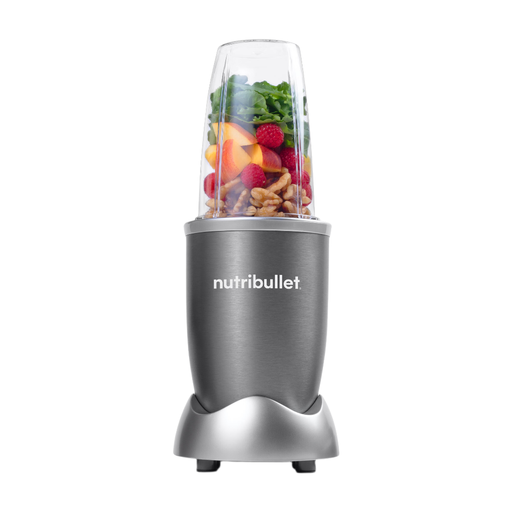
nutribullet Original Blender, grey, 600 W, 700 ml
According to the product information, the 700 ml cup is designed for up to two portions; you may need to blend an extra batch to make more drink.
The product information lists a pulse function and a dishwasher-safe cup.
View at Joybuy
 No image available
nutribullet Portable, 475 ml, white and beige
This rechargeable blender is an option if cordless use is important to you; it needs charging and has a cup capacity of 475 ml.
The product information lists USB-C charging, a drinking lid and removable parts that can be rinsed.
View at Joybuy
 No image available
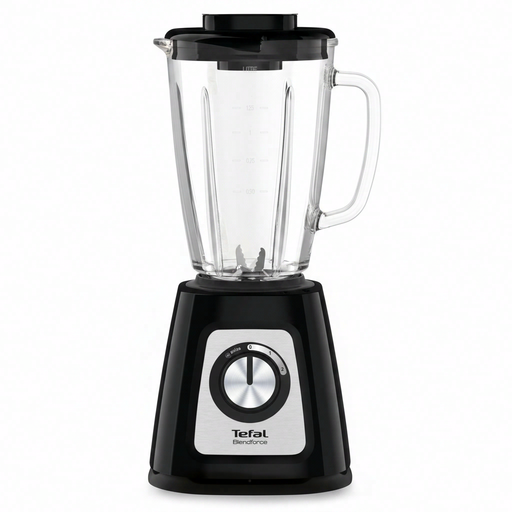
Tefal BL435831 BlendForce 2, 800 W
The 1.25 l jug is a good option if you want to make several glasses in one go.
The product information lists two speeds, a pulse setting, a separate ice-crushing setting and dishwasher-safe parts.
View at Joybuy
Frequently asked questions
Should I focus mainly on wattage when choosing a blender for watermelon?
No. Compare portion size, dimensions and ease of cleaning, too. The Consumentenbond assesses smoothie performance, ease of use and noise separately; the stated motor power isn’t, by itself, a measured result for your drink.
How should I prepare and store watermelon for a drink?
Cut the flesh away from the rind and into pieces. The Voedingscentrum advises covering cut watermelon and keeping it in the fridge for up to 2 days. For an opened fruit smoothie, the Voedingscentrum recommends 1–2 days in the fridge.
Which blender parts can go in the dishwasher?
It varies by model and part. nutribullet says the Original NB603DG cup is suitable for the top rack and advises rinsing the blades with soap and water. Check the manual for the model you choose.
What guarantee and cooling-off period apply to an online purchase in the Netherlands?
ACM ConsuWijzer explains that, as well as any manufacturer’s guarantee, you have statutory rights with the seller if a product doesn’t meet what you could reasonably expect when used normally. For an online purchase, you generally have 14 days to change your mind after delivery; check whether a statutory exception applies.
Which product safety rules are relevant to a blender?
According to the Netherlands Food and Consumer Product Safety Authority, materials that come into contact with food must meet the relevant requirements. Electrical equipment within the scope of the Low Voltage Directive must meet the safety requirements set out in it and carry CE marking; the directive covers rated AC voltages from 50 to 1,000 V and DC voltages from 75 to 1,500 V. Don’t assume, without checking the product specifications, that every rechargeable and mains-powered model is covered by exactly the same regulatory framework.


