
Vandaag of morgen in huis

Kwaliteit gegarandeerd

Welkomstaanbiedingen ontgrendelen: GRATIS bezorging | Tot 80% korting | Gratis 30 dagen JoyPlus-proefperiode
Download de app
A water flosser can be a practical addition to brushing and traditional flossing. Its targeted stream of water removes food particles from between the teeth and along the gumline. However, not every model is equally suitable for everyday use, braces or travelling.
The main pitfalls are often not related to appearance, but to details such as pressure control, the reservoir and the attachments supplied. Below, you’ll find what to look out for before buying a cordless water flosser or a countertop oral irrigator.
A product offering, for example, 140 PSI may sound powerful, but a high maximum pressure is not automatically more comfortable or more suitable. For beginners and people with sensitive gums, a low setting with precise adjustment is particularly important. Check the following:
A water flosser with several settings generally offers more choice than a device with just one powerful stream. Always start gently and only increase the intensity if it remains comfortable.
A portable water flosser with a battery life of 30, 40 or 50 days sounds convenient, but you should also check the tank capacity. A 150 ml reservoir may need refilling more often than a 250 or 300 ml tank.
For a complete cleaning session, the combination of reservoir capacity, refill time and operating time is more important than the number of days per charge alone. Also check whether the tank is removable. This makes filling, rinsing and drying it easier.
A set with different nozzles may seem appealing, but only if the attachments suit the way you intend to use the device. When choosing a water flosser for braces, for example, look for an orthodontic nozzle. A standard tip may be sufficient for everyday use. A tongue cleaner or periodontal nozzle is only useful if you actually plan to use those functions.
Also check whether replacement tips are available and whether separate tips can be used for each member of the household. Don’t share a nozzle without cleaning it thoroughly.
An electric flosser uses either a continuous or pulsating stream of water. Pulses can help move the stream in a controlled way along the gumline. Brands use different names for these features. According to Philips’ product description, for example, the Sonicare Cordless Power Flosser 3000 uses Quad Stream technology and Pulse Wave technology in Deep Clean mode. These are the manufacturer’s product specifications, not an independent assessment of how the device performs.
Focus mainly on practical operation:
If you have sensitive gums, braces or implants, it’s advisable to follow your dentist’s or dental hygienist’s guidance. A water flosser is not a medical treatment device.
For home use, a larger reservoir is usually more convenient. According to the stated product specifications, the Oral-B Oxyjet Health Center MD20 has a 600 ml reservoir. Cordless models are more compact, but often have a tank holding between 150 and 300 ml.
Pay attention to these points:
Don’t leave water in the reservoir for long periods. Empty the tank after use, rinse the nozzle and allow the components to air-dry.
A water flosser for travelling is most convenient when it’s easy to charge and the battery lasts for several days. USB-C is practical if you already have a suitable adapter. However, make sure the charging port is dry before connecting the cable.
An IPX rating provides information about protection against water, but not under every possible condition. The Sunluxy L5, for example, is listed in the product information as having IPX6 protection. Use the device according to the instructions and don’t charge it in a wet environment. On models with a built-in battery, the battery generally cannot be replaced by the user.
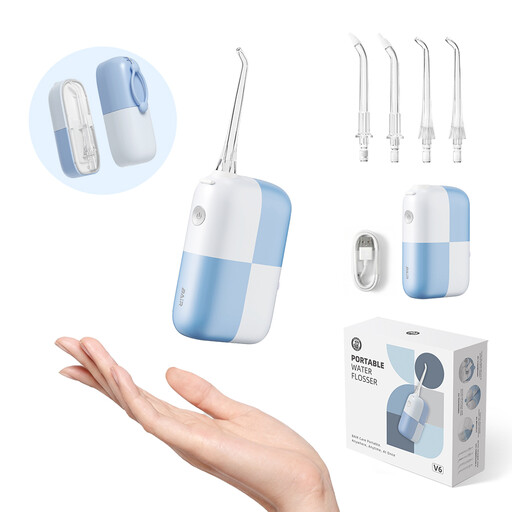
Why it suits this profile: This compact model is designed for everyday use and travelling. According to the product information, its foldable design weighs 145 grams and it has a button for pulsating operation.
The magnetically detachable tank is designed to make filling and cleaning easier. The standard, orthodontic and periodontal tips supplied reduce the likelihood of needing to buy a separate nozzle.
145 grams, IPX7 according to the product information, USB-C charging and a stated battery life of up to 30 days with typical use.
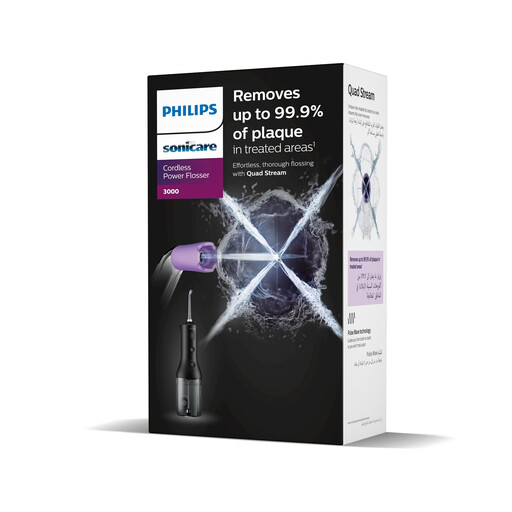
Why it suits this profile: This cordless water flosser combines two modes with three intensity levels. That makes it suitable for users who value straightforward everyday operation and an adjustable water stream.
The 250 ml tank is clearly specified and designed for a session of approximately 60 seconds, according to Philips. The three intensity levels offer more control than a single fixed powerful setting.
Two modes, three intensity levels, a Quad Stream nozzle and a stated battery life of up to 14 days with typical use.
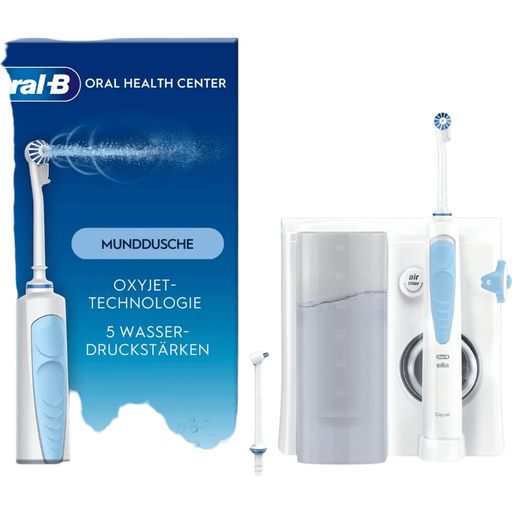
Why it suits this profile: This model is designed for home use and has a large reservoir. According to the product description, it is suitable for use around braces and implants; always follow your dentist’s instructions.
The five pressure settings allow you to start gently. The large 600 ml reservoir reduces the need to refill the tank during a session.
Five pressure settings, four stream options, a 600 ml reservoir and two attachments supplied, according to the product specifications.
We’ve put together a complete, up-to-date list of products that fully meet these strict selection criteria and the applicable European safety regulations.
Fill the reservoir with clean, lukewarm water and attach the nozzle securely. Place the tip in your mouth before switching on the device and lean over the sink to limit splashing. Move it slowly along the gumline and between your teeth.
Clean the tank and tip after every session. Don’t use essential oils or other additives unless the manufacturer expressly permits this. On models with a USB connection, the port must be dry before charging. Stop if you experience persistent bleeding or significant discomfort, and seek advice from a dentist.
Many users incorporate a water flosser into their daily oral care routine, for example after brushing. The right frequency depends on your teeth and any treatment you may be undergoing. If you have braces, implants or sensitive gums, it’s best to discuss usage with your dentist or dental hygienist.
Its lifespan depends on the battery, motor, seals and maintenance. Empty and dry the reservoir after use, descale components according to the instructions and replace nozzles when they become worn or are no longer hygienic. When buying, also check the warranty and the availability of replacement tips.
After purchase, the ongoing costs are generally limited to water, electricity and replacement nozzles. A cordless water flosser does require a higher one-off investment than dental floss. So don’t compare only the purchase price; also consider the cost and availability of replacement parts.
