
Vandaag of morgen in huis

Kwaliteit gegarandeerd

Welkomstaanbiedingen ontgrendelen: GRATIS bezorging | Tot 80% korting | Gratis 30 dagen JoyPlus-proefperiode
Download de app
A water flosser can be useful when you want to flush away food particles from between your teeth, along the gum line or around braces. However, not every model is automatically suitable for every user. High pressure, a large tank or long battery life may sound appealing, but in practice they can be less important than comfortable operation and easy maintenance.
The three most common pitfalls are:
Only looking at maximum water pressure
A higher PSI rating does not automatically mean greater comfort or a better choice. If you have sensitive gums, a gentle setting may be more important.
Confusing battery life with ease of use
A cordless water flosser with long battery life is convenient for travel, but also check the charging time, the type of connection and whether the tank is easy to clean.
Treating marketing claims as guaranteed results
Brands may mention percentages relating to plaque or bacteria. For example, according to Philips’ own research, the manufacturer claims that certain treated areas remove up to 99.9% of plaque. Treat this as a brand claim, not a guaranteed result for every user.
Water pressure is often expressed in PSI. A model with one powerful setting gives you less flexibility to start gently. Therefore, look for:
A low setting is practical for beginners and people with sensitive gums. A water flosser for sensitive teeth or dental irrigator should not feel uncomfortable. Start gently according to the instructions and only increase the intensity if it remains comfortable.
A tank of 150 to 260 ml is usually a good fit for a portable model. The exact usage time depends on the selected pressure and mode. A larger tank, such as 570 or 600 ml, is mainly useful at home and if you do not want to refill it part-way through use.
Pay attention to the design:
Leaving water behind can cause limescale and an unpleasant smell. Empty the tank after every use, rinse the nozzle and allow the parts to dry thoroughly.
A standard nozzle is suitable for daily cleaning between your teeth. If you are looking for a water flosser for braces, check whether an orthodontic tip is included. The same applies to implants: check the recommended use in the manual and choose a comfortable pressure.
A water flosser does not automatically replace brushing or professional dental advice. If you experience persistent bleeding, pain, recent oral surgery or an existing gum condition, it is sensible to consult a dentist.
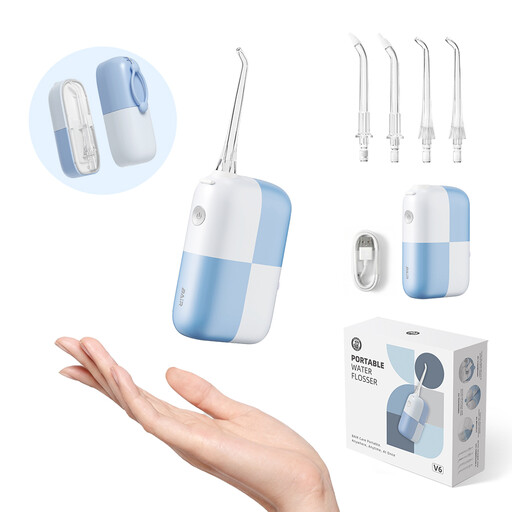
Why it suits this profile: According to the product information, this compact model folds down to approximately 10 cm and weighs around 145 grams. This makes it suitable for anyone looking for a portable water flosser for use at home, at work or on short trips.
The press-and-spray function gives you control over the water jet. The tank is removable and the tips can be stored inside the device, making daily cleaning and taking it with you more straightforward.
75–80 PSI, IPX7 water resistance, USB-C charging, approximately 30 days of battery life, plus standard, orthodontic and periodontal tips.
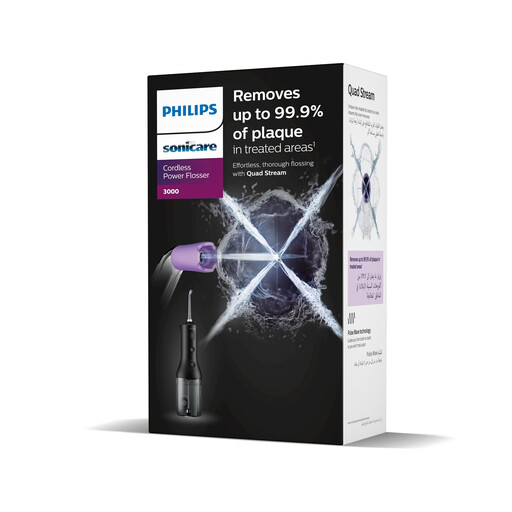
Why it suits this profile: The combination of two cleaning modes, three intensity levels and a 250 ml reservoir is a good fit for users who want to establish a consistent routine at home.
You are not restricted to one fixed pressure. Together, the Clean and Deep Clean modes and three intensity levels give you flexibility for daily use and a more thorough setting.
Cordless design, Quad Stream nozzle, pulsing waves in Deep Clean mode, 250 ml tank and, according to the product information, up to 14 days of battery life with typical use.
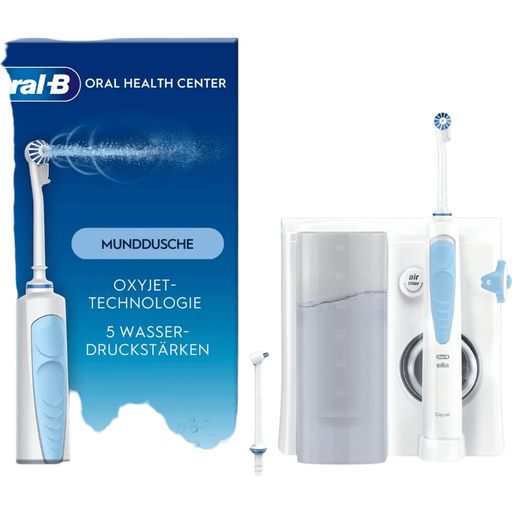
Why it suits this profile: This model is designed for home use and has a 600 ml reservoir. That is practical for users who have a permanent place for it in the bathroom and want to use several settings.
The water pressure can be adjusted across five levels and there are different jet options. This lets you tailor the setting instead of relying solely on the maximum level.
600 ml reservoir, five pressure settings, Oxyjet and Waterjet tips, plus a corded design for use in a fixed location.
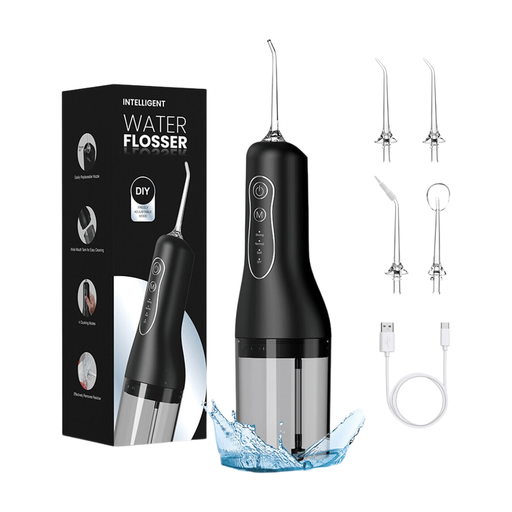
Why it suits this profile: The removable 260 ml tank, USB-C charging and compact design are aimed at users looking for a water flosser to take travelling.
As well as a powerful setting, there are Standard, Soft and DIY modes. You can therefore start at a lower intensity. The wide tank opening makes filling and cleaning easier.
Four modes, 60–140 PSI according to the product specification, 260 ml tank, three types of nozzle and a stated battery life of up to 50 days.
We have put together a complete, up-to-date list of products that fully meet these strict selection criteria and the applicable European safety regulations.
It can be, provided the model has an orthodontic tip and the manufacturer states that it is suitable for this application. A water flosser for braces helps flush away debris around brackets and wires. Start at a low pressure and gently move the nozzle along the gum line.
Its lifespan depends on the battery, motor, seals and maintenance. Empty the tank after use, remove limescale according to the instructions and allow the device to dry. With a battery-powered water flosser, the charging method is particularly important: use the supplied cable or charger and do not charge a USB connection while it is wet.
In addition to the purchase price, replacement nozzles and any charging accessories are the main recurring costs. Before buying, check whether individual replacement tips are available and what replacement interval the manufacturer recommends. This helps prevent a budget model from becoming less practical over time.
