
Map researcher using one screen
You want to work with maps, literature and notes side by side without an external monitor. HZ describes fieldwork, literature and map research as parts of its Water Management course.


When comparing laptops for water management, first look at the usable screen space, then check which GIS or drawing software your course requires. QGIS offers desktop versions for Windows and macOS, while ArcGIS Pro requires a supported Windows environment. You’ll also need to weigh the benefits of a large built-in screen against the laptop’s weight and how easy it is to carry.
You want to work with maps, literature and notes side by side without an external monitor. HZ describes fieldwork, literature and map research as parts of its Water Management course.
You want to know in advance whether your course requires QGIS, ArcGIS Pro or AutoCAD, as operating system and system requirements vary between programmes. Esri, the QGIS project and Autodesk each publish separate requirements for their software.
You take your laptop to lectures or out on fieldwork, so you’ll need to weigh the built-in screen against the laptop’s weight and dimensions. Compare the details of the specific configuration, not just the screen size.
A good fit if: you want to view maps and documents on one screen and need locally required Windows software.
The trade-off: check the exact screen resolution, memory and weight. A large screen alone doesn’t mean a laptop is suitable for demanding GIS tasks.
A good fit if: your course supports the software you need on macOS; QGIS offers a macOS desktop version.
The trade-off: Esri lists supported Windows versions for ArcGIS Pro. So if it’s part of your course, first check how your institution expects you to use the programme.
A good fit if: your course confirms you can complete assignments in a browser and doesn’t require incompatible local desktop software.
The trade-off: QGIS doesn’t list a standard installation for ChromeOS, and ArcGIS Pro requires a supported Windows environment. Before choosing this option, ask your institution to confirm that browser-based work is enough.
| What to consider | What to check before buying | Who is this important for? |
|---|---|---|
| Maps and text on one screen | Compare the screen size, resolution, aspect ratio and finish of the exact configuration. | If I want to view maps and study texts at the same time, usable screen space is my first consideration. Around 36% of consumers prioritise screen space. |
| Software compatibility | Check the programme, version, operating system and type of assignments, then compare them with the official requirements. | I want to find out first whether the laptop can run the GIS or drawing software required by my course, rather than choosing specifications I don’t need. Around 29% of consumers prioritise software compatibility. |
| Carrying and working on the move | Consider the weight, dimensions and any charging requirements alongside the screen space you need. | If I often take my laptop to lectures or out on fieldwork, I weigh portability against the built-in screen. Portability is the top priority for around 21% of consumers. |
| Purchase cost and included accessories | Check the configuration, included charger, seller and applicable warranty terms. | I want to keep costs down without overlooking a charger I need or whether the laptop can run essential software. Around 14% of consumers give purchase cost top priority. |
The diagonal measurement doesn’t tell you the resolution or aspect ratio. A larger model may also be less practical to carry around regularly.
Compare the exact resolution, screen finish, dimensions and stated weight before deciding whether maps and documents will fit side by side.
QGIS doesn’t list a standard installation for ChromeOS, and ArcGIS Pro requires a supported Windows environment. This means a Chromebook may not be suitable for locally required software.
Ask your institution in advance whether browser-based work is enough. If you need local desktop software, check which operating systems it supports.
If the required software doesn’t work, you may need a different laptop or a different place to work.
Studenten Wegwijzer’s student ranking lists several model codes for its Acer entry. A MacBook Air configuration viewed on Joybuy had 512 GB of storage and was Sky Blue, compared with 256 GB and Midnight for the model in the ranking.
Check the full model number, storage capacity and other variant details. A similar product name doesn’t mean it’s the same configuration.
HP states that the charger is sold separately for the specific ProBook 4 G2a configuration E15MJEA#ABH.
Check what’s in the box for the specific configuration you’re considering.
If there’s no charger included, you may need to buy a suitable one before you can use the laptop.
The Aspire 17 A17-51M-53T4 is a specific model to consider if you’re looking for a large built-in screen.
The ProBook 4 G2a 16 E15MJEA#ABH is a Windows configuration with a 16-inch WUXGA screen.
The 13- and 15-inch MacBook Air with M5 are macOS options to consider if your course software supports macOS.
The Chromebook CM14 Flip shows why you should check a browser-focused option separately against your course’s software requirements.
The IdeaPad Slim 5 15ARP10 bundle is a Windows option with a 15-inch-class screen for general study tasks.
These laptops are options to compare for studying with a single built-in screen. For each model, check that its operating system is compatible with your course software. Also check the CE marking and applicable product safety requirements for the specific configuration.
 No image available
A 16-inch screen is an option to compare if you want to view maps and study materials on a single built-in screen.
1920 × 1200 IPS screen with a 16:10 aspect ratio, 8 GB RAM, 512 GB SSD and Windows 11 Home. The stated weight is around 1,64 kg; the charger isn’t included.
Check that the configuration meets your course software requirements and that the specific model carries the required CE marking.
 No image available
The 15.3-inch screen is an option to compare if you want to weigh built-in workspace against portability.
Anti-glare 1920 × 1200 IPS screen with a 16:10 aspect ratio, 16 GB RAM, 512 GB SSD and Windows 11 Home. The stated weight is around 1,59 kg; the charger must be purchased separately.
Check your course software requirements, as well as the CE marking and applicable product safety requirements for this configuration.
 No image available
The 16-inch screen gives you a built-in workspace to compare for maps and study materials.
2560 × 1600 IPS screen, 32 GB RAM and 1 TB storage. Check the operating system and compatibility with your course software.
For this specific configuration, also check the CE marking and applicable product safety requirements.
 No image available
A 16-inch built-in screen is an option to compare if you want to work with maps and documents on one screen.
WUXGA OLED screen, 16 GB LPDDR5X memory, 512 GB SSD and Windows 11 Home. The stated weight is 1,70 kg.
Check that your course’s specific software runs on this configuration and that the model carries the required CE marking.
 No image available
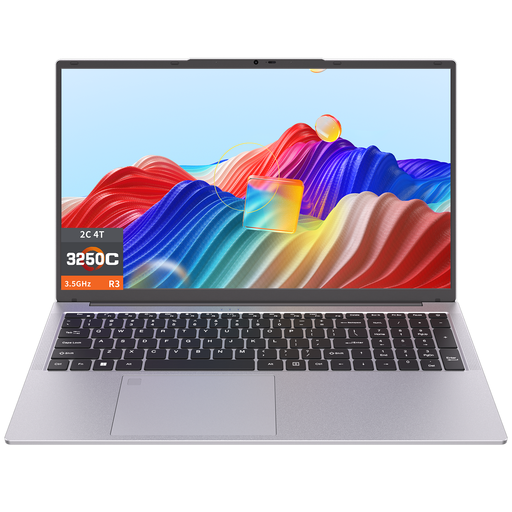
The 17.3-inch screen is an option to compare if you’re looking for plenty of built-in screen space.
8 GB DDR4 RAM and 512 GB SSD. Check the operating system and compatibility with your study programmes.
For this specific configuration, also check the CE marking and applicable product safety requirements.
Not based on the course name alone. The QGIS project offers desktop versions for Windows and macOS, while Esri lists supported Windows versions for ArcGIS Pro. Before choosing an operating system, ask your institution which programmes and versions you’ll need to use locally.
As well as the screen size, compare the resolution, aspect ratio and finish of the specific configuration. This helps you assess the built-in screen space on more than just the number of inches.
No, it varies by configuration. For the ProBook 4 G2a E15MJEA#ABH, HP states that the charger is sold separately, so check what’s in the box for the model you’re considering.
For a consumer purchase in the Netherlands, the seller is your point of contact for the legal guarantee. The Government of the Netherlands states that there is no fixed statutory guarantee period. What you can expect from a product depends, among other things, on the product, its price and the information provided.
The Government of the Netherlands states that electronic products offered for sale in the EU must carry the required CE marking. Check the marking and applicable product safety requirements for the specific configuration; a product listing alone doesn’t confirm them.