
Vandaag of morgen in huis

Kwaliteit gegarandeerd

Welkomstaanbiedingen ontgrendelen: GRATIS bezorging | Tot 80% korting | Gratis 30 dagen JoyPlus-proefperiode
Download de app
A water flosser, also known as an oral irrigator or electric flosser, can be a practical addition to brushing and cleaning between your teeth. It can be particularly useful if you wear braces, have implants, larger gaps between your teeth or find traditional flossing difficult. However, models vary considerably in ease of use, pressure control, battery life and maintenance.
The product information below is based on the manufacturers’ stated specifications. Claims about cleaning results are not medical guarantees. If you experience persistent irritation or bleeding, or have recently undergone a procedure, it is advisable to consult your dentist.
A high maximum pressure may sound appealing, but it will not be comfortable for everyone. A water flosser for sensitive gums should instead offer a low starting setting and fine adjustment. Look at the full pressure range and the number of settings, rather than just the highest PSI figure.
A gentle setting is also useful if you are still getting used to an oral irrigator. Start slowly and only increase the intensity if it remains comfortable.
A model with long battery life can be useful for travelling, but manufacturers do not always base their claims on the same usage frequency. “Up to 30, 40 or 50 days” is therefore a stated maximum or typical usage period, not a guarantee for every user.
Also check the type of connection, charging time and whether the charging port needs to be dry before you connect the cable. For a cordless water flosser, these are practical details you will notice every day.
A large reservoir means less frequent refilling, but a fixed tank with narrow openings can be more difficult to clean. Leaving water in the tank is inconvenient and may lead to limescale or unpleasant odours. A removable tank with a wide filling opening is often easier to rinse and dry.
Empty the tank after use, rinse the nozzle and always follow the manufacturer’s maintenance instructions.
Ideally, a useful water flosser should have several intensity levels. For everyday use, a gentle or normal setting is usually more practical than immediately using the highest pressure. If you are looking for a water flosser for braces, check whether an orthodontic nozzle is included or available separately.
For a water flosser for implants, do not rely solely on a marketing label. Check the tips included and ask your dentist for advice if you are unsure. A periodontal care nozzle is not a substitute for professional treatment.
Portable models often have a reservoir of around 150 to 300 ml. A smaller tank makes the device more compact for a travel water flosser, but may require you to refill it during use. A larger tank is more convenient for a complete cleaning session, but takes up more space.
Also consider how the tank is removed. A removable reservoir with a wide opening is generally easier to fill and clean.
An IPX rating provides information about protection against water, but the precise use must match the instructions. IPX6 and IPX7 do not automatically mean that every part can be used under water or while charging. Only charge a cordless water flosser when the connection is dry.
For home use, weight and grip are important. For travelling, the key features are a compact design, storage space for nozzles and a water flosser with long battery life.
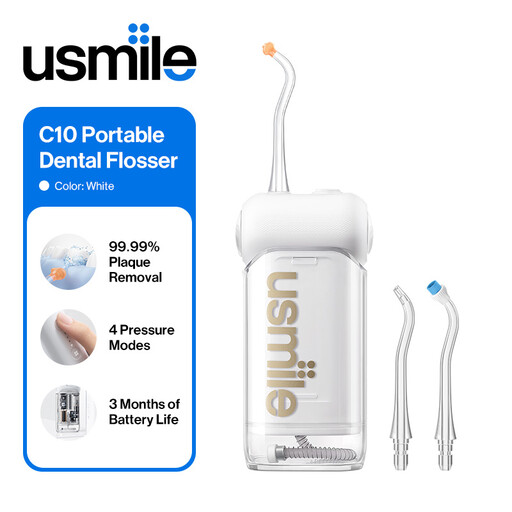
Why it suits this profile: This portable model combines four settings with a 180 ml tank and a stated battery life of up to 95 days. It is therefore suitable for users who want to start with a cordless device without having a large appliance on the bathroom basin.
The four settings give you more choice than a single fixed water pressure. However, check whether 180 ml is enough for your needs and empty the tank after every session.
Four modes, 360° nozzle, IPX7 water resistance and a stated battery life of up to 95 days according to the product information.
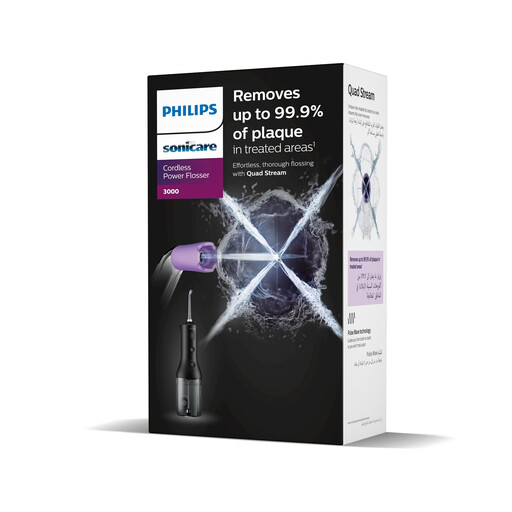
Why it suits this profile: The HX3826/33 offers two modes, three intensity levels and a 250 ml reservoir. This makes it a straightforward choice for everyday use at home, including if you wear braces or want to go easy on sensitive gums.
The three intensity levels mean you are not limited to using a single powerful setting. The tank is larger than those found on many compact travel models.
250 ml reservoir, two cleaning modes, three intensity levels and a stated battery life of up to 14 days with typical use.
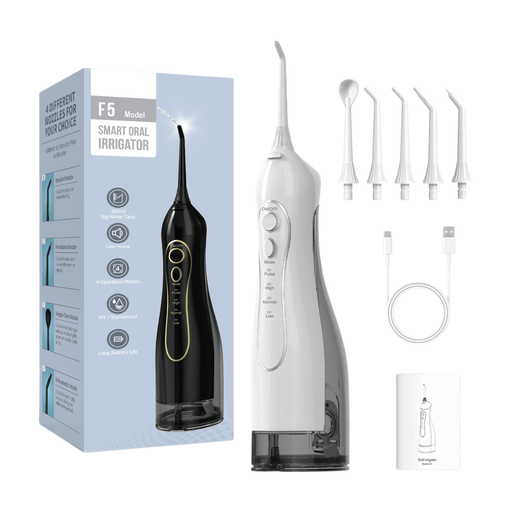
Why it suits this profile: The F5 has five pressure settings, a 300 ml tank and, according to the manufacturer, five nozzle types included, including an orthodontic nozzle. This suits users looking for several applications.
According to the specifications, the pressure ranges from 40 to 140 PSI, so you are not limited to a single high setting. The removable tank has a wide opening for filling and cleaning.
Five settings, 300 ml reservoir, 360° rotating nozzle, IPX7 rating and a stated battery life of up to 40 days.
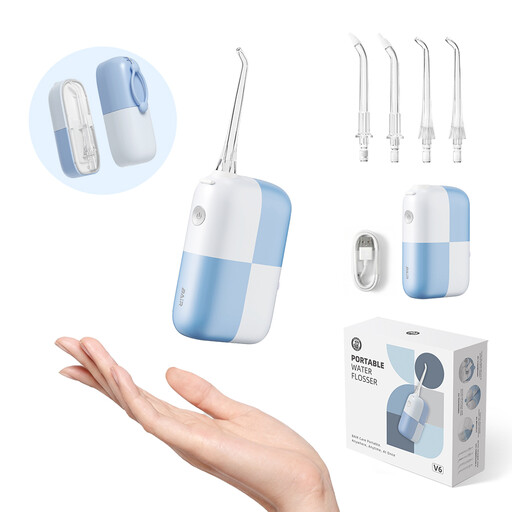
Why it suits this profile: According to the product information, this model folds down to around 10 cm and weighs approximately 145 grams. The USB-C connection, IPX7 rating and stated battery life of up to 30 days make it suitable for travelling and everyday carrying.
The compact design takes up less space in a washbag. The magnetic removable tank and storage space for tips make filling and carrying the device more organised.
Approximately 145 grams, 75–80 PSI according to the specifications, press-and-spray operation, IPX7 and three types of nozzle.
We have put together a complete, up-to-date list of products that fully meet these strict selection criteria and the applicable European safety regulations.
A special nozzle can be useful if you wear braces or have implants. This does not mean that every model is suitable for every situation. If you are unsure, follow your dentist’s advice.
A water flosser and dental floss work in different ways. An oral irrigator can be useful for people who find string floss difficult to use or want to clean around braces. Suitability depends on your teeth, technique and daily routine. The device does not automatically replace all other oral care.
Its lifespan depends on the battery, pump, seals and maintenance. Empty the tank after use, avoid dropping the device and charge it according to the instructions. Also check whether replacement nozzles are available. Long battery life mainly indicates how often the device needs charging, not its total lifespan.
Ongoing costs mainly consist of electricity, water and any replacement nozzles. A USB-rechargeable model uses little energy per charge. Before buying, check the price and availability of compatible tips, as these may be more significant over time than a small difference in the purchase price.
