
Vandaag of morgen in huis

Kwaliteit gegarandeerd

Welkomstaanbiedingen ontgrendelen: GRATIS bezorging | Tot 80% korting | Gratis 30 dagen JoyPlus-proefperiode
Download de app
A water flosser can be a handy tool for cleaning between teeth, along the gum line and around braces. However, every model is different. High pressure, a large reservoir or long battery life may sound appealing, but they don’t automatically mean a device will feel comfortable in your daily routine.
The key question, therefore, isn’t which water flosser has the most features, but which combination of pressure settings, nozzles, reservoir and portability suits you best.
A model that offers, say, 140 PSI can be powerful, but a high setting isn’t comfortable for everyone. If you have sensitive gums or are using an oral irrigator for the first time, a low or gentle setting matters more than just the highest number.
Look out for:
Product claims about plaque removal should be taken as information from the manufacturer. According to Philips’ own research, the Philips Sonicare Power Flosser 3000 removes up to 99.9% of plaque on treated areas. This is not a general guarantee for every user or situation.
A water reservoir of 300 ml or more can be practical because you need to refill it less often. But a reservoir with a small opening or hard-to-reach corners can make maintenance more fiddly.
So check:
A water flosser should be rinsed and dried after use. Leftover water can lead to a less hygienic experience.
“Up to 30, 40 or 50 days” is usually based on a specific usage pattern set by the manufacturer. The actual battery life depends on the pressure you choose, how often you use it and the charge level.
An IPX6 or IPX7 rating tells you about protection against water under certain test conditions. It doesn’t mean every part can be safely submerged in all circumstances. Always check the manual and keep the charging port dry before connecting a USB cable.
For daily use, adjustable pressure is more important than just a high maximum pressure. A water flosser for sensitive gums should ideally have a gentle setting. For a water flosser for braces, an orthodontic nozzle can be useful because it allows you to direct the water around brackets and wires.
PSI stands for pounds per square inch and describes the water pressure. Manufacturers sometimes also mention a pulse frequency, such as 1,600–1,800 pulses per minute. These values are mainly useful for comparing models; they don’t on their own predict how comfortable the device will feel.
A reservoir of around 250 to 300 ml is often a practical middle ground for both home and travel. More compact models save space but may need refilling more often. A larger model is suitable if you want a longer cleaning session or plan to share the device with others. In that case, use separate nozzles for each person.
If you’re looking for a portable water flosser, it’s also worth checking the weight and shape. A device that fits in a wash bag will probably be easier to take with you than a model with a large separate reservoir.
Don’t just look at the number of tips included, but especially at the type:
A water flosser doesn’t automatically replace every other form of oral care. Brushing your teeth remains part of your daily routine. For some spaces, floss, interdental brushes or picks may work better. If you have braces, a crown, an implant or persistent bleeding gums, it’s wise to ask your dentist or dental hygienist for advice.
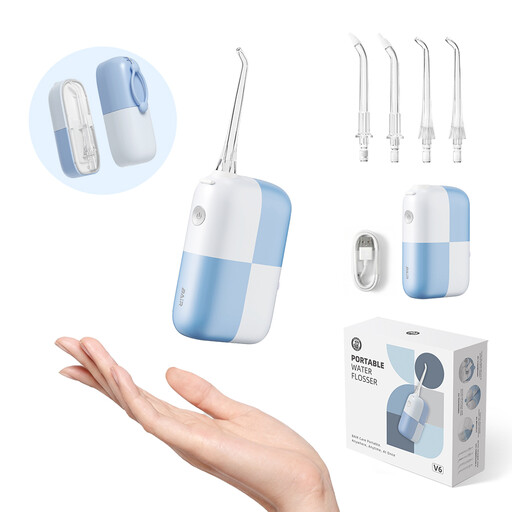
Why it fits this profile: The compact design is intended for users who want to start with an oral irrigator without complicated controls.
The press-and-spray mode gives you control over the water jet, according to the product description. The stated pressure is around 75–80 PSI.
145 grams, folds down to around 10 cm, IPX7 waterproof and comes with standard, orthodontic and periodontal nozzles.
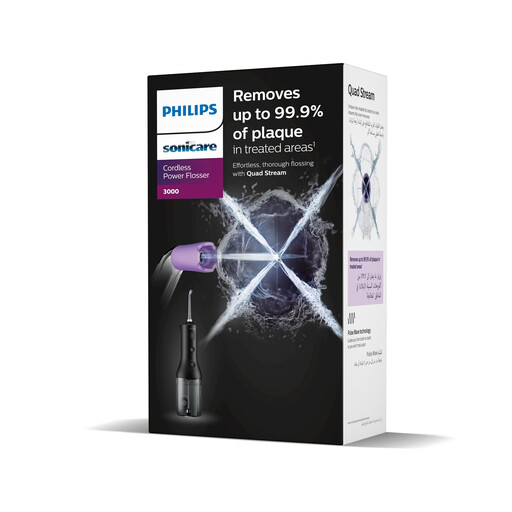
Why it fits this profile: This model offers straightforward controls with two modes and three intensity levels.
The 250 ml tank is suitable for a session of around 60 seconds, according to the specifications. The manufacturer also mentions three intensity settings.
Quad Stream nozzle, Pulse Wave mode, Clean and Deep Clean settings, and a stated battery life of up to 14 days.
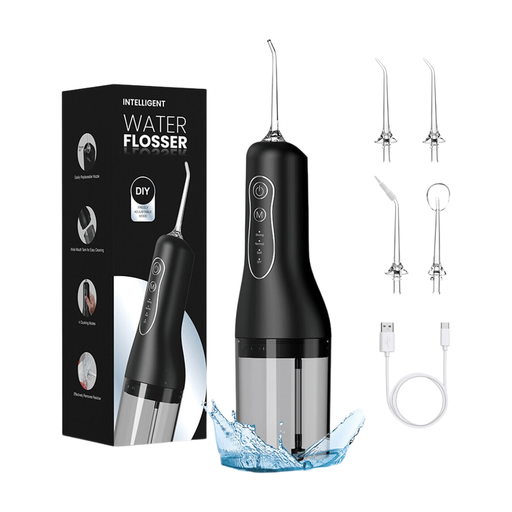
Why it fits this profile: A cordless water flosser with multiple settings and a relatively large reservoir suits both daily use and travel.
The four settings include Strong, Standard, Soft and DIY. This means you can adjust the intensity rather than only using a fixed high pressure.
260 ml removable tank, USB-C charging, memory function, 60–140 PSI according to the product specifications and a stated battery life of up to 50 days.
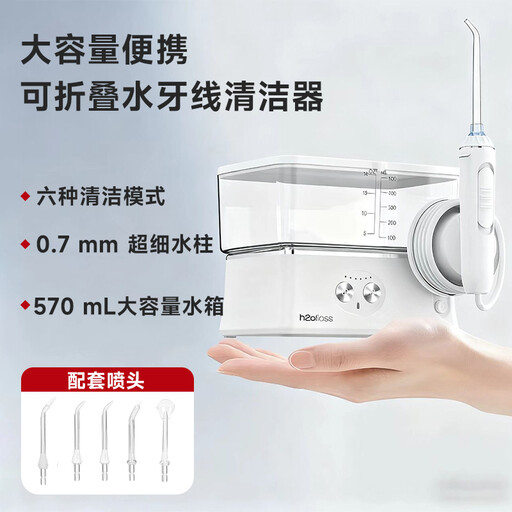
Why it fits this profile: The larger tank and multiple nozzles are practical when you want a bigger water capacity and different cleaning options.
The product specifications mention six modes and five spray heads. This offers more adjustment options than a model with a single fixed water jet.
A stated reservoir capacity of 570 ml, 2,500 mAh battery, IPX7 waterproof rating and five included spray heads.
We’ve put together a full, up-to-date list of products that fully meet these strict selection criteria and comply with current European safety regulations.
Do not use hot water or additives such as essential oils unless the manufacturer explicitly allows it. Stop if you experience severe pain or persistent bleeding and seek advice from a dentist.
A water flosser can help rinse away food debris around brackets and wires. Ideally, choose a model with an orthodontic nozzle and a gentle pressure setting. Suitability varies depending on the type of braces and your oral situation, so also follow your orthodontist’s instructions.
Many users incorporate a water flosser into their oral care routine once a day. Take it easy if you haven’t used an electric flosser before. A consistent, achievable routine is more important than always choosing the highest pressure or the longest session.
Besides the purchase price, your main costs are electricity or USB charging and replacement nozzles. Check in advance whether tips are available separately and how often the manufacturer recommends replacing them. With a simple manual option, such as floss or an interdental brush, the ongoing costs are often different, but they require more dexterity to use.
